Two of the three election commissioners, Sukhbir Singh Sandhu and Vivek Joshi, objected to decisions made in the Election Commission of India (ECI)’s name without their knowledge, the Indian Express reported on Wednesday. The commissioners flagged concerns ranging from unilateral changes to voter registration forms and centralised control over IT systems to decisions on deletion and restoration of names. They cited a case in Goa as part of Special Intensive Revision (SIR) where 97 voters verified as eligible by ground officers could not be added to the rolls because the software did not allow the update to be recorded.
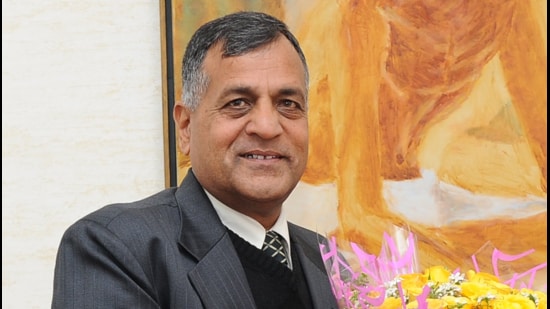
HT spoke to Ashok Lavasa, who, as an election commissioner in 2019, dissented publicly from the ECI’s exoneration of leaders accused of violating the model code of conduct, about the current crisis. Edited excerpts:
What do you make of the revelations?
The election commissioners have raised some very valid issues, which are legal in nature. They are saying that Form 6 [requiring new voters to declare whether they, a parent, or a grandparent appeared on the “last SIR” roll] was changed without following due procedure. The law prescribes one form, and we are using another form. So, with whose authority has this form been changed? They are also saying the procedure adopted is actually impeding the statutory powers of the ERO [Electoral Registration Officer]. So if these allegations are right, it is a very serious issue.
Form 6 is in the public domain; that claim has been verified. But as far as the ERO’s powers being blocked is concerned, that is a very serious matter. We do not know, because these things are not in the public domain. The case from Goa provides an example that even when the ERO in Goa wanted to add people he thought were eligible, he could not. This is absolutely improper.
{{/usCountry}}Form 6 is in the public domain; that claim has been verified. But as far as the ERO’s powers being blocked is concerned, that is a very serious matter. We do not know, because these things are not in the public domain. The case from Goa provides an example that even when the ERO in Goa wanted to add people he thought were eligible, he could not. This is absolutely improper.
{{/usCountry}}You were once the only dissenter inside the ECI. Today, two of three commissioners say decisions were taken without their knowledge. Is this simply dissent, or does it point to a breakdown in the ECI’s functioning?
I think you do not have to compare it with what happened in the past. These are very serious concerns and should be looked at independently. What is happening inside the commission is absolutely improper.
Also read: ‘Invisible hand’: Opposition questions ECI after report on commissioners’ SIR concerns
What do you make of the ECI’s denial?
That actually makes this matter more intriguing. A plain denial does not cut it here simply because of the nature of these allegations. There was an RTI case, where petitioners wanted the ECI to furnish the minutes of meetings where the decision to conduct the SIR was taken. ECI refused, saying no such records were maintained. These obfuscations cannot go on.
There has to be an official statement giving full details on when the commission took all these decisions. If two commissioners are saying that they were not involved, then the only way to refute this is to show a record that they were present in the commission meeting in which these decisions were taken.
Also read: Two commissioners, one CEC, no veto: How the Election Commission decides
One of the significant objections concerns the ERONET software. From your experience, what safeguards did decentralisation provide, and what risks arise if technical control over the roll becomes concentrated at the commission’s headquarters?
It is very simple. The law prescribes a certain procedure, and it empowers certain authorities. Technology is only a tool. You write by hand, you write on a computer, or you use ERONET. This is all a technological support system. That does not take away...after all, there were electoral rolls before as well. And they had a sanctity, whether it was with the BLO [Block Level Officer] or ERO. So in this, decentralisation and centralisation, if you make such a system in which all electoral rolls are integrated, it is fine; it is good. There is nothing wrong with that.
But that does not take away what should not be taken away. There is authority invested in officers under law. So if I, as an ERO, hear somebody’s petition and find that, yes, this name should be deleted, or this name should be added, then I should be able to do it, no? I should not have to rely on someone, a third party, to delete it.
Also read: Why ECI software ERONET is at the centre of the row over SIR
If you were facing the kind of institutional situation, what mechanisms should an election commissioner use to ensure that their objections do not simply disappear into a file?
I think the functioning of the ECI is governed by a law. That law clearly states that, as far as possible, decisions will be taken unanimously, but if not unanimously, then by a majority. So two is always more than one. So I do not know why the decision of the two could not prevail or did not prevail.
What, according to you, is the way forward?
The SIR should be scrapped. As for the differences among the commissioners, if the ECI needs to clarify, they have to bring all the facts before the people. And say that the objections these gentlemen are raising are unfounded. They should get to the bottom of all this and see whether any legal procedures have been violated. They should take this into account. So far, the court has only heard and pronounced on whether the ECI has the constitutional power to conduct the kind of SIR it has done. What about the procedures? What about the legalities of the various actions taken? So, I think the field is open for the court to investigate.