The Supreme Court on Monday ruled that a spouse may rely on secretly recorded telephonic conversations with the other partner in matrimonial disputes, including divorce proceedings, because such communications are not barred under the law and do not amount to a breach of privacy.
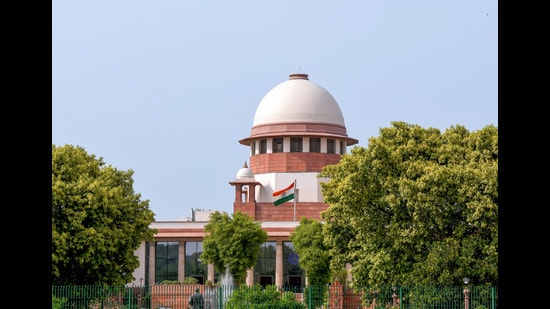
In a significant ruling that reshapes the contours of privacy and evidence within marriage, a bench of justices BV Nagarathna and Satish Chandra Sharma set aside a 2021 judgment of the Punjab and Haryana high court, which had barred a husband from using a compact disc (CD) or a memory card containing conversations with his estranged wife, recorded without her knowledge.
The court relied on section 122 of the Indian Evidence Act, which bars disclosure of marital communications by one spouse without the other’s consent. However, the same provision contains an exception when such communication is brought forth during legal proceedings between the spouses. To be sure, section 122 of the Evidence Act has been replaced by section 121 of the Bharatiya Sakshya Adhiniyam, 2023.
The bench asserted that while the right to privacy exists between spouses, it is not absolute. The exception under section 122, it said, must be read in conjunction with the constitutional right to a fair trial, which is also protected under Article 21 of the Constitution.
{{/usCountry}}The bench asserted that while the right to privacy exists between spouses, it is not absolute. The exception under section 122, it said, must be read in conjunction with the constitutional right to a fair trial, which is also protected under Article 21 of the Constitution.
{{/usCountry}}“We have also referred to the 2017 KS Puttaswamy judgment,” said the court, referring to the landmark ruling that affirmed privacy as a fundamental right. “However, such rights cannot be applied horizontally in all contexts. Section 122 does not touch upon the right to privacy as envisaged under Article 21 because it is based on the right to a fair trial.”
Noting that a conversation between spouses secretly recorded by one of them can be admitted in evidence, the bench emphasised that allowing such evidence in matrimonial cases upholds procedural fairness, particularly where issues such as mental cruelty or marital discord are being litigated.
“Privacy of communication exists, but it is not absolute,” the bench said, pointing out that statutory exceptions such as those in the Evidence Act reflect a balance between privacy and justice.
Dealing with the issue of protected nature of conversation between spouses, the bench maintained that if spouses are snooping on each other, the marriage seems to have already broken down. “Snooping is not the result of pending proceedings but rather a symptom of a broken-down marriage,” said the court, adding that such conversations can be validly produced and proved in legal proceedings between them.
The apex court restored the earlier order of the Bathinda family court (2020), which had allowed the husband to prove the contents of the CD in support of his plea for divorce, provided its authenticity was established.
The case arose from a 2017 divorce petition filed by a man against his wife, with whom he shared a daughter. In support of his case, the husband submitted a CD of telephonic conversations purportedly between him and his wife, recorded without her knowledge.
The Bathinda family court had allowed him to prove the contents of the CD subject to verification of its correctness. However, in 2021, the Punjab and Haryana high court reversed this decision, calling the act of recording a “clear-cut infringement” of the wife’s privacy. It also raised concerns over the manner and context in which such conversations were recorded, calling the evidence inadmissible.
The husband then approached the Supreme Court, which began examining the interplay between privacy rights and evidentiary rules.
During the hearings, the court appointed advocate Vrinda Grover as amicus curiae, who argued that laws such as section 122, framed in a pre-digital era, must be reinterpreted in light of evolving technology and gender dynamics.
In its final ruling, the court, however, maintained a statutory interpretation approach, stating that the exceptions under section 122 must be construed harmoniously with constitutional guarantees, especially the right to a fair trial. The bench concluded that no breach of privacy occurred in the instant case and that such evidence could be tested under appropriate legal standards.
“In view of the aforesaid, we set aside the impugned order and restore the 2020 family court order. The family court is allowed to retrieve the recorded conversations and test it under the pertinent legal provisions,” the court ordered.