
 E-Paper



Shed inhibition, use social media: Justice Chandrachud to judiciary
“We have been very reticent. The Supreme Court has been very reticent. So, the high courts are even more reticent and the district courts, which look up to the high court, are therefore even more reticent on the use of modern means of communication, including Twitter and Telegram” said Justice Chandrachud


Judiciary will lose its game if it does not shed its inhibition of using modern social media tools such as Twitter and Telegram, justice Dhananjaya Y Chandrachud said on Sunday, emphasising that technology must be put to its best use by the justice delivery system in the interest of transparency and accountability.
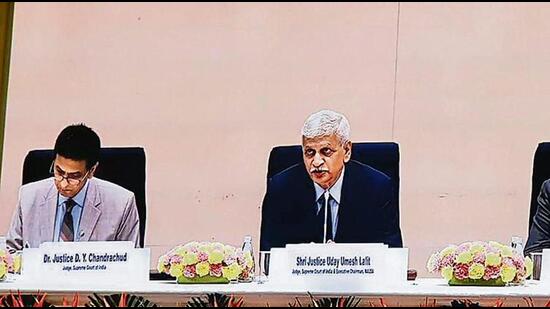
“We have been very reticent. The Supreme Court has been very reticent. So, the high courts are even more reticent and the district courts, which look up to the high court, are therefore even more reticent on the use of modern means of communication, including Twitter and Telegram” said the judge, speaking at the valedictory function of the First All India District Legal Services Authorities meet in New Delhi.
Justice Chandrachud underlined that judiciary’s resistance to use the means of modern communication has to change because it can reach out to the citizens by only using the language of discourse, which is today becoming so prevalent in society.
“Unless we, as judicial institutions, shake this resistance to adopting the means of communication which is so widespread in society today, we would perhaps have lost the game. And, I believe that we are already in the process of losing the game, unless we shed fear about what is going to happen if we use modern means of communication,” he regretted.
Justice Chandrachud, who is also the chairman of the Supreme Court eCommittee and has been spearheading the e-court and digital courts projects for the entire country, also mentioned about reservations of judges against live-streaming of court proceedings, adding judges across the board feel they would be assessed by the people if judicial proceedings are telecast.
“Yes, of course, some of us will lose their sense of respect of the community… by showing it to the world at large as to how we conduct ourselves when we sit on that dais. But that’s also a reminder that we have to change the ways in which we have been functioning,” he highlighted.
The senior Supreme Court judge added that there is a world of accountability at large. “I think we can earn the respect of the community at large, provided we adopt and come on to the platforms which are so prevalent in our society. The judicial institutions cannot be left behind if we have to be the harbingers of change,” he stressed.
Talking about significance of technology, justice Chandrachud said the use of technology can reduce the opacity of the institutions and make them more accessible to the marginalised sections, in terms of gender, caste, sexual orientation, geographical opportunities, education or just socio-economic want.
“These are two ends of the spectrum: the might of the State and the position of the beneficiaries. Technology, ironically, enables us to do something which the wings of the State don’t do, which is, simply put, to talk to each other. So, technology has today become a powerful interface for different wings of the state to be talking to each other,” he added.
About the legal aid movement in India, justice Chandrachud underscored that there is a need for a shift in the thinking process in terms of our dialogue.
“We must shift from a system which allows citizens to pursue their cause of justice to a system which seeks out those for whom justice is meant… by seeking out the beneficiaries. The burden then is displaced from the beneficiaries to those who are in charge of various facets of the administration of justice, whether in terms of identification of beneficiaries, creating a sense of awareness or preparing a module for universalising the delivery of justice,” he said.
The judge added that there is also a need to institutionalise the processes of legal aid. “Don’t do it in an ad hoc way. When you see a problem, attend to it. When you see injustice, reach out to it. That is what we do as judges every day in our lives. That is our duty, but we have to go beyond. Setup systems and processes so that cases which fall in a paradigm are treated uniformly,” he said.


