E-Paper



Two more cheetah cubs die at MP’s Kuno National Park
The latest fatalities took the death toll of cheetahs in KNP to six in the last two months, including three felines translocated from African countries

 Prefer HTon Google


Two more cubs born to Namibian cheetah Jwala at Madhya Pradesh’s Kuno National Park (KNP) died on Thursday due to “dehydration” caused by the sweltering heat, forest officials said, as the incident came just two days after the death of one of the four cubs.
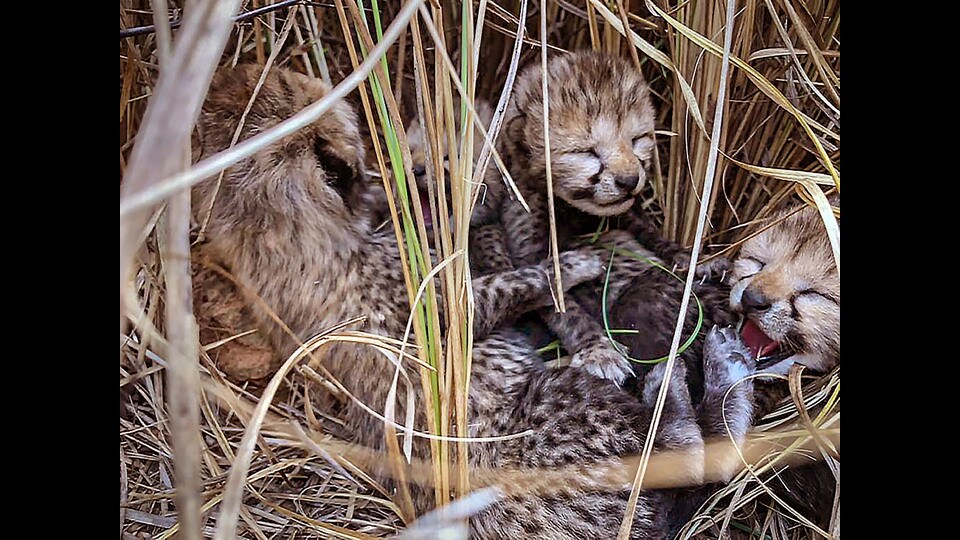
The fourth cub is in a critical condition and has been shifted to a hospital, the officials added.
The latest fatalities took the death toll of cheetahs in KNP to six in the last two months, including three felines translocated from African countries.
The cubs were born to Jwala, who was earlier named Siyaya, on March 27. Jwala arrived along with seven other cheetahs at Kuno from Namibia on September 17, 2022 as part of the country’s first inter-continental translocation project. On February 18 this year, 12 cheetahs were translocated from South Africa.
Madhya Pradesh chief wildlife warden JS Chauhan said the two cubs died due to dehydration. “On May 23, the temperature at Kuno was 47 degree Celsius which resulted in dehydration of the cubs. As the cubs were malnourished, the heat adversely impacted their health,” he said.
In a statement, the state forest department said the health of the remaining three cubs were not good in the afternoon. “During monitoring in the afternoon, the health of the three cubs was not found to be good. Seeing their condition, the local officials decided to start their treatment. The two cubs could not be saved despite best efforts,” the department said.
It added that the fourth cub is in a critical condition and is being treated by experts and veterinarians in a hospital.
“His health is stable and we are also in touch with cheetah experts in Namibia and South Africa also,” a forest official said, seeking anonymity.
The first cub had also died due to dehydration and weakness, officials said earlier.
The department’s statement said that “as per cheetah experts, the survival rate of cheetah cubs is very poor in Africa”.
South Africa veterinarian Adrian Tordiffe said: “The cubs were under surveillance in an enclosure, so forest officials should have kept an eye on them. The mortality rate is high but these cubs could have been saved with better vigilance.”
Now, 18 cheetahs, including one cub, are left in Kuno National Park. Six of them have been released in the wild and 12, including the cub, are in a bigger enclosure of 6 sq km.