Smuggling of human hair along the Indo-Bangla border in West Bengal has turned into a new cause for worry for the Border Security Force. More than 400 kilos of human hair have been seized while they were being smuggled into Bangladesh over the past one year.
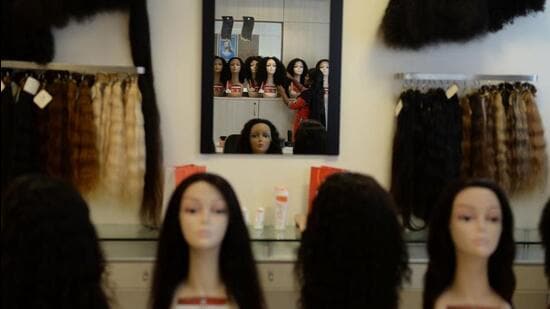
“This is a recent trend which has been going on since 2021. The first consignment, of around 12 kilos was intercepted in Nadia district in February 2021. At least 397 kilos of human hair were seized in 2021, while around 47 kilos have been seized so far this year,” said SS Guleria, DIG of BSF’s South Bengal Frontier.
The latest consignment, of around 38 kilos of human hair stuffed in 10 sacks, was seized on March 3, at Tehatta in Nadia district in south Bengal.
Officials said that tons of human hair, collected by rag-pickers from across the country, reaches Murshidabad in West Bengal, through agents and middlemen. Hair cleaning and processing is a household industry in Murshidabad’s Beldanga area.
“Women having long hair regularly dump the hair strands which fall off after combing. Rag pickers and hair collectors gather these strands from door-to-door and from landfills in cities. Once they reach us they are cleaned and processed before being woven into wigs. Both the processed hair and wigs are then exported, primarily to China,” said Milan Chowdhury, president of the Murshidabad hair traders’ association.
{{/usCountry}}“Women having long hair regularly dump the hair strands which fall off after combing. Rag pickers and hair collectors gather these strands from door-to-door and from landfills in cities. Once they reach us they are cleaned and processed before being woven into wigs. Both the processed hair and wigs are then exported, primarily to China,” said Milan Chowdhury, president of the Murshidabad hair traders’ association.
{{/usCountry}}Before the pandemic had hit, dozens of Chinese importers used to come to Murshidabad to check the quality before importing the processed hair and wigs. But the pandemic took a heavy toll and they have stopped coming as visa rules were tightened.
The shorter hair (less than six inches) are not processed and usually exported to Bangladesh and Myanmar at cheaper rates.
There are multiple hair processing factories in Bangladesh in places like Naogaon, Kushtia, Rajshahi and Dinajpur among others. On the basis of their size and quality each kilo of human hair could fetch between ₹5,000 to ₹10,000.
Officials said that while 90% of the hair was sent to China, only a small portion went to UAE and Malaysia. Some were also used by local hair replacement salons in Bangladesh.
“Long strands of human hair more than 6 inches long are of huge demand in the factories. While the long hair is used for makings wigs and hair extensions for women, the shorter ones are used to make wigs for men and artificial toys,” said a BSF official.