Exiled Bangladeshi author Taslima Nasreen on Sunday said that, in her opinion, madrasas "should not exist", alleging that some of these educational institutions were producing "jihadis" and witnessing cases of child abuse.
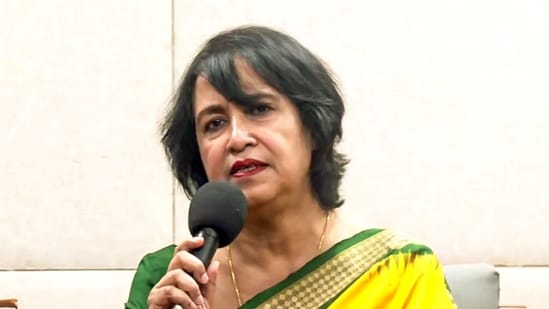
Speaking to reporters in Kolkata, Nasreen said, "In my opinion, madrasas should not exist... not in all cases, but in some it is seen that jihadis are being produced in madrasas."
She further alleged that "Child abuse is going on there, rapes are happening... imams and madrasa teachers are being held."
Nasreen argued that punishment alone was not enough and called for changes to the education system.
"They are going to jail, but just punishment won't help... this education system needs a transformation... I don't think there is a need for madrasas... no one does anything after passing out of madrasas... they beg, survive on charity... madrasas should go, and secular schools should come up instead," she said.
Some madrasas produce ‘jihadis’: Nasreen
She also alleged that "a lot of masjids have turned out to become jihad-producing factories", while adding, "not saying all, but some."
{{/usCountry}}She also alleged that "a lot of masjids have turned out to become jihad-producing factories", while adding, "not saying all, but some."
{{/usCountry}}"If some money is made/collected, a masjid is built. So many masjids are not needed; the government should control this," Nasreen added.
However, she did not cite any specific instances or evidence to support her claims during the press conference.
Also Read: ‘Took me 19 years to say I have returned to Kolkata’: Exiled Bangladeshi author Taslima Nasrin
Taslima's ‘homecoming’
Nasreen returned to Kolkata on Friday for the first time in nearly 19 years, describing the visit as an emotional homecoming to a city she still considers her own.
Ahead of her visit, Nasreen told PTI that returning to Kolkata felt like coming back to "my own country."
"I feel as though I am returning to my own country. Bengal has never been divided in my heart by a border or a barbed-wire fence. The door to the eastern part of Bengal remains closed to me, so for now, this part of Bengal is my home," she said.
Nasreen said she was returning "with joy, but also with pain", recalling that Kolkata had given her a home, friends, readers and a sense of belonging before she was forced to leave.
Her return marks her first visit to the city since November 2007, when she left following violent protests over her writings.
After fleeing Bangladesh in 1994 following death threats over her novel Lajja, she settled in Kolkata in 2004, describing the Bengali-speaking city as her cultural refuge in exile.
However, her stay ended in November 2007 after violent protests erupted over portions of her memoir Dwikhandito, which had been banned by the then Left Front government in 2003 for allegedly hurting the sentiments of sections of the Muslim community.
As the protests escalated and the Army was deployed in parts of Kolkata to restore order, the then Buddhadeb Bhattacharjee government asked Nasreen to leave the city. She was shifted to Jaipur and later Delhi before eventually moving abroad.
Over the years, Nasreen repeatedly expressed her desire to return to Kolkata, particularly to participate in literary events, but the visit did not materialise despite appeals from writers, civil society groups and occasional political interventions.
The issue resurfaced nationally last year when BJP Rajya Sabha MP and current West Bengal BJP president Samik Bhattacharya urged the Centre in Parliament to facilitate her return, describing Nasreen as a fearless voice against Islamist fundamentalism.
(With inputs from agencies)