
 E-Paper



Stalin attacks BJP over Presidential reference on SC timeline for clearing bills
Tamil Nadu chief minister MK Stalin said the questions raised in the reference reveal the BJP-led Union government’s “sinister intent” to distort the Constitution’s basic distribution of powers


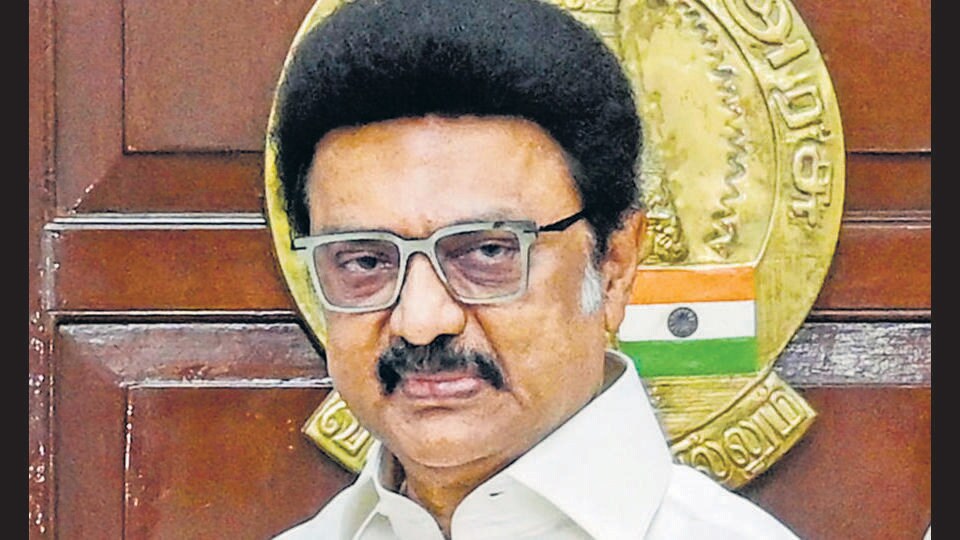
Tamil Nadu chief minister MK Stalin on Thursday attacked the Bharatiya Janata Party (BJP)-led Union government over the presidential reference questioning the April 8 Supreme Court verdict that laid down a timeline for the president and governors to decide on state bills, saying it reveals a sinister intent.
President Droupadi Murmu exercised a rare constitutional provision and sought the Supreme Court’s advisory opinion on 14 questions to settle the law on whether the president and governors need to follow timelines to decide on state bills referred for consent when the Constitution does not prescribe it.
In a post on X, Stalin said the questions raised in the reference reveal the BJP-led Union government’s “sinister intent” to distort the Constitution’s basic distribution of powers and incapacitate the state legislatures dominated by parties opposed to the ruling party at the Centre. “Thus, it poses a clear exigent threat to State autonomy,” Stalin said. He vowed to continue to fight on the issue.
Stalin said the presidential reference attempts to subvert the constitutional position settled by the Supreme Court in the Tamil Nadu governor’s case. “This attempt [reference] clearly exposes the fact that the Tamil Nadu Governor acted at the BJP’s behest to undermine the people’s mandate,” Stalin said. “This is nothing but a desperate attempt to weaken democratically elected State Governments by placing them under the control of Governors serving as agents of the Union Government. It also directly challenges the majesty of law and the authority of the Supreme Court as the final interpreter of the Constitution.”
Stalin questioned why the timelines should be objected to, and whether the BJP was seeking to legitimise its governors’ obstruction by allowing indefinite delays in bill assent. He wondered if the Union government intends to paralyse non-BJP state legislatures.
Stalin said the country stands at a critical juncture. He cited “grave circumstances” and urged non-BJP-ruled states and party leaders to join Tamil Nadu’s legal struggle to defend the Constitution.
On April 8, the Supreme Court struck down Tamil Nadu governor RN Ravi’s move to reserve 10 re-enacted bills for presidential assent after withholding their approval. Tamil Nadu’s Dravida Munnetra Kazhagam-led government and Ravi have been at loggerheads over withheld assent to bills. Ten of the bills were forwarded to the president after the assembly re-enacted them.
The Union and Tamil Nadu governments have also sparred over the holding back of funding under the Samagra Shiksha scheme to the state over its refusal to implement the National Education Policy (NEP). The Tamil Nadu government has accused the Union government of using NEP to impose Hindi through the three-language policy. Stalin has also led the opposition to the population-based delimitation, saying it would affect the southern and eastern states of Odisha and West Bengal.
The Supreme Court’s April 8 verdict came as a boost for Stalin. It called Ravi’s move to withhold assent to the bills erroneous and violative of the Constitution.
A bench of justices JB Pardiwala and R Mahadevan said that if a governor withholds assent or reserves a bill for the president’s consideration, this must be done within three months of its presentation. It added that a governor must grant assent “forthwith” or within a month if a state legislature re-enacts an identical bill.
The court said the president must decide within three months of receiving a bill from a governor, as it laid down such a timeline for the first time. It asked that the president’s office convey reasons to the concerned state if there is any delay beyond this period.
The court used its extraordinary powers under the Constitution’s Article 142. It called the withholding of consent on the bills “illegal”. The court said that the bills would be “deemed” to have been assented to.
The presidential reference filed under Article 143 said the concept of a deemed assent of the president and the governor is alien to the constitutional scheme and fundamentally circumscribes their power. It referred to the court’s conflicting judgments as to whether the president’s assent can be gone into by courts, the absence of timelines under the Constitution’s Articles 200 and 201, and the frequency with which states are approaching the court to challenge the governor’s actions on bills. “...can timelines be imposed and the manner of exercise be prescribed through judicial orders for the exercise of discretion by the President under Article 201 of the Constitution of India?”
The reference questioned whether the courts could adjudicate on a bill even before it becomes a law.


