The Supreme Court on Tuesday directed former Tehelka editor Tarun Tejpal to surrender within three weeks, rejecting his plea for exemption from surrendering before his appeal against his conviction and 10-year jail term in the 2013 sexual assault case is heard.
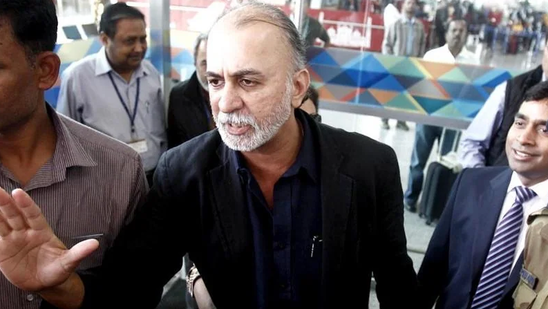
Justice Alok Aradhe directed Tejpal to furnish a surrender certificate, and ordered that if the certificate is filed on or before September 22, his appeal be listed on that date.
Tejpal's lawyers argue surrender not required before appeal
Senior advocates Kapil Sibal and Aman Lekhi, appearing for Tejpal, argued that there was no legal requirement for an accused to surrender before his criminal appeal could be listed. Sibal also relied on the Bombay high court’s August 6 judgment, which gave Tejpal four weeks to surrender, and underlined that the case was 13 years old and that he was now a senior citizen with strong roots in society.
Also read | Tarun Tejpal must surrender, seek exemption before appeal is heard: Goa tells SC
“There is no legal condition that he must surrender before the appeal is listed,” Sibal said, adding that there was no purpose in sending Tejpal to jail for a few days before his appeal could be taken up. “There is no point to send him to jail for five days,” he said.
Supreme Court weighs nature of offence
{{/usCountry}}“There is no legal condition that he must surrender before the appeal is listed,” Sibal said, adding that there was no purpose in sending Tejpal to jail for a few days before his appeal could be taken up. “There is no point to send him to jail for five days,” he said.
Supreme Court weighs nature of offence
{{/usCountry}}The bench, however, made it clear that Tejpal’s plea for exemption could not be decided without examining the nature of the offence and the sentence imposed on him.
“We have to look into the nature of the offence and the sentence,” observed the bench, noting that Sibal had also argued that the high court had reversed a trial court acquittal.
Also read | SC declines to list Tejpal’s appeal until surrender plea is decided
Solicitor General Tushar Mehta, appearing for the Goa government, opposed Tejpal’s plea. He reasoned that the Bombay high court had suspended the operation of its judgment only to enable Tejpal to approach the Supreme Court with an exemption plea and not to permit him to bypass the requirement of surrender altogether.
“This court will have to go into the merits of the case, besides the technical arguments, in so far as the issue of deciding whether the appellant deserves this exemption or not,” Mehta contended. He also stressed the gravity of the allegations, describing it as a case of aggravated rape.
Sibal objected to the characterisation, saying: “It is not a case of rape at all.”
Lekhi, on his part, argued that the rules governing surrender did not categorise offences in a manner that could operate as an automatic bar to exemption.
The bench, however, concluded that the surrender issue had to be decided first. “How much time you need to surrender?” the bench asked Sibal.
The court then rejected Tejpal’s application with the direction to surrender within three weeks.
On Monday, the Supreme Court declined to list Tejpal’s appeal without first deciding his plea for exemption from surrender, underlining that the exemption application had to be dealt with before the appeal could be listed.
On August 6, the high court overturned Tejpal’s acquittal by a trial court in May 2021 and convicted him of two counts of aggravated rape, sentencing him to 10 years’ imprisonment and imposing a fine. Tejpal was convicted for sexually assaulting a junior female colleague twice in an elevator during the Tehelka THiNK festival in Goa in November 2013.
The high court held that the trial court’s appreciation of the evidence was “not only unreasonable but perverse” and that it had assessed the complainant’s testimony through preconceived notions. The high court also held that Tejpal occupied a position of “dominance, control, trust and authority” over the woman as her employer and mentor.
The Goa government has also approached the top court to separately challenge the sentence, and seek its enhancement to life imprisonment. It has also challenged the direction that the sentences for the two aggravated rape offences run concurrently, contending that the alleged assaults occurred on successive days and involved separate criminality.