
 E-Paper



SC zeroes in on two key issues in Article 370 case
The Supreme Court bench examining the validity of the decision to nullify Article 370 of the Constitution pondered over whether Article 370 is a permanent feature and whether the process adopted for its removal was correct. The bench is considering arguments that Article 370 became permanent in 1957 when the constitution of J&K came into force. The hearing will continue on August 8.


New Delhi A Supreme Court bench examining the validity of the decision to nullify Article 370 of Constitution on Thursday fleshed out two issues for its consideration -- determining if Article 370 is a permanent feature of the Constitution, and if not, whether the process adopted for effectively removing it by the Centre was correct.
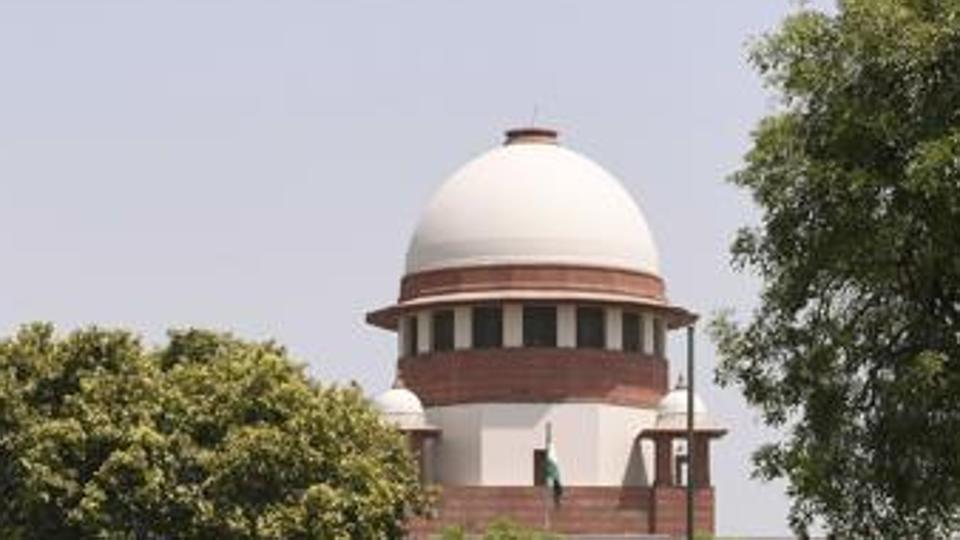
On the second straight day of arguments, the five-judge Constitution bench comprising Chief Justice of India (CJI) Dhananjaya Y Chandrachud and the four most senior judges of the Supreme Court – justices Sanjay Kishan Kaul, Sanjiv Khanna, BR Gavai and Surya Kant -- pondered over the argument that Article 370 became a permanent feature of the Constitution of India on the adoption of a separate constitution for J&K on January 26, 1957.
They were confronted with the submission by senior advocate Kapil Sibal, appearing for National Conference leader Mohammad Akbar Lone. Sibal said that Article 370 is a permanent provision that was initially kept as “temporary” by the makers of Indian Constitution in 1950, who left its inclusion to the Constituent Assembly of J&K. In January 1957, the constitution of J&K came into force, and Article 370 was retained by it. With the adoption of Constitution, the constituent assembly of J&K was dissolved, and with that, Article 370 assumed permanence in the Indian Constitution, Sibal said.
The senior advocate added that the Constituent Assembly of J&K was aware of the task entrusted to it under Article 370 of the Constitution of India, and believed, on the framing of the constitution for the state, the duty cast upon it had been fulfilled. “As of January 26, 1957, Article 370 assumed permanence. On the dissolution of the Constituent Assembly, there was no authority under Article 370 that could give any recommendation for the purpose of amending or abrogating Article 370.”
He argued that the intention behind this procedure was to give power to the citizens of the state of Jammu & Kashmir to decide whether and to what extent they wanted to integrate in India. “Central to any amendment is the will of the people and the Constituent Assembly of J&K was given the authority to abrogate Article 370 through a recommendation. Such a decision would have also represented the will of the people.”
The bench, on hearing Sibal’s submissions, replied: “For our consideration these are the two issues – whether Article 370 acquired a permanent feature in the Constitution, which is still a debatable issue. And suppose it is not, then how is it to be abrogated.”
If the provision is temporary, the act of the Centre is justified in changing the status of J&K by way of a law, as done in this case by the passing of the ‘Jammu & Kashmir Reorganisation Act, 2019. On the contrary, if the petitioner’s argument that it is permanent is accepted, any attempt to remove it will require a Constitutional amendment. This has to be passed by each House of parliament by majority of not less than two-thirds members of that House present and voting.
The Centre in its submission has said, “Article 370, in its previous form, existed merely to temporarily manage the situation and ensure that a wider time frame is provided to complete this process of further integration and uniformity qua J&K. The transitory/temporary provisions under Article 370 were framed with limited purpose, having a limited life and were to be kept on the books till the constitutional parity with other units of the Union of India is decided to be achieved.”
What was done by Parliament in August 2019, however, was completely illegal, Sibal said. “The will of the people of J&K cannot be subsumed by members of Parliament who represent the will of the people of India. Any such act is outside the very scheme and embedded contours of Article 370 and therefore per se unconstitutional,” he added.
Describing the abrogation of Article 370 as a “political act to achieve a political purpose de hors constitutional provisions”, he said it was achieved by dissolving the state legislature in J&K, imposing President’s Rule, and arrogating the powers of the Constituent Assembly. This, Sibal argued, was a procedure unknown to law. “If Parliament can do this, then forget about this case. I should be more concerned about the future.”
The bench, however, kept pondering the issue as it asked Sibal: “In 2019, if President seeks to modify Article 370, question is, you say it can’t be done, but there must be a way to do it?”
Sibal refused to suggest how it could be done, remarking, “I do not have to give a helping hand to my colleagues how it is to be done. They believed it could have been done this way. If there is some other way, they had to decide. I only say this was a political act and to achieve it, the constitutional process was circumvented.”
The bench has now posted the matter for hearing on August 8.
The hearing of the case is expected to continue through the entire month as the petitioners alone have sought 60 hours to complete their submissions. After Sibal, other legal stalwarts such as Gopal Subramanium, Rajeev Dhavan, Dushyant Dave, Raju Ramachandran among others will be arguing for the petitioners. For the Centre, Attorney general R Venkatramani will lead arguments followed by solicitor general Tushar Mehta.


