
 E-Paper



SC seeks report on Cauvery water supply to Tamil Nadu
The bench was hearing an application moved by the Tamil Nadu government for a direction to the Karnataka government to release 24,000 cusecs per day of river water from its reservoirs

 Prefer HTon Google


The Supreme Court on Friday sought a report from the Cauvery Water Management Authority (CWMA) to examine whether the Karnataka government has complied with the authority’s directive on releasing 10,000 cusecs (cubic feet per second) per day of Cauvery river water to Tamil Nadu between August 12 and August 26.
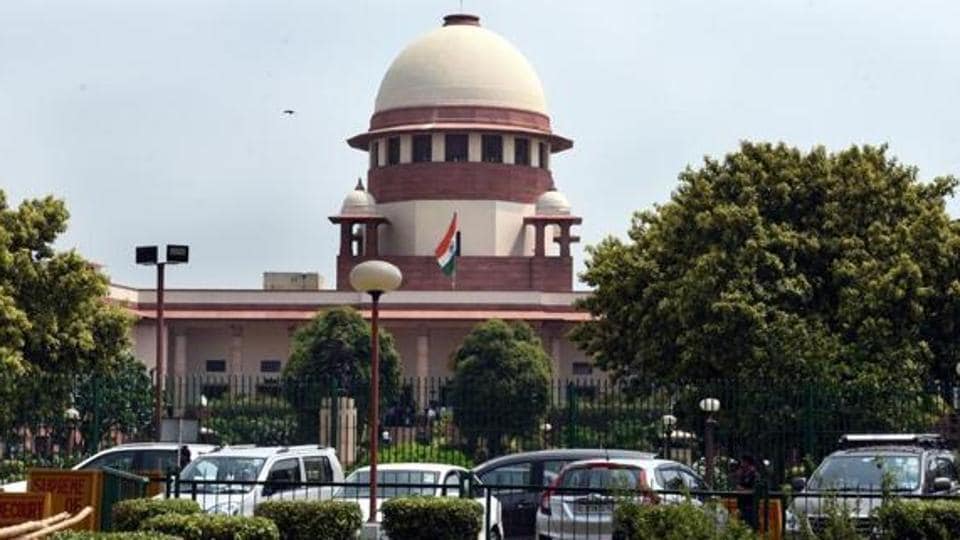
“We don’t possess expertise in these matters,” a bench, led by justice Bhushan R Gavai said while asking the central government to communicate its directive to CWMA for submitting the report by September 1 when the matter will be heard next.
“It is appropriate for the CWMA to submit a report on whether the water as per its order has been discharged or not. Karnataka submits that as a matter of fact, the orders passed by CWMA are adverse to the interest of Karnataka and that it has filed an application for review of the order passed on August 11. On the contrary, Tamil Nadu claims that water allotted is much less and that they have requested the authority to enhance the quantity,” the bench, which also included justices PS Narasimha and PK Mishra, recorded in its order.
Also Read: TN plea regarding Cauvery is not maintainable: Siddaramaiah
The bench was hearing an application moved by the Tamil Nadu government for a direction to the Karnataka government to release 24,000 cusecs per day of river water from its reservoirs.
The court, during the brief hearing, did not accede to the Tamil Nadu government’s oral request to issue an interim order to the Karnataka government for continuing to release at least 10,000 cusecs of water every day after the Centre informed the bench that a meeting of the Cauvery Water Regulation Committee (CWRC) is scheduled for August 28.
Additional solicitor general Aishwarya Bhati, appearing for the Centre, informed the bench that an interim arrangement on the release of water for the next 15 days will be taken up in the next CWRC meeting.
The matter will then move to the CWMA, which is a statutory body constituted for implementation of the decision of the Cauvery Water Disputes Tribunal.
Recording the ASG’s statement, the bench deferred the hearing to September 1 even as it observed that both the states should first approach the regulatory authority for meeting their requirement of Cauvery water.
“Why don’t you go to the authority? They have experts. We don’t possess any expertise on these matters. If there is non-compliance, bring it to the notice of the authority...before us, it is only your words against their words,” it told the senior counsel appearing for both sides.
Senior counsel Mukul Rohatgi and PS Wilson appeared for the Tamil Nadu government while senior lawyer Shyam Divan represented the Karnataka government.
While Divan argued that cutbacks in the water supply are inevitable in a distress monsoon year, Rohatgi claimed that there is a huge shortfall even after reducing the shortfall in rain received this year.
Rohatgi added that CWMA unreasonably reduced the water quantity from 15,000 cusecs per day to 10,000 cusecs per day by its order on August 11 and that the standing crops in Tami Nadu are getting badly affected due to lack of water. Responding, Divan said that they have sought the review of the August 11 order because even 10,000 cusecs per day is too much for Karnataka to share.
On Thursday, the Siddaramaiah-government filed an affidavit to oppose the Tamil Nadu government’s plea for release of 24,000 cusecs per day of Cauvery river water from its reservoirs.
Terming the Stalin- government’s application “wholly misconceived” since the state suffered from a distressed water year due to the failure of south-west Monsoon, Karnataka said that the Tamil Nadu government’s demand is based on an “erroneous assumption” that this water year is a normal water year.
“During this water year the south-west Monsoon has largely failed so far, due to which, the distress condition has arisen in the Cauvery basin. Karnataka, therefore, is not obliged to and it cannot be compelled to ensure water as per the stipulated releases prescribed for the normal year,” stated the Karnataka government’s affidavit.
Maintaining that the total inflows in four reservoirs in Karnataka are lesser by 42.5% as on date, the affidavit contended, “The entire current storage plus likely inflow is not sufficient for the crops in Karnataka and for meeting the drinking water requirements of towns and villages including the megacity of Bengaluru which is the technological hub of the world. Hence, Karnataka’s reasonable needs are at serious risk.”
In its application filed last week, Tamil Nadu urged the court to direct CWMA to ensure that the directions issued to Karnataka by Cauvery Water Dispute Tribunal (CWDT) in respect of the release of water to Tamil Nadu are fully implemented and the stipulated monthly releases during the remaining period of the current water year are fully given effect to.
The plea pointed out that Tamil Nadu CM MK Stalin also wrote to Prime Minister Narendra Modi on August 4 apprising him of the growing concern amongst the farmers in the Cauvery Basin of Tamil Nadu due to the failure of Karnataka in adhering to the directions of CWMA.
The Tamil Nadu government added that in the current water year 2023-24, Karnataka released only 11.6 TMC (thousand million cubic feet) as against 40.4 TMC due at Billigundulu from 01.06.2023 to 31.07.2023 with a deficit of 28.8 TMC while Karnataka had a gross storage of 91 TMC in its 4 major reservoirs against the full capacity of 114.6 TMC.
11,000 cusecs flow for a day amounts to 1 TMC, which is around 28 billion litres of water.
The Cauvery water sharing is a long dispute between the two southern states- Karnataka and Tamil Nadu. The conflict traces its roots to two agreements in 1892 and 1924 between the Madras Presidency and Kingdom of Mysore.
In June 1990, the Union government established the CWDT to address disagreements concerning water sharing capacities among Tamil Nadu, Kerala, Karnataka and Puducherry. By a February 2018 ruling, the Supreme Court issued directions on the water sharing between Tamil Nadu and Karnataka. Karnataka is supposed to make available 177.25 TMC of water to Tamil Nadu in a ‘normal’ water year. Later that year, the Centre constituted CWRC and CWMA to give effect to the decision of CWDT, as modified by the Supreme Court in its February 2018 ruling. These bodies comprise representatives of the central government and the four party states.
According to the ruling, Karnataka has to make available a total of 123.14 TMC from June to September, a period when the Cauvery issue gets flared up as the monsoon yields lower rainfall.



