Chief minister Siddaramaiah on Friday firmly refused to relax the October 7 deadline for the completion of the ongoing socio-educational survey.
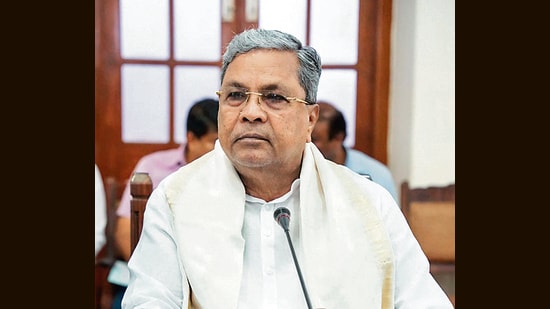
“The deadline will not be extended under any circumstances,” Siddaramaiah told senior officials while addressing a video conference. The survey is intended to record the social and educational profile of over 14.3 million families across the state, out of which 27.6 million households were surveyed in the first week, according to officials. It is popularly referred to as the “caste survey”.
“You must achieve a daily progress rate of at least 10% to meet the target,” he said, adding that technical glitches reported in the survey’s initial stages had “almost been sorted out”.
With nearly 500 million families falling within the Greater Bengaluru Authority’s ambit, the capital presents a particularly daunting challenge, said Siddaramaiah. Enumeration in the capital began only on Thursday.
““Every single family in the state must be surveyed. We must ensure no household is missed,” he said.
The chief minister added that the payments for over 120,000 school teachers mobilised as enumerators had already been disbursed to their accounts. “They must fulfil this responsibility sincerely,” he said, warning that “legal action will be taken against any negligence.”
The state has also authorized the establishment of survey centres in schools in hilly areas, enabling families to participate more easily. The government also wants to encourage the use of online submissions. Enumerators have been instructed to return to households that were locked during earlier attempts. The chief minister directed officials to assign IT staff from other departments to handle technical problems on a hands-on basis, instead of relying on centralised support. Moreover, each taluk will appoint a nodal officer to review progress alongside regional commissioners. “This survey involves multiple departments,” Siddaramaiah said, urging officials to coordinate more closely.
Meanwhile, members of the Valmiki community gathered in Bengaluru to stage a protest against the recognition of the Kuruba community as a Scheduled Tribe (ST), reflecting fears of the Kurubas’ inclusion acting as a catalyst to erode quota benefits for other communities long established as ST.
{{/usCountry}}Meanwhile, members of the Valmiki community gathered in Bengaluru to stage a protest against the recognition of the Kuruba community as a Scheduled Tribe (ST), reflecting fears of the Kurubas’ inclusion acting as a catalyst to erode quota benefits for other communities long established as ST.
{{/usCountry}}“We have fought for our rights for generations, and this move threatens to undo our progress,” said a representative of a Valmiki association present at the protest. The community’s leaders argue that the benefits of reservation -- in education, employment, and welfare -- were already contested, and that expanding the list would place further strain on those who have depended on it for decades.
The Kuruba community, traditionally associated with pastoral and shepherding occupations, has pressed for Scheduled Tribe recognition for years. Some political factions have supported this demand, but it has been consistently opposed by groups like the Valmikis.