World Health Organisation director general Tedros Ghebreyesus on Saturday hailed Gujarat as the future hub of traditional medicine.
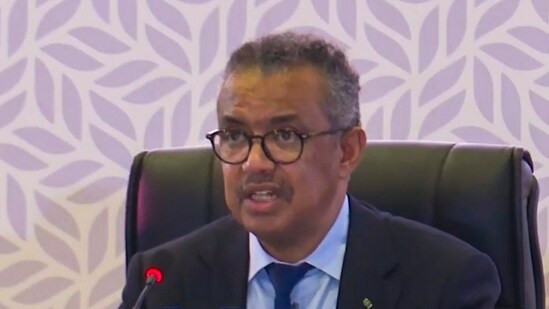
"I believe that a few years from now Gujarat will be the mecca of traditional medicine. It is unique and it is very important," Ghebreyesus told PTI at the G20 health ministers' meeting in Gandhinagar.Earlier in the day, Union health minister Mansukh Mandaviya unveiled the ‘Global Initiative on Digital Health, a WHO Managed Network’ at the Mahatma Mandir convention, in the presence of Ghebreyesus.
The WHO chief said the GIDH is an integrative step that fosters equity in healthcare by converging efforts and best practices.
"It will amplify our efforts with the incorporation of tools, such as AI while giving due importance to ethics, policy, and governance. GIDH will ensure that no one is left behind," PTI quoted Ghebreyesus as saying.ALSO READ: WHO director lauds India for digital health initiative with Ayushman Bharat
The WHO DG said the global health body is committed to use the latest technologies for health, adding that the power of digital health technologies like telemedicine and AI has had a significant impact across the world over the last two decades.
“The potential and successful implementation of technology during the times of severe healthcare disruptions was evident during COVID-19 in the form of telemedicine usage”, he added.ALSO READ: ‘My good friend Tulsi bhai’: Here's how PM Modi greeted this UN agency chief
'Covid-19 still a global threat': WHO chief
{{/usCountry}}“The potential and successful implementation of technology during the times of severe healthcare disruptions was evident during COVID-19 in the form of telemedicine usage”, he added.ALSO READ: ‘My good friend Tulsi bhai’: Here's how PM Modi greeted this UN agency chief
'Covid-19 still a global threat': WHO chief
{{/usCountry}}On Friday, Ghebreyesus said that although Covid-19 is no longer a global health emergency, it is still a ‘global health threat’ and a new variant is already under the scanner.
“Although COVID-19 is no longer a global health emergency, it remains a global health threat. WHO has recently classified a new variant with a large number of mutations. BA.2.86 variant is under monitoring at present, highlighting once again the need for all countries to maintain surveillance,” he said.
Ghebreyesus urged all the countries to speed up the process of finalising the ‘Pandemic Accord’ so that it can be adopted in the World Health Assembly scheduled to be held next year.
“COVID-19 has taught us all an important lesson that when health is at risk everything is at risk. The world is learning the painful lessons of the pandemic,” he added.