Delhi water minister Atishi has asked the chief secretary to address the sewer overflow issues across Delhi, directing him to oversee and resolve the situation and take strict action against negligent officers responsible for the crisis.
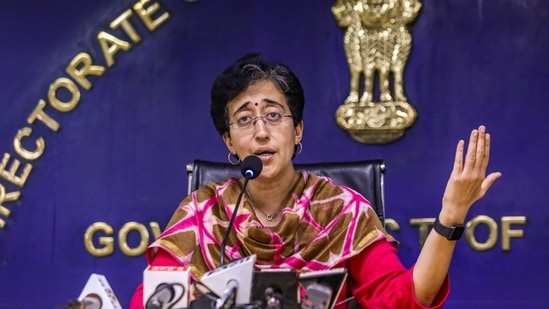
“In many parts of Delhi, sewer water is contaminating drinking water. This could become a serious public health crisis if not attended to immediately. I have taken multiple review meetings of Delhi Jal Board along with concerned local are representatives and DJB officers,” Atishi writes.
Atishi mentioned that she has held several review meetings with the Delhi Jal Board, local area representatives, and DJB officers. She said specific complaints, including their locations, were forwarded to the relevant officials during these meetings.
She alleged that the impasse is caused by poor coordination among various departments with the urban development department, Delhi Jal Board, and finance department engaging in a blame game rather than resolving the issue. As a result, the people of Delhi are suffering.
‘Chief secretary is the head of the bureaucracy’
“The chief secretary is the head of the bureaucracy. As the head, it is your responsibility to sort and settle issues so that the people do not face the brunt of the laxity of government officials. I have on numerous occasions verbally and in writing given instructions to you to resolve this issue before it becomes unmanageable, however, I am shocked to note that no action has been taken on your part. This is not acceptable,” the letter reads.
{{/usCountry}}“The chief secretary is the head of the bureaucracy. As the head, it is your responsibility to sort and settle issues so that the people do not face the brunt of the laxity of government officials. I have on numerous occasions verbally and in writing given instructions to you to resolve this issue before it becomes unmanageable, however, I am shocked to note that no action has been taken on your part. This is not acceptable,” the letter reads.
{{/usCountry}}Atishi also reported numerous complaints from areas such as Patparganj Village, Shashi Garden, Khichripur, Subhash Park, Raj Nagar Part 2, Satya Niketan, and RK Puram about sewer overflow.
She highlighted that these pressing issues are escalating, with sewers overflowing in multiple locations and causing significant inconvenience for local residents.
According to an official report, water treatment plants (WTPs) in the city supply around 40 to 47 million gallons a day (mgd) of potable water above their installed capacity, which, inadvertently, may be affecting the quality of potable water supplied to residents.
A part of a government report submitted on July 29 by chief secretary Naresh Kumar the Delhi government underlines the urgent need to increase the capacity of water treatment plants.