
 E-Paper



This village in UP's Barabanki has close links to Iran Revolution of 1979
Some residents of this village believe that the reason that Iran allowed Indian vessels to pass through Hormuz was India's cultural ties with Iran.

 Prefer HTon Google


A small Indian village in Uttar Pradesh's Barabanki district holds a distinction of having historic ties to Iran. This village is an evidence of India's civilisational ties and a spiritual and cultural connection with Iran. This village, named Kintoor, is the ancestral home of Ayatollah Ruhollah Khomeini who led Iran's revolution of 1979 that toppled the monarchy led by the Pahlavi dynasty. Track updates on Iran US war
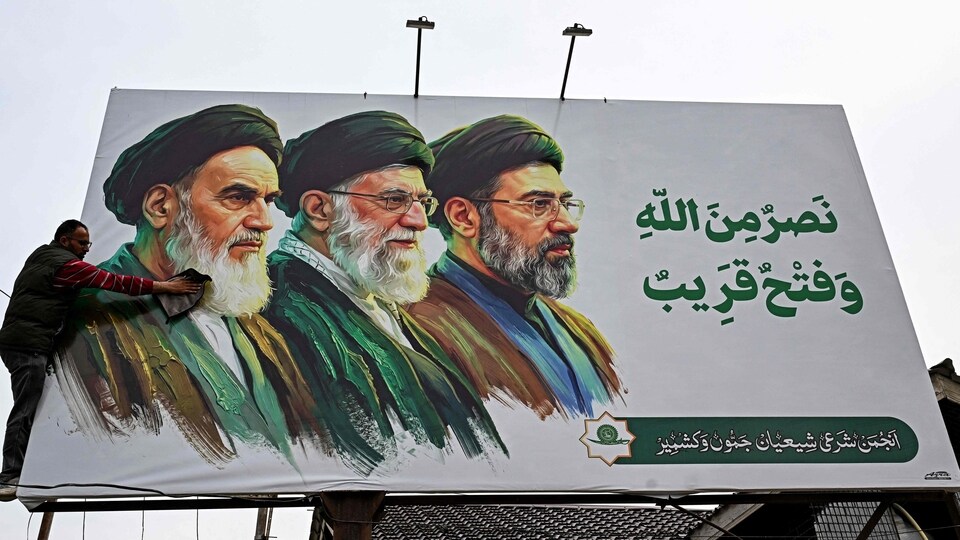
Syed Ahmad Musavi Hindi, grandfather of Ayatollah Khomenei, was born in Kintoor village in 1790, but later migrated to Iran's Markaz province in a village called Khomein. Musavi Hindi settled in Khomein and the family lineage subsequently flourished there, according to a report by news agency ANI.
Also read: Iran Supreme Leader Mojtaba Khamenei has severe, disfiguring wounds: Report
Musavi Hindi retained the suffix ‘Hindi’ in his name to honor his Indian heritage even after he settled in Iran.
Why did Syed Ahmad Musavi Hindi move to Iran?
According to reports Syed Ahmad Musavi Hindi was 40-years-old when he travelled to Iran via Iraq in 1830 with the Nawab of Awadh. This was a time when British rule was tightening its grip over undivided India. Probably weary of the colonial regime, Musavi Hindi settled permanently in Iran's Khomein village where his family grew to become highly influential in both religious and social spheres.
Also read: Iran Supreme Leader Mojtaba Khamenei has severe, disfiguring wounds: Report
Syed Ahmad Musavi Hindi's son, Ayatollah Mustafa Hindi, became a renowned scholar of Islamic theology. His son, Ruhollah, was born in 1902, who later rose to fame and was known as 'Ayatollah Khomenei' or 'Imam Khomenei.' He eventually overthrew the Pahlavi dynasty, a move that forever changed the political landscape of the Middle East.
Cultural ties between India and Iran
The spiritual and lineage-based connection between India and Iran remains a profound, living history for the residents of Barabanki.
“Ayatollah Khamenei has a connection to the whole of India, and he was the supreme leader of the Shia community. We have learnt the way of life from him. Ayatollah Khamenei does not have a direct connection to Kintoor, but Ruhollah Khomeini, who led the Islamic revolution, his grandfather hailed from here. He migrated to Iran and resided in Khomein. The British regime did not want him to return to India. Ruhollah Khomeini's father passed away when he was 5 years old, and he was raised by his grandfather,” Dr Rehan Kazmi, a resident of Rasoolpur in Barabanki, told ANI.
Another resident, Syed Nihar Ahmad Kazmi, belives that it was this cultural connection between India and Iran that Iran allowed Indians vessels to pass through the Strait of Hormuz amid the West Asia conflict and blockade of trade routes.
"Ayatollah Ruhollah Khomeini has a direct connection to Kintoor. We have heard that Ayatollah Khamenei was a disciple of Ruhollah Khomeini. There was discrimination against women and alcoholism, so they led the revolution. India and Iran have had an old connection. They had to block the route because of the circumstances, but still they allowed the Indian-flagged ships to pass," Kazmi was quoted as saying.
Iran and the West Asia war
The Middle East plunged into crisis after US-Israel joint strikes targeted Iran on February 28 and Iran retaliated by attacking US facilities in the region. Iran's Supreme Leader Ayatollah Ali Khamenei, a desciple of Ruhollah Khomeini, was assassinated in one of the first strikes while he was in his office. Protests broke out in several parts of the world and many Indian states such as Uttar Pradesh and Jammu and Kashmir after Khamenei's death.
Even as US and Iran paused the fighting after six weeks and agreed for mediated talks in Pakistan, Khamenei's killing was one of the most devastating outcomes of the war.
With inputs from ANI


