Prime Minister Narendra Modi emphasised India’s concerns at his meeting with Chinese President Xi Jinping and made it clear that both sides should show sensitivity to each other’s “core” issues, the external affairs ministry said on Tuesday against the backdrop of efforts to normalise bilateral ties.
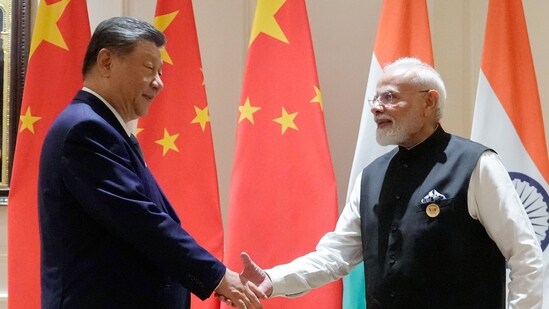
Modi and Xi met on the margins of the Brics Summit in New Delhi on September 12 when the Chinese leader travelled to India for the first time in seven years. The Indian side emphasised that peace and tranquillity in the border areas would be the “essential basis” for developing ties with China as both leaders welcomed “steady progress” in bilateral relations.
“Prime Minister referred to Indian concerns as well, and underlined those, that both sides should show sensitivity to each other's core concerns and be guided by three mutuals — mutual respect, mutual interest and mutual sensitivity,” external affairs ministry spokesperson Randhir Jaiswal told a regular media briefing. He did not go into details regarding India’s concerns.
Deep Dive
What are the three mutuals that Prime Minister Modi emphasized for India-China ties?
How does India intend to address its border concerns with China after the BRICS meeting?
Why is the meeting between Modi and Xi considered significant in the context of India-China relations?
Jaiswal was responding to a question on the opposition Congress party’s contention that the Indian side has weakened its position on border transgressions by China while deepening economic dependence on Beijing.
{{/usCountry}}Jaiswal was responding to a question on the opposition Congress party’s contention that the Indian side has weakened its position on border transgressions by China while deepening economic dependence on Beijing.
{{/usCountry}}The spokesperson acknowledged that issues such as Taiwan and Tibet figured in the discussions between the two leaders, as noted in a Chinese readout of the meeting.
The Chinese readout said that India’s position on issues related to Taiwan and Tibet “remain unchanged”, and that the Indian side “will not allow any force to engage in anti-China activities on its territories”. People familiar with the matter said both sides raised their concerns during the talks, with India taking up the need to maintain peace and tranquillity along the border.
Modi and Xi met against the backdrop of fresh tensions between Indian and Chinese troops in the remote Taksing region of Arunachal Pradesh, with reports of face-offs in July and August.
The talks also offered an opportunity to take stock of several rounds of dialogue between the Special Representatives on the border issue, the Working Mechanism for Consultation and Coordination (WMCC), and senior military commanders. India and China held the first round of talks between military commanders in the eastern sector in Arunachal Pradesh on September 6 and 7.
Jaiswal was also asked about Chinese foreign minister Wang Yi’s remarks that Modi and Xi had reached an “important consensus” that India and China should be partners. He replied that the Indian side had already issued a detailed readout on the discussions.
At his meeting with Xi, Modi emphasised that peace and tranquillity in the border areas “remains an essential basis for the continued development of bilateral relations”, and that both sides should “observe existing agreements and understandings on border-related issues”.
The two leaders “expressed commitment to a fair, reasonable, and mutually acceptable resolution of the boundary question proceeding from the political perspective of their overall bilateral relations”, the external affairs ministry said.
Modi and Xi welcomed the “steady progress” in India-China relations since their last meeting at Tianjin in August 2025, and said differences should not become disputes between the two countries.
Besides the border issue, India has a range of concerns, especially in the economic sphere, including China’s visa curbs, export restrictions on critical machinery and commodities, and the imbalance in two-way trade.
Xi said his two meetings with Modi since 2024, when the two sides reached an understanding on the standoff in Ladakh, have guided bilateral ties from a “restart” to a “further enhancement”. Xi listed four points for promoting bilateral ties — China and India are partners, not rivals; both sides should focus on development, strengthening friendly exchanges and mutually beneficial cooperation; they should commit to parallel development and mutual promotion of bilateral relations and border issues; and benefit the world through inclusive multilateral cooperation.