After the Madras high court’s intervention, transport employee unions’ strike, which entered its second day on Wednesday, was temporarily called off. The court said the state and the trade unions must reach a solution so that people do not face inconvenience ahead of Pongal, the biggest festival in the state.
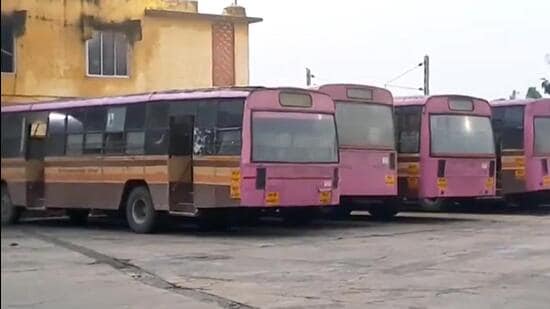
The strike has been called off until January 19 after which the next round of conciliation talks is scheduled with the DMK government. Except the trade unions affiliated with the DMK, other trade unions participated in the strike demanding better pay and allowances for pensioners.
“The Madras high court has ordered transport unions to temporarily withdraw their strike. After the meeting, the final decision will be taken. For the past two days, there was no problem because of the strike,” said Tamil Nadu transport minister SS Sivashankar.
High court chief justice Sanjay V Gangapurwala passed the order on a public interest litigation filed by an individual stating that state government buses not plying was causing a major inconvenience for the public. “Even additional public transport facilities would be required to be provided by the state and the transport corporations,” the chief justice said. “It is a period where the persons would be travelling throughout the state to visit their villages and native places…. The workers/employees may have a right to go on strike as per the provisions of the Industrial Disputes Act. The legality of the said strike certainly would be decided at the appropriate time. However, it is also a matter of fact that the transport service is the essential public utility service. At the time the people of the State are celebrating one of the biggest festivals, the citizens of the state would be held to ransom and the movement of the society would come to a standstill.”
The court said that the state and the trade unions were not reasonable towards the public. “At the same time, we also do not appreciate the stand of the state in not at all agreeing for any aspect of the matter,” the court said. “Even when a suggestion was given to the learned Additional Advocate General that whether the state would pay ad hoc dearness allowance ₹2,000 each to the retired pensioner (we are told there are 92,000 retired pensioners) and in case, the State succeeds, the said amount can be adjusted in the payment of pension and the same may be paid without prejudice to the rights and contentions of the state, the learned Additional Advocate General did not agree for the same.”
{{/usCountry}}The court said that the state and the trade unions were not reasonable towards the public. “At the same time, we also do not appreciate the stand of the state in not at all agreeing for any aspect of the matter,” the court said. “Even when a suggestion was given to the learned Additional Advocate General that whether the state would pay ad hoc dearness allowance ₹2,000 each to the retired pensioner (we are told there are 92,000 retired pensioners) and in case, the State succeeds, the said amount can be adjusted in the payment of pension and the same may be paid without prejudice to the rights and contentions of the state, the learned Additional Advocate General did not agree for the same.”
{{/usCountry}}Ahead of the order, the Centre of Indian Trade Union (CITU) state president A Soundararajan said, “We are doing the same thing we did earlier even when the DMK was in the opposition. Where is the politics here?”
The court also directed the corporation to permit the striking workers to report to duty and not to take actions against those involved in the strike. “To provide the facility of transport service throughout the state is the responsibility of the state. In light of that, the state would be within its right to take all possible legitimate steps as may be permissible under law in case the illegal activities are resorted to by the employees,” the court said.