The Communist Party of India (Maoist) on Friday confirmed the death of its senior leader and central committee member Akkiraju Haragopal, alias Rama Krishna (RK), due to kidney-related ailments.
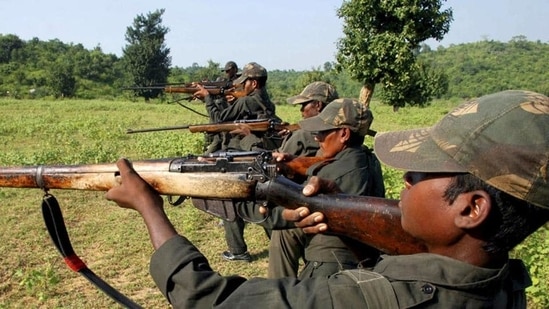
A statement released by Maoist party central committee official spokesman, Abhay, said Haragopal (65) died at around 6am on Thursday. Though he did not mention any location, police in Chhattisgarh claimed that Haragopal died in the jungles of South Bastar, and that his last rites were performed on Thursday evening.
“He suddenly developed complications in functioning of kidneys. Though he was immediately kept on dialysis, the party could not save him as he had suffered from multiple health issues,” the party spokesman said.
“ We got information that Haragopal died in the forests of South Bastar... In last couple of years two other central committee members, Ramanana and Haribhushan, have also died due to illness in the forests of South Bastar. This is an outcome of the chocking of supply network and safe corridors for Maoist cadres by opening up of forward base camps in erstwhile Maoist stronghold areas,” said inspector general of police , Bastar range , Sunderaj P.
Maoism, once described by former Prime Minister Manmohan Singh as India’s gravest internal security threat, has its origins in the teachings of the Mao Zedong, the first premier of the People’s Republic of China. While the Maoists had separate organisations that have existed for several decades, primarily the PWG(People’s War Group) and the MCC(Maoist Communist Centre), the two wings came together to form the CPI(Maoist) in 2004. The organisation is now a banned organisation by the Government of India, and carry the stated objective of overthrowing the state through revolution. The Maoists believe that the system of governance in India is “imperialist”, and want “revolution” through the use of arms, attacking state security wings. The organisation now operates chiefly in the forests of Chhattisgarh, Odisha, Maharashtra and Madhya Pradesh, and varying estimates put the number of fighting cadre in and around ten thousand cadre, in a structure that mirrors military formations. The highest cadre are the Politburo and the Central Committee, who stay in the forests for years on end, evading the forces, and attempting to widen the organisation.
Haragopal was born in Tumrugoti village of Macharla block in the Palnad area of Andhra Pradesh’s Guntur district in 1956. He did his postgraduation, and later worked as a teacher. He was attracted towards revolutionary politics while he was working as a teacher in 1978, and became a member of CPI (Marxist-Leninist), People’s War Group in 1982. He went underground and operated from Nallamala forests adjoining Guntur, Prakasam and Kurnool district and later became the secretary of CPI (ML) Guntur district committee in 1986.
{{/usCountry}}Haragopal was born in Tumrugoti village of Macharla block in the Palnad area of Andhra Pradesh’s Guntur district in 1956. He did his postgraduation, and later worked as a teacher. He was attracted towards revolutionary politics while he was working as a teacher in 1978, and became a member of CPI (Marxist-Leninist), People’s War Group in 1982. He went underground and operated from Nallamala forests adjoining Guntur, Prakasam and Kurnool district and later became the secretary of CPI (ML) Guntur district committee in 1986.
{{/usCountry}}In 1992, he got elected as the member of the party’s state committee and led the South Telangana movement from Nallamala forests for about four years. In 2000, he was elevated as the Andhra Pradesh state committee secretary of the party and in January 2001, he was nominated to the party’s central committee.
In 2004, Haragopal, also known in the party with several other names including Saketh, Madhu and Srinivas, led a delegation of the CPI (ML) to hold discussion with then government of combined Andhra Pradesh.
“He put forth the people’s demands before the government and held discussions with the government representatives effectively. Through these dialogues, Haragopal could successfully take the party’s agenda among the people all over the country,” the spokesman said in the statement.
After the failure of talks with the government, Haragopal went back into the forests to lead the movement of the party, which had by then converted to CPI (Maoist) with the merger of the CPI (ML) People’s War with the Maoist Communist Centre of India (MCCI).
Following repression from the police forces in Andhra Pradesh, Haragopal was shifted to Andhra-Odisha border. He worked as the party’s Andhra Pradesh Odisha Border (AOB) committee secretary till 2014, and then moved to the Bijapur area, from where he was guiding the party’s AOB committee.
“In 2019, Haragopal was nominated to the CPI (Maoist) party’s politburo. Since then, he had been effectively handling the party activities, protecting the party and the cadre from the severe repression from the government. In the process, he had suffered health complications that ultimately led to his demise,” the spokesman added.
Haragopal was married to Kandula Nirmala, alias Sirisha alias Padma, also a Maoist party activist as a division committee member. His son Munna was also in the movement, and was killed in an encounter with the police at Ramaguda. Sirisha, who was later arrested by the police and released on bail, has been staying at Alakurapadu village of Tanguturu block in Prakasam district.
Haragopal was named in more than 80 cases, including the attack on Telugu Desam Party president and former Andhra Pradesh chief minister N Chandrababu Naidu in October 2003, besides the killing of over 40 jawans at Balimela reservoir in Odisha in late 2000.
“ Hargopal’s death would certainty deplete the strength of the Naxal movement in Bastar.. He was one of the main ideologue of Maoists movement in this part. Now a very few senior cadres are left here and I believe security forces would make an all-out attempt to soon bring an end to five decade long mindless violence by Naxals in Bastar region,” said Sunderaj P.
Sirisha said her husband had dedicated his life to the people. “He was a great warrior in the people’s movement and a selfless revolutionary. He did not lose his heart even when our son sacrificed his life for the sake of the people,” she told the reporters.
Notably , Ravula Srinivas alias Ramanna (56), who was Central Committee member of CPI ( Maoist ) and was also the secretary of the Dandakaranya Special Zonal Committee (DKSZC) -- died of heart attack in 2019 in Bastar jungles. Similarly, another CC member and Telangana state committee secretary Yapa Narayana alias Haribhushan (59) due to Covid-19 in June this year.
( With inputs from Ritesh Mishra )