Patients with symptoms of severe acute respiratory infection (SARI) symptoms should not be moved to non-Covid spaces in hospitals even if their initial test results for the coronavirus disease are negative, experts treating Covid-19 patients said in their first meeting to present and discuss specific cases and the learnings from them.
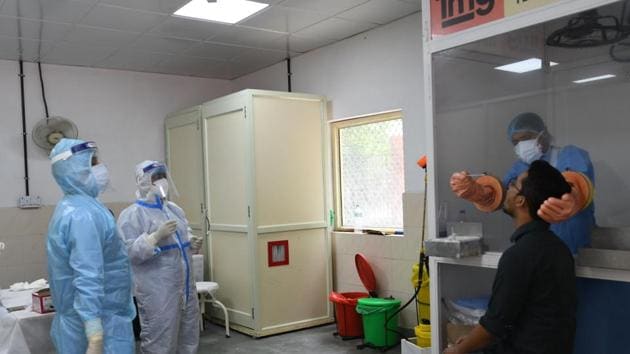
“We have to give a lot of importance to the clinico-radiological findings of the patient, in spite of the test returning negative. The tests have also to be interpreted in the light of other findings. When index of suspicion is high, the patient should not be transferred to an area where there is risk of spread of disease to other patients. We must have an area in hospitals where such patients can be put till such time there Covid-19 status is confirmed,” said Dr S Rajeshwari, department of anesthesiology, AIIMS.
The comments came during the first session of national Clinical Grands Rounds (CGR) on Covid-19 diagnosis. CGR is a globally accepted practice where doctors discuss specific cases. The first session focused on patients who test negative despite showing symptoms of Covid-19 and who, sometimes, test positive in later tests.
The All India Institute of Medical Sciences (AIIMS), New Delhi, in collaboration with Niti Aayog and Union ministry of health and family welfare, launched the CGR on Covid-19.
{{/usCountry}}The All India Institute of Medical Sciences (AIIMS), New Delhi, in collaboration with Niti Aayog and Union ministry of health and family welfare, launched the CGR on Covid-19.
{{/usCountry}}The first session that took place on Wednesday was on disease diagnosis. Experts who presented cases agreed that apart from test results that can return negative in some rare cases, reports of a chest CT scan or an X-ray should be considered to watch for classic Covid-19 signs that affect the lungs, especially the lower lobe.
“There will be separate discussion topics in coming weeks that will deal with issues such as neurological or gastrointestinal manifestations, and Covid in pregnant women,” said Dr Randeep Guleria, director, AIIMS.
Each case discussion will be followed by a short presentation on clinically relevant topics in managing Covid-19.
“Our ultimate aim is to devise a strategy that brings down the number of deaths due to Covid-19 to less than 1% (of cases) as ultimately it is the number of deaths that’s going to matter and not the number of cases,” said Dr Guleria.