
 E-Paper



2 years after abrogation of Art 370, louder calls for statehood
It is significant for Ladakh to have demanded restoration of statehood given its long quest for UT status that had finally materialised in 2019


NEW DELHI: Two years after the bifurcation of Jammu and Kashmir into two separate Union territories of Jammu and Kashmir and Ladakh, there is a demand growing there for the restoration of statehood. It is significant for Ladakh to have demanded this given its long quest for UT status that had finally materialised in 2019.
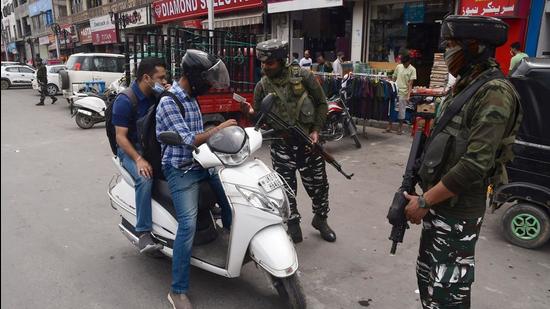
The reorganisation of the state on August 5, 2019, included the reading down of articles 370 and 35(A) that gave the erstwhile state its special status and the mandate to define its domicile rules that also laid down conditions for employment. The UT of Jammu and Kashmir has a legislature, but the UT of Ladakh doesn’t have one.
While there is no unanimous demand for the restoration of the special status J&K enjoyed, with only regional parties such as the National Conference and People’s Democratic Party challenging the abrogation of the articles in court, political parties are united in their demand for the restoration of statehood. Barring the Bharatiya Janata Party at the national level, all the other parties have demanded the restoration of statehood before the delimitation exercise gets over, which is mandatory for the holding of elections according to the reorganisation law.
However, the local unit of the BJP is in favour of restoring statehood even though it was at the forefront of demanding the abrogation of the articles 370 and 35 (A).
“It is a promise that the Prime Minister has made, and we want him to fulfil it. There is a concern in Jammu that even post reorganisation little has changed on the ground vis-à-vis development in the region. Then there is also the concern that taking advantage of loopholes in the law, outsiders can grab the land in Jammu as they will find the (security) situation more conducive here than in the Kashmir Valley,” said a local BJP leader on condition of anonymity.
BJP spokesperson Anil Gupta, however, said that the party is more focused on the delimitation process needed for elections. “Once a legitimate government is in place, the Union government, depending on the situation, will consider the restoration of statehood. As of today, their demand has no meaning because the PM has already assured that it will be done. The opposition parties just keep shifting the goalpost; first they did not support reorganisation and now they have problems with the delimitation,” Gupta said.
At an all party meeting on June 24, PM Narendra Modi had stressed on the need for stronger grassroots democracy and the importance of conducting elections in J&K, stating his commitment to restoring the region’s statehood, and urging mainstream leaders to participate in the ongoing delimitation exercise.
“Our priority is to strengthen grassroots democracy in J&K. Delimitation has to happen at a quick pace so that polls can happen and J&K gets an elected government that gives strength to J&K’s development trajectory,” Modi had tweeted shortly after the meeting.
But the regional satraps who raised the demand for restoration of statehood are not convinced by the Union government’s assurance.
Former MP and NC leader Hasnain Masoodi said the reorganisation and the scrapping of the special status was done “citing reasons that are far from reality”.
“Kashmir was way ahead of many states in the country on several human development indices. Second, the assurances that we were given about the changes that will take place after August 5 have not yielded results. There is only uncertainty,” he said.
Masoodi said the Union government’s claims of introducing a three-tier administrative set-up by conducting district development council elections do not compensate for the lack of elected representatives. “Most of the DDC functionaries are in protective custody and cannot even meet people,” he said.
In Ladakh where the Kargil and the Leh divisions have buried their differences over the reorganisation, the demand for statehood has stemmed from concerns that the Union government is yet to sanction a protective law such as bringing the region under Schedule VI of the Constitution to offer protection of land, jobs, environment, culture and language that existed prior to the formation of the UT.
Former BJP MP Thupstan Chhewang earlier told HT that the demand for legislature was raised because the Centre had “failed to offer protection” to the people by reserving jobs and ensuring land rights. He went on to add that both the Leh and Kargil divisions were pushing for protection under the Sixth Schedule or a separate schedule of the Constitution for safeguarding the interests of the residents of Ladakh fearing that with domicile rules not defined, land and government jobs would be available to outsiders depriving the residents, a large percentage of whom are from the Scheduled Tribes.
Last week, Chhewang who heads the Apex Committee of Peoples’ Movement of Ladakh along with Asgar Ali Karbali, the co-chair of the Kargil Democratic Alliance, pushed for complete restoration of statehood and two additional Lok Sabha seats from Ladakh.
For its part, the Union government has underlined that the process of restoration of statehood would follow delimitation and elections. “The political parties have been explicitly told that there will be no change in the process. They are needlessly trying to stoke fears that delimitation will change the demography of the region. The Act says seven seats are to be added to take the total strength of the assembly from 107 to114. It will be done by the delimitation commission in a scientific way, keeping in mind the size of the constituency and the population. But the regional parties first boycotted it, then spread misgivings,” said a senior government official not wishing to be identified.


