New Delhi:
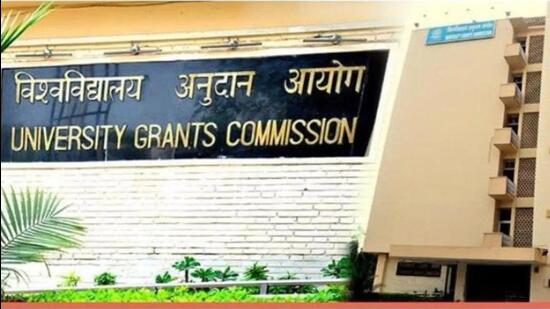
The University Grants Commission (UGC) released draft model curricula for undergraduate Political Science courses that include a core or compulsory course on “Tradition of Political Thinking in Bharat”, a discipline-specific elective on “Rajadharma Tradition in India”, and general electives on Vinayak Damodar Savarkar, Deen Dayal Upadhyaya, B.R. Ambedkar, Mahatma Gandhi, Basaveshwar and Thiruvalluvar.
UGC secretary Manish Joshi said in a notice on Wednesday that the body has developed draft Learning Outcomes based Curriculum Framework (LOCF) for nine subjects so far. These include anthropology, chemistry, commerce, economics, geography, home science, mathematics, physical education and political science.
“The draft LOCF will serve as a model curriculum to promote flexibility and innovation in programme design and syllabi development,” Joshi added, requesting stakeholders feedback on the draft LOCFs on or before September 20.
LOCFs of different subjects will serve as guiding documents for universities and colleges for their curriculum revision in line with National Education Policy (NEP) 2020. Under LOCF, every discipline contains three categories of courses of study: Discipline Specific Core (DSCs), Discipline Specific Electives (DSEs) and Generic Electives (GEs). DSC courses are compulsory credits within a student’s chosen discipline, DSEs are optional credits within the same or related disciplines, and GEs are courses outside the core discipline that provide multidisciplinary or interdisciplinary exposure.
Also read: UGC releases draft regulations for promotion of equity in universities, colleges
{{/usCountry}}Also read: UGC releases draft regulations for promotion of equity in universities, colleges
{{/usCountry}}UGC’s draft LOCF for political science proposes 20 four-credit DSC courses, including “Tradition of Political Thinking in Bharat”, which introduces students to Vedic traditions, Jain and Buddhist literature, political ideas in the Upanishads, Ramayana, Mahabharata, and Thirukkural, as well as the works of Bhasa, Kalidasa, and Kalhana. Other DSC courses cover themes such as India’s independence movement, the Constitution, public policy, and the Panchayati Raj system.
Among the 15 four-credit DSE courses is “Rajadharma Tradition in India”, designed to help students understand Rajadharma in the Vedas, examine its treatment in the Manusmriti and Shukraneeti, and evaluate its depiction in texts like the Ayodhyakanda of the Ramayana, the Shantiparva of the Mahabharata, and Kautilya’s Arthashastra. Additional DSE offerings include papers on political leadership, Indian administration, global politics, and perspectives on democracy.
Also Read: SC seeks replies from UGC, govt on PIL raising questions on NAAC accreditations
There are 18 GE papers of four-credits each proposed including SIX separate papers on various Indian leaders and reformers and a paper on women freedom fighters of India that analyse the contributions of women warriors and rulers in medieval Indian history.
The paper on Ambedkar examines his ideas beyond caste, covering economy, class, religion, gender, culture, politics, democracy, law, and constitutionalism, and their relevance to contemporary society.
Also Read: UGC bans open and distance learning in healthcare, allied courses from current academic year
The paper on Gandhi introduces his life, philosophy, and methods, focusing on non-violence, justice, and socio-political engagement.
The paper on Savarkar studies his “revolutionary journey”, socio-political thoughts, and role in the freedom movement and Hindutva, fostering critical engagement with nationalism and social reform.
The paper on Upadhyaya explores his philosophy of Integral Humanism and contributions to India’s political, social, and economic thought.
The paper on Lingayat social reformer Basaveshwara examines his life, philosophy, and contributions to social justice, equality, and Lingayatism. The paper on philosopher Thiruvalluvar studies the Tamil text Thirukkural and its teachings on virtue, wealth, ethics, and governance, highlighting their contemporary relevance.