The government will launch a series of residential schools for students from the scheduled tribes (STs), in view of the social discrimination faced by tribal communities.
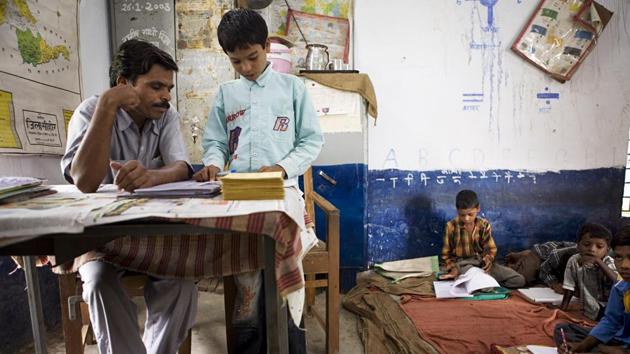
By 2022, every block with more than 50% ST population and at least 20,000 tribal persons will have an Ekalavya Model Residential School, Union finance minister Arun Jaitley said in his budget speech.
“The government is committed to providing the best quality education to the tribal children in their own environment...Economic and social advancement of hard working people of scheduled castes and scheduled tribes has received core attention of the government,” Jaitley said.
He said Ekalavya schools will be on par with Navodaya Vidyalayas (schools aimed at providing quality education to all students irrespective of their socio-economic backgrounds) in India and will have special facilities for preserving local art and culture besides providing training in sports and skill development.
The 104.2 million Indians notified as STs, constitute 8.6% of the country’s total population and 11.3% of the total rural population. The literacy rates of STs has increased from 8.53% in 1961 to 58.96% in 2011.
Despite the increase and despite the fact that the 2009 Right to Education Act makes it mandatory that all children between the ages of six and 14 be provided free and compulsory education, significant disparities exist in enrolment rates, drop-outs, across states, districts and blocks.In the case of tribals, dropout rates are still very high – 35.6% in Classes I to V; 55% in Classes I to VIII; and 70.9% in Classes I to X in 2010-11, according to the Statistics Of School Education 2010-2011.
{{/usCountry}}Despite the increase and despite the fact that the 2009 Right to Education Act makes it mandatory that all children between the ages of six and 14 be provided free and compulsory education, significant disparities exist in enrolment rates, drop-outs, across states, districts and blocks.In the case of tribals, dropout rates are still very high – 35.6% in Classes I to V; 55% in Classes I to VIII; and 70.9% in Classes I to X in 2010-11, according to the Statistics Of School Education 2010-2011.
{{/usCountry}}According to a 2014 UNICEF-sponsored South Asia regional study All Children in School by 2015, economic and socio-cultural factors are reasons behind the education deprivation for certain groups in India, especially SCs, STs and Muslims.
“Poverty levels are very high in these three groups. The India Human Development Survey shows the incidence of poverty is highest among the STs (49.6%), followed by the SCs (32.3 per cent), and then the Muslims (30.6%),” the report says.
“Even compared to scheduled castes, STs are much more backward. They cannot compete with others....not even with the other marginalized communities...so it is important to make space and create doors for them to enter the domain of democratic benefits,” says Badri Narayan, a professor and director at G.B. Pant Social Science Institute in Allahabad.