Whistleblower-turned-activist A Shankar, popularly known as ‘Savukku’ Shankar, is an “unrepentant character”, the Madras high court observed on Thursday as a two-judge bench sentenced him to six months imprisonment for contempt of court.
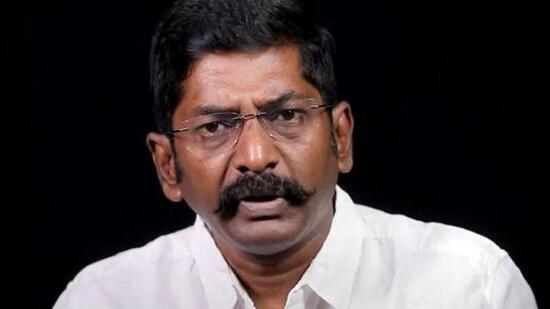
“Nowhere he expressed his regret or remorse. He did not offer any apology at all,” the Madurai bench of the Madras high court said in suo moto contempt proceedings. “On the other hand, he asserted that he was justified in making the charged statements. A reading of the charged statements would lead anyone to the conclusion that they are likely to lower the prestige and dignity of courts and judges. We, therefore, hold that the contemnor is guilty of criminal contempt.”
Shankar has been sent to the Madurai central jail for standing by his comments in a YouTube interview that, “the entire higher judiciary is riddled with corruption.” Shankar argued his own case before a bench of justice GR Swaminathan and justice B Pugalendhi.
Retired Madras high court justice K Chandru said that he was not in favour of such an order. “One could have been more magnanimous in dealing with such issues. You can’t punish anyone for mere speech,” Chandru told HT.
{{/usCountry}}Retired Madras high court justice K Chandru said that he was not in favour of such an order. “One could have been more magnanimous in dealing with such issues. You can’t punish anyone for mere speech,” Chandru told HT.
{{/usCountry}}“At least half a dozen sitting judges who called me since this evening (Thursday) expressed their shock and anguish and disapproved of the penalty imposed. I am for removing criminal contempt power. Contempt punishment will not enhance the majesty of the court. In this case, the procedure adopted is completely flawed. The least the judge could have done is to suspend the sentence pending appeal to the Supreme Court which is a statutory right.”
The bench had refused to suspend his sentence until the filing of the appeal in the top court. The court also directed the fifth respondent, the Secretary to Government, Ministry of Electronics and Information Technology (MeitY), to ensure that Shankar’s offending interviews and an article are taken down.
The bench pointed out how Shankar is “no stranger to contempt proceedings” as such a case was initiated six years ago but the file has not moved. “Its continuance in the cold storage appears to have emboldened him to be more vituperative, reckless and scandalous,” the justices said.
The court said that the right to freedom of speech and expression guaranteed under Article 19(1)(a) of the Constitution of India “is not absolute” but subject to Article 19(2) of the Constitution.
Another suo moto contempt proceeding was initiated against Shankar in July by justice Swaminathan for his tweet against him and his court judgments. The tweet was interpreted to imply that the judge was influenced when he quashed a first information report (FIR) in December 2021 against controversial YouTuber M Maridhas.
“But when the contemnor tweeted on 18 July raising a question as to whom one of us met at Alagar Koil at 06.00 A.M on a day when the case pertaining to one Maridhas was being enquired, the contemnor was clearly suggesting that the outcome of the said case was influenced by the person whom one of us allegedly met,” the court said. “Since this innuendo questioned the judicial integrity of one of us, the Registry was directed to take action in the matter.”
The chief justice assigned this case too to the same bench. Shankar appeared in court on 1 September and said that he stood by his comments that the judiciary is corrupt and sought time to file a response.
At the following hearing on 8 September, Shankar sought two weeks’ time to file his explanation and the judges told him that it would be conditional provided he doesn’t make fun of the court in interviews to which he didn’t agree.
In his affidavit submitted on Thursday, Shankar said that he made the comments concerned with the under-representation of the suppressed classes and the over-representation of Brahmins in the higher judiciary. The court rejected this defence.
“He took us through the report of the National Commission for Scheduled Castes on reservation in judiciary and pointed out that his article referred to in the charges is a mere echo of the very same views,” the court said in its orders. “He emphasised that his comments have been taken out of context. He reiterated that he has respect for the judiciary and that he only wants the system to be rid of some of the evils plaguing it. He asserted that if his interviews and articles are considered as a whole, then it would be evident that his intention was only to demand improvement in the system and not anything else.”
Shankar ended by stating that he is entitled to highlight public causes and that he should not be prevented from doing so. AL Somayaji, senior lawyer appearing for the high court registry, argued that “the contemnor justified his utterances by taking shelter behind issues of social justice”.
The court did not favour Shankar and said that he should highlight specific instances of corruption. But tarnishing the entire judiciary with the same brush “would be crossing the lakshman rekha by a long shot” the court observed. “It is criminal contempt of the highest degree to portray the entire institution of higher judiciary as corrupt….”
T
.