...
...
Next Story

UP: After reports of HIV cases in Unnao, quacks disappear fearing raids

The quacks, who offered treatment for as little as Rs 5 and Rs 10 along with medicines, were the lifeline for Premgunj residents who rarely go to the community health centre in Bangermau.

Published on: Feb 8, 2018, 23:13:55 IST
Hindustan Times, New Delhi | By
Prefer HTon Google
Advertisement

Following the arrest of an unlicensed self-styled doctor accused of infecting at least 58 people with HIV in Uttar Pradesh’s Unnao, other such fake medical practitioners in the surrounding areas have shut shop fearing police raids.
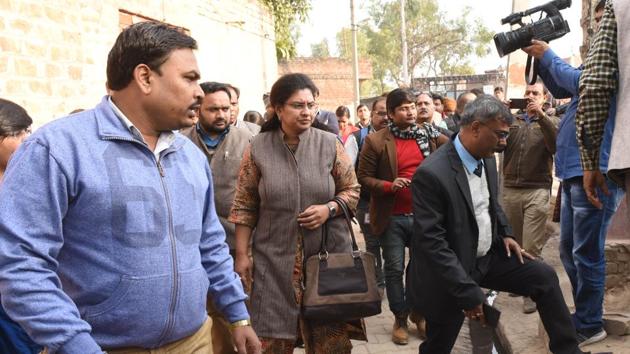
National Aids Control Organisation (NACO) and UP State Aids Control Society (UPSACS) at Premganj area of Bangarmau in Unnao. (Subhankar Chakraborty/HT File Photo)

The quacks, who offered treatment for as little as Rs 5 and Rs 10 along with medicines, were the lifeline for Premgunj residents who rarely go to the community health centre in Bangermau.

There are only six doctors against the 12 sanctioned strength for the centre, and none of them are specialists. “These doctors were our only hope. We cannot afford treatment in Kanpur or Lucknow. Where do we go now?” said Ramsakhi Devi, 45, a resident of Premgunj, the village from where 50 of the 58 confirmed HIV cases were reported.

“I do not understand why these doctors should be arrested; at least their medicines work and are affordable. Doctors at the CHC write medicines that are not available at their pharmacy and cost a fortune outside,” she said.

People are already feeling socially ostracised. “Marriage proposals for my friends in Kirmidiyapur village were turned down after the news spread,” said 35-year-old Seema Gautam. “My children are young, but I will eventually have to look for partners for them. This stigma will remain for life,” she added.

 
ABOUT THE AUTHOR
Rhythma Kaul

Rhythma Kaul is the national health editor of the Hindustan Times. She has been reporting on public health, medicine, and medical research, with a particular focus on how government decisions and health system reforms shape people’s lives. Rhythma has over 25 years of journalistic experience. She joined Hindustan Times in 2008, and has since covered everything from pandemics and infectious diseases to cutting‑edge medical research and climate‑related health challenges. Her stories routinely track the work of the Ministry of Health and Family Welfare, department of pharmaceuticals, and key national health programmes, making complex medical science and policy accessible to a wide audience. One of her prominent news breaks has been the 2012 Baby Falak case: A two-year-old brutally battered baby girl was admitted to AIIMS-Delhi with severe head injuries, multiple fractures, human bite marks, and burns. The police investigation revealed this to be a case of multi-state human-trafficking racket. She was profiled by The Wall Street Journal for breaking this story. Rhythma holds a Master’s degree from Jawaharlal Nehru University, Delhi. Prior to Hindustan Times, she worked with the India Today Group. Rhythma can be contacted at rhythma.kaul@hindustantimes.com. Her X handle is @RamblingBrook.

Get the latest India News, breaking headlines and real-time updates from across the country. Stay informed about politics, government policies, crime, weather and major national developments.
SHARE THIS ARTICLE ON
Hindustantimes wants to start sending you push notifications. Click allow to subscribe