Numbers explain Uttar Pradesh’s stray cattle problem far better than anecdotes: the state’s 2022-23 budget allocated a pension of ₹1,000 a month to poor and old people above 60 years of age (there were 5.49 million beneficiaries of this pension in 2022-23 ). A total amount of ₹6,069 crore was disbursed to them.
Read here: U.P. Budget 2023-24: Stray cow maintenance gets ₹750 crore
Similarly, the budget allocated a pension of ₹1,000 a month to destitute
Numbers explain Uttar Pradesh’s stray cattle problem far better than anecdotes: the state’s 2022-23 budget allocated a pension of ₹1,000 a month to poor and old people above 60 years of age (there were 5.49 million beneficiaries of this pension in 2022-23 ). A total amount of ₹6,069 crore was disbursed to them.
Read here: U.P. Budget 2023-24: Stray cow maintenance gets ₹750 crore
Similarly, the budget allocated a pension of ₹1,000 a month to destitute women under the widow pension scheme that had 2.721 million beneficiaries who were disbursed ₹3,299 crore the same year. On September 9, according to a government press release, chief minister Yogi Adityanath approved an increase in daily spending on cattle food from the current ₹30 to ₹50 per animal, which translates into ₹1,500 a month .
According to officials from the state’s animal husbandry department, nearly 1.37 million destitute cattle are sheltered across 6,889 cow protection centres and other sites in the state. Of these, 1.19 million are in cow protection centres, and an additional 185,000 are under the care of individuals under the Mukhya Mantri Sahabhagita Yojana. At ₹50 a day, these numbers translate into a spend of over ₹2,500 crore a year on cattle food.
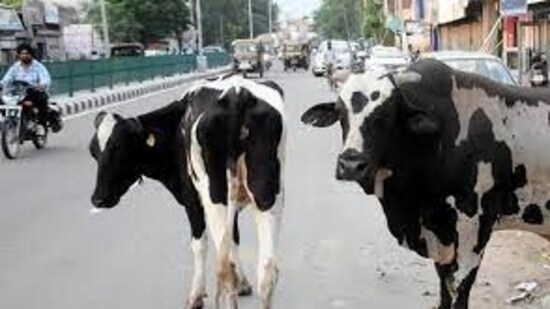
With Uttar Pradesh clamping down on the slaughter of cows beyond the productive age, and oxen and bulls, most farmers simply release these animals to avoid caring for them. The result has been a sharp increase in the number of stray cattle, which often invade agricultural fields, much to the dismay of other farmers. The state’s solution to this soaring problem has been to set up more cow protection centres.
“The minimum food cost per cattle per day was working out to be ₹62 and district magistrates at their level were arranging the cost over and above ₹30 from different sources, including funds available to local bodies under various heads,” said JP Pandey, additional director (godhan), explaining the enhancement, “Besides, fodder is collected from willing individuals, NGOs etc by way of donation.”
To be sure, this amount does not involve the cost of maintaining cow protection centres or the salaries of care givers. In addition, the state is also spending on 250 new large cow protection centres, each with a capacity of 5,000-10,000 cattle.
Currently, caregivers are paid at the rate of ₹210 per day under the Mahatma Gandhi National Rural Employment Guarantee Scheme (MGNREGS), but the state government has decided to pay them a monthly salary of ₹7,000 in eastern UP and ₹7,500 in western UP, according to additional chief secretary, animal husbandry, Rajnish Dubey.
While the state government’s commitment and dedication to protecting destitute cattle is laudable, questions are often raised on the proper utilisation of funds.
Read here: Police bust gang slaughtering stray cows for Delhi hotels, 4 held
“Despite huge financial investments and government’s dedicated efforts spanning the past five years, the issue of stray cattle continues to plague the state,” said an official from the animal husbandry department, requesting anonymity.
“More than two lakh (200,000) stray cattle are still believed to be roaming free with complaints about their destroying farmers’ crops, disrupting traffic on roads and even attacking people, sometime to death, are being received from in many districts,” he added.
One Subscription.
Get 360° coverage—from daily headlines
to 100 year archives.
Archives
HT App & Website