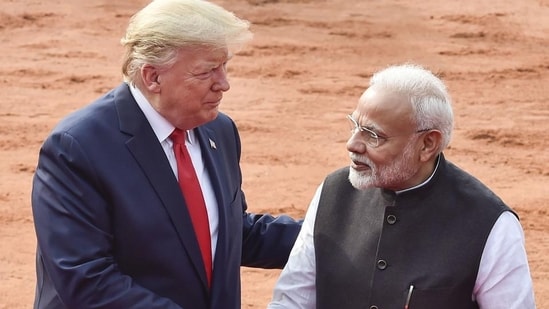
With the India-US talks for a trade deal back on track after renewed bonhomie between President Donald Trump and PM Narendra Modi, the American chief negotiator, Brendan Lynch, is arriving in India on Monday night, September 15.
India's chief negotiator, Rajesh Agrawal, said both sides intend to "fast-track" the talks, and confirmed Lynch's one-day visit, but gave no details, according to Reuters.
Lynch, who is the Assistant US Trade Representative for South and Central Asia, will hold talks with Agrawal on Tuesday, multiple news agencies reported.
A visit by the US team was originally scheduled between August 25 and 29, but it was called off amid rising tensions over massive tariffs imposed by the US on Indian products as “penalty” for the country's purchase of Russian oil “funding the Ukraine war”. Of the tariffs, 25 per cent came into effect in the first week of August as part of a global trade rest by the US; and the additional 25 per cent over the Russian oil kicked in on August 27.
Quick movement after several jabs
- The US side made some heated statements during this time, even referencing caste and taking personal jibes.
- India stuck to a more measured approach, questioning the US logic and underlining that it has a sovereign right to buy from whoever it deemed fit for its national interest.
- Tempers have since cooled as India too sought to stress its historic Russia ties and moved towards a thaw with China.
- Trump has now called the Russia-Ukraine war and the need for oil-linked sanctions “more of a Europe problem”. While his officials continued with mixed signals, Trump spared India a mention as he urged the European Union (EU) to put tariffs on China too.
- This change in tone came after a thaw apparently on social media between Trump and Modi, following which officials had said negotiations would resume within days.
How talks have progressed, and the red lines
It's since March-April that India and the US have been negotiating for an interim trade deal. At one point, the US side said one of the reasons for the “punitive” tariffs was that the talks were taking too long.
{{/usCountry}}It's since March-April that India and the US have been negotiating for an interim trade deal. At one point, the US side said one of the reasons for the “punitive” tariffs was that the talks were taking too long.
{{/usCountry}}There remain clear reservations from the Indian side on the US demand for opening up its domestic agricultural and dairy sectors to American products. PM Modi has said he would protect farmers' interests. Those red lines will be on focus in the talks that originally aimed to have a pact in place by September; now the aim is to complete a first stage of the agreement by October-November.
India's exports to the US fell to $6.86 billion in August from $8.01 billion in July, though the full impact of higher tariffs would be known next month as the additional tariffs kicked in at the end of August.
US-China talks on too
In a related development, the US and China too resumed trade talks on Monday in Spain's Madrid. US treasury secretary Scott Bessent and Chinese vice-premier He Lifeng opened the latest round of discussions that is likely to last till Wednesday.
Their agenda includes two of the thorniest issues in their relationship: Trump's threat of steep tariffs on China, and the demand that social media platform TikTok be sold to a non-Chinese owner or face a US ban by September 17.