
 E-Paper



Violence in Afghanistan could affect neighbourhood and beyond: Jaishankar
The Covid-19 pandemic and subsequent normative breakdown have “rudely reminded us that institutions built to tackle problems of the 1940s desperately need to be upgraded and made fit-for-purpose for our century, Jaishankar said.


The violent transition underway in Afghanistan has exacerbated the challenge posed by terrorism and its impact will be felt in the neighbourhood and beyond if it is left unattended, external affairs minister S Jaishankar said on Tuesday.
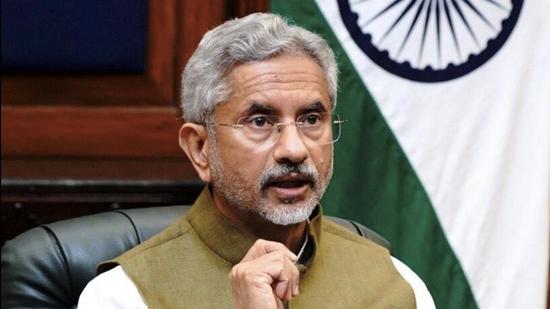
In a virtual address to the inaugural session of the Brazil-Russia-India-China-South Africa (Brics) Academic Forum, Jaishankar reiterated India’s concerns about the legitimacy of any dispensation that comes to power in Kabul through force and called for an inclusive set-up that ensures peace and stability.
India has been concerned by the Taliban’s violent campaign to capture territory across Afghanistan, which last week expanded to key cities such as Herat, Lashkargah and Kandahar. New Delhi has maintained that any regime that seeks to capture power through military force will not be legitimate.
In his speech, Jaishankar said terrorism thrives in some of the gaps that emerged after multilateral institutions were disadvantaged by “structural inertia, competitive gridlocks, uneven resourcing and skewed navigation”.
The nursery of terrorism “lies in conflict-ridden spaces made fertile for radicalisation by malign players, including states”, Jaishankar said, in a tacit reference to Pakistan’s role in backing the Taliban.
“The transition in Afghanistan that we are seeing today and the warfare that has yet again been forced upon its people has sharpened this challenge. Left unattended, its edge will be deeply felt not just in Afghanistan’s neighbourhood but well beyond,” he said.
“We are, therefore, all stakeholders in the quest for a clear, coordinated and undifferentiated response to terrorism. In the 21st century, legitimacy cannot be derived from mass violence, brutal intimidation or covert agendas. Representation, inclusion, peace and stability are inextricably linked,” he said.
The Covid-19 pandemic and subsequent normative breakdown have “rudely reminded us that institutions built to tackle problems of the 1940s desperately need to be upgraded and made fit-for-purpose for our century”, Jaishankar said.
An expansion of the permanent membership of the UN Security Council is not sufficient to address the gaps that have emerged because multilateral institutions are unable to cope with contemporary challenges, he added.
“Too often, we obsess with one or the other response, more effort and action is actually required to fill the gaps,” Jaishankar said.
India’s presidency of Brics in 2021 has come at an “inflection point” for the grouping and the pandemic has “demanded a price in terms of economic growth” and challenged timelines for the Sustainable Development Goals (SDGs). “Technology could help us now recover ground and time. India is optimistic on this score, and ready to share what it has harnessed, innovated and learnt in these last years,” he said.


