The Centre on Wednesday drew a parallel between the Hindu Code Bill and the Waqf Act in an argument for the latter's constitutionality in a Supreme Court hearing.
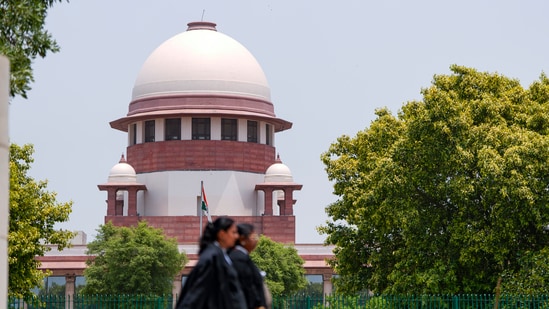
Responding to the submissions challenging the constitutional validity of the Waqf (Amendment) Act, 2025, Solicitor General Tushar Mehta said that the Waqf law does not contradict Article 25 of the Constitution, which guarantees freedom of religion.
"When the Hindu Code Bill came in 1956, the personal law rights of Hindus, Christians, Sikhs, Buddhists and Jains were taken away. No one said then why only Muslims were left and why others were not?” he told the apex court, NDTV reported.
Mehta also argued in front of the bench composed of Chief Justice B R Gavai and Justice Augustine George Masih that nobody can claim a right over government land, and that the government is legally empowered to reclaim properties that are declared waqf by using the waqf by user principle.
“Nobody has the right over government land. There is a Supreme Court judgment which says the government can save the property if it belongs to the government and has been declared as waqf,” PTI quoted Mehta as saying.
Waqf by user refers to a concept where a property is recognised as waqf based on its long-term use for religious or charitable purposes, even without formal documentation.
{{/usCountry}}Waqf by user refers to a concept where a property is recognised as waqf based on its long-term use for religious or charitable purposes, even without formal documentation.
{{/usCountry}}The bench sought a response from the Centre on the petitioners' pleas that an officer above the rank of the district collector can decide the claim over waqf properties because they are of the government.
“This is not just misleading but a false argument,” the law officer said.
Why has the Waqf Act been challenged?
The Waqf (Amendment) Act 2025, which received presidential assent on April 5 after being passed by both the Houses of Parliament earlier, makes sweeping changes to the governance and recognition of Islamic charitable endowments, or waqfs.
The Centre has defended the amendments as necessary to curb corruption, enhance transparency and ensure better regulatory oversight. But several political parties, religious organisations and civil society groups have mounted a strong push back, calling the law a direct infringement on religious autonomy and an unconstitutional imposition on the Muslim community.
The petitions, filed under Article 32 of the Constitution, challenge the law on multiple grounds, alleging that it undermines the fundamental rights of Muslims and erodes age-old waqf traditions. Petitioners have particularly targeted provisions such as the removal of “waqf by user” — a principle that historically allowed recognition of religious endowments created through usage or oral tradition — and the invalidation of oral waqfs unless backed by formal deeds. These changes, critics say, jeopardise the status of mosques, graveyards and dargahs that have existed for centuries without written documentation.