
 E-Paper



Wars, hot or cold, don’t end: Lessons from Russia’s military action
Washington: If there is one lesson from Russia’s invasion of Ukraine, it is this

 Prefer HTon Google


If there is one lesson from Russia’s invasion of Ukraine, it is this. Wars, hot or cold, don’t end. They leave in their wake the victor and the vanquished, but neither the victor’s triumph nor the defeat of the vanquished is permanent. They leave resentments and grievances, which persist and then manifest in unpredictable ways, at unexpected moments. They return, decades later, interrupting well-designed strategic plans and throwing established security structures in disarray. And they prove the enduring value of hard power as the real currency in an anarchic world, where international norms and institutions and values are effectively only so far as a State is willing to sign up for them.
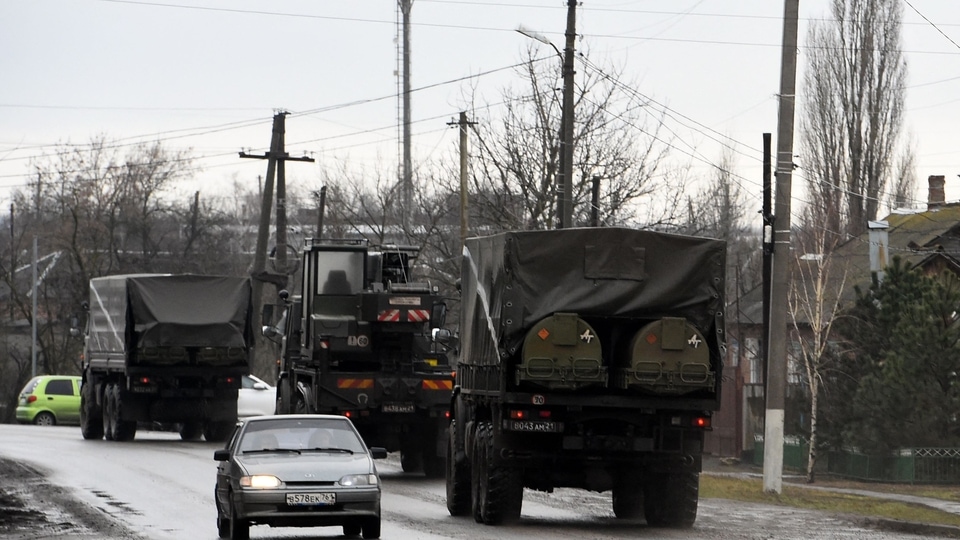
The Union of Soviet Socialist Republics may have collapsed, the Berlin Wall may have fallen, the Iron Curtain may have become history, generations may have got accustomed to the idea of a Europe permanently at peace,even the hopes of Russia integrating into the existing international order, largely on terms set by the West, may have seemed real. But three decades after what was supposed to be end of the Cold War, the conflict between the West and Russia has returned as the primary fault-line in the global strategic landscape. And the return of the old Cold War between the US and Russia, for the time being, may well overshadow what was supposed to be the emerging new Cold War between the US and its allies and partners and China.
It is too early to predict how the Russian invasion of Ukraine will play out, what will be its long-term implications. But the episode will sharpen and intensify four trends, and these, along with a set of imponderable variables, will determine the future of the world.
Here is what is certain.
One, the US and Russia will return to a deep confrontational relationship after decades of a relationship where distrust was accompanied with a degree of collaboration. To be sure, ties between Washington and Moscow have dipped in the past decade, over Russia’s actions in Crimea and east Ukraine in 2014, over its role in Syria, over its alleged interference in the 2016 elections, over its role in Central Asia, and over its partnership with China. But while no segment of US politics is willing to put troops on the ground to fight Russia in Ukraine – Ukraine matters far more to Vladimir Putin than Joe Biden – there is a clear bipartisan mood of hostility towards Moscow in Washington. This will, in the immediate context, manifest itself in unprecedented sanctions against Russia and support for Ukrainian resistance. The US may not have succeeded in deterring Russia, but Washington will not let Moscow have it easy in Kiev.
Also read | Russia has 'complete air superiority' over Ukraine: Western intel official
Two, Russia and China will get closer. The recent joint statement by Vladimir Putin and Xi Jinping highlighted a new level of convergence between Beijing and Moscow in their opposition to the West and their attempts to overhaul the existing architecture of global order. In response to HT’s questions, before the Xi-Putin statement in early February, Sergey Radchenko, a distinguished professor at the Johns Hopkins University and author of Two Suns in the Heaven: The Sino-Soviet Struggle for Supremacy, said that unlike the 1950s, when China and USSR had an alliance, they now have an alignment, and in that sense they were closer in the past than now. “An alignment is more flexible and therefore more durable than an alliance.” He added, “There are areas of divergence in any relationship, and this relationship is no different. What is interesting is that China and Russia have worked very hard to smooth sharp corners and pre-empt emergence of major frictions, in particular in central Asia. This speaks to strategic vision in both capitals concerning the importance of this relationship.” As the West rolls out more sanctions against Russia, Moscow’s dependence on Beijing will only grow. And while, for now, Russia has had greater room to manoeuvre – for instance, it has not let ties with Delhi get affected due to proximity with Beijing – this room for autonomy in Russian strategic policy may shrink as its conflict with the West sharpens.
Three, Europe will have to revise its assumptions about its strategic posture and be forced to make choices. Key powers, particularly Germany, have sought to deepen their energy and economic ties with Russia while retaining the security umbrella provided by the US and NATO. As the debate over Nordstream-2 (a pipeline to ship gas from Russia to Europe) showed, this will become increasingly difficult to sustain. Eastern and central European nations – which, unlike Ukraine, are NATO members – have begun feeling more vulnerable after enjoying three decades of relative autonomy from Russian influence. The US will begin asking the rest of Europe to assume greater responsibilities, financial commitments, and military obligations to secure its eastern flank. This, in turn, will cause domestic political debates within European states, which have got long accustomed to a relatively stable equilibrium. The US-Europe transatlantic partnership is strong at the moment, and will both will remain unified in the face of Russian aggression – but maintaining this unity will be hard work for both.
Four, the US attention to Indo-Pacific will diminish, for the time being. Yes, Washington will engage with other members in Quad meetings; it will constantly reiterate the competition from China is the challenge of the future; it will keep an eye on Taiwan; and it will seek to reduce its economic dependence on China. But as the distinguished strategic expert at Carnegie Endowment of International Peace, Ashley Tellis, said in late January, “The US gets easily distracted. In this case, thinking about Indo-Pacific is far ahead of the actual implementation. For all the accentuated rhetoric, the administration’s engagement and investment in Indo-Pacific is relatively modest and involves pursuing low-hanging fruit, such as investing in Quad or holding summit-level meetings. There is a big deficit in terms of both the military investments in the Indo-Pacific strategy, and more visibly, the trade dimension, at a time when the regional economies are still deeply integrated with China.” Since then, the US has released its Indo-Pacific strategy and promised both greater military and economic commitment to the region. But at a time when there are strong insular impulses within US polity, where Congressional elections are set to be held later this year, where the administration is grappling with domestic economic challenges especially inflation, and where the national security set up is already dealing with Russia, it is unlikely that the White House will be able to give adequate attention to the China challenge. To reiterate, this does not mean that the US focus on China will change in the long-run; but it will get affected in the short-term.
When asked what was the most challenging aspect of his prime ministership, Harold Macmillan, the British PM, is once said to have remarked, “Events, dear boy, events.” Vladimir Putin’s decision to invade Ukraine is one such event that creates a new global reality – one that India’s national security and foreign policy managers will have to now grapple with as they navigate a difficult strategic environment.


