E-Paper



‘We will worship there’: Hindu side lawyer on next move after Bhojshala declared a temple
Speaking after the verdict, advocate Vishnu Shankar Jain said the immediate focus would be on carrying out worship at the site.

 Prefer HTon Google


After the Indore bench of the Madhya Pradesh high court on Friday declared the disputed Bhojshala Temple-Kamal Maula Mosque complex in Dhar district a temple dedicated to Goddess Saraswati, the Hindu side said it would begin exercising its right to worship at the site.
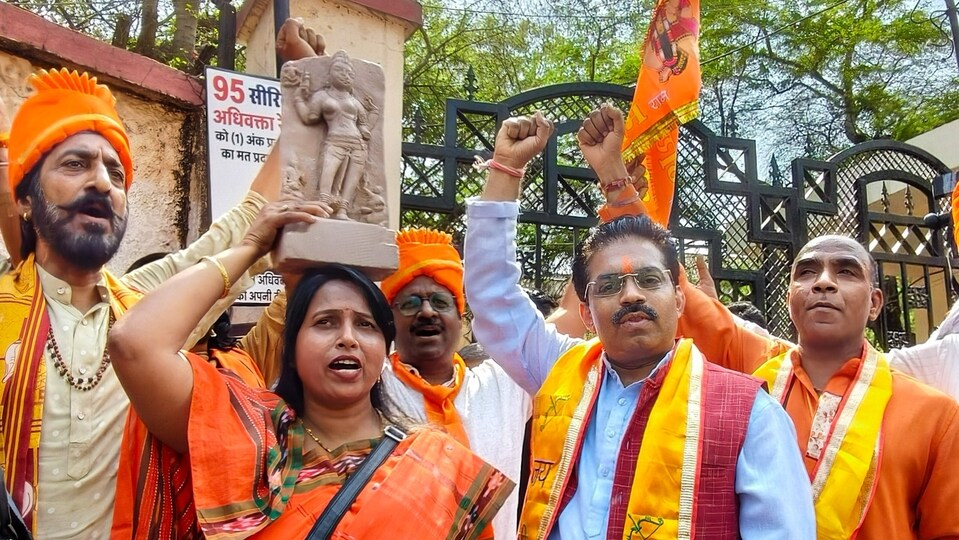
Speaking after the verdict, advocate Vishnu Shankar Jain said the immediate focus would be on carrying out worship at the site while also preparing for further legal proceedings in the Supreme Court.
"We will worship in the premises in question. We will exercise our fundamental rights of worship in the premises in question in tune with Article 25, as well as Section 16 of the ASI Act 1958," he told NDTV.
What did Indore bench of the Madhya Pradesh High Court said?
The Indore bench of the Madhya Pradesh High Court, in a 242-page judgment delivered by justices Vijay Kumar Shukla and Alok Awasthi, held that the disputed Bhojshala Temple-Kamal Maula Mosque complex in Dhar district is a temple of Goddess Vagdevi (Saraswati). The court also directed the government to provide separate land to Muslims for the construction of a mosque.
Also read | Dhar’s Bhojshala site is a Saraswati temple, rules Madhya Pradesh high court
The bench ruled that the disputed site had remained a protected monument under the Ancient Monuments and Archaeological Sites and Remains Act, 1958, since March 18, 1904. It also set aside portions of the Archaeological Survey of India’s April 7, 2003 order that had restricted Hindu worship while allowing Muslims to offer prayers at the premises.
“The religious character of disputed area of the Bhojshala Complex and Kamal Maula Mosque is held to be a Bhojshala with a temple of goddess Vagdevi (Saraswati),” the court said in its judgment.
Hindu side calls verdict historic
Reacting to the ruling, Jain described the order as a “historic verdict” and said the court had recognised the Bhojshala complex as belonging to Raja Bhoj.
Also read | Ayodhya 2.0: Bhojshala a Hindu temple, rules MP HC; cites SC's principles in ruling on Dhar dispute
"The Indore High Court has delivered a historic verdict, partially setting aside the ASI's order dated April 7, 2003. Furthermore, the Court has granted the Hindu side the right to worship and has recognised the Bhojshala complex as belonging to Raja Bhoj," Jain was quoted as saying by news agency ANI.
Jain also referred to the demand for the return of an idol currently housed in a museum in London. According to him, the court directed the government to consider the request while allowing the Muslim side to place its views before authorities.
"Regarding our demand for the repatriation of the idol currently housed in a London museum, the Court has directed the government to consider this request; the Court also noted that the Muslim side is free to present its views before the government as well. Additionally, the Court has asked the government to consider allocating alternative land to the Muslim side," he said.
Also read | Muslim claim not the only one dismissed in MP HC's Bhojshala ‘Hindu temple’ verdict
He added that the court had removed the earlier arrangement permitting namaz at the site.
"The Court has granted us the right to perform worship rituals and has directed the government to oversee the management of the site. The ASI's previous order, which granted the right to offer Namaz (prayers), has been completely set aside; henceforth, only Hindu worship shall take place there," Jain said.
Owaisi criticises verdict
The judgment also drew criticism from Asaduddin Owaisi, who said the ruling was inconsistent with constitutional principles and compared it to the Babri Masjid-Ram Mandir dispute.
Speaking in Hyderabad, the AIMIM chief said the verdict had “opened a floodgate” for similar claims involving religious sites.
"This judgment does not align with constitutional values. The verdict delivered regarding the Babri Masjid-Ram Mandir dispute accorded primacy to a single religion while effectively undermining the worship rights of others. Furthermore, this judgment has opened a floodgate. Tomorrow, anyone could come forward to challenge the sanctity of various places of worship," he said as per an ANI report.
Owaisi also questioned the interpretation of the Places of Worship Act in light of the latest ruling.
"This is particularly concerning given that, in the Babri Masjid-Ram Mandir verdict, the Supreme Court itself had affirmed the significance of the Places of Worship Act, linking it to the 'Basic Structure' of the Constitution, a principle that the Court appears to have completely disregarded today. The Places of Worship Act has been reduced to a mockery," he told reporters.
Referring again to the Ayodhya judgment, Owaisi said: “This judgment has turned out to be exactly like the Babri Masjid case. In the Babri Masjid case, the court had stated that the Muslims did not have possession of the site. But in this case, I held possession right up until today.”
(With inputs from ANI)