Over sixty years since he stepped down as chief minister of the erstwhile Madras State, the memory of K Kamaraj still persists in the collective consciousness of the state. In today’s Tamil Nadu, he is cited more as a standard, a memory of a time when a different breed of leaders altogether walked the earth. His simplicity and integrity are eulogised in an era when public perception of politicians is “quite different,” to say the least.
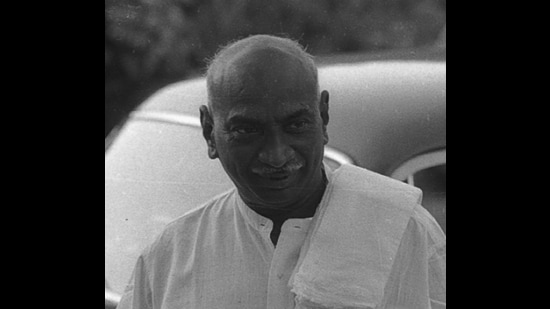
Kamaraj’s admirers remain diverse— common people, politicians, industrialists and students— and his contributions to the state’s development in sectors including education, economy, industry and infrastructure are far from forgotten.
The discerning reader may also note Kamaraj’s shrewdness as a politician. His relationship with the bureaucracy and unique communication style with administrative officials is regarded as one of the finest examples of elected political leadership’s approach to the professional civil service in a political democracy like India.
Kamaraj was known for his people- centered pragmatic approach, administrative judgment and political decisiveness in decision-making. He wanted the bureaucracy to explore and identify appropriate administrative and legal solutions whenever the officials cited that existing government rules prevented a particular policy initiative involving a welfare measure and irrigation projects.
His midday meal scheme for children in government schools persists today. The Vaigai Dam project illustrated his political leadership and his commitment to a scientific approach to governance when he chose to heed senior officials and engineers who expressed reservations about the suitability of the proposed site based on their initial assessments of geological conditions or abandoning the project. He asked them to conduct a fresh study and further scientific investigations besides verifying their earlier conclusions with evidence, and then advise the government. A more detailed geological survey, hydrological study and soil investigations were carried out to verify the earlier assessments and found that the selected site was suitable for constructing the dam. Today Vaigai Dam is one of the most significant irrigation projects in southern Tamil Nadu.
{{/usCountry}}His midday meal scheme for children in government schools persists today. The Vaigai Dam project illustrated his political leadership and his commitment to a scientific approach to governance when he chose to heed senior officials and engineers who expressed reservations about the suitability of the proposed site based on their initial assessments of geological conditions or abandoning the project. He asked them to conduct a fresh study and further scientific investigations besides verifying their earlier conclusions with evidence, and then advise the government. A more detailed geological survey, hydrological study and soil investigations were carried out to verify the earlier assessments and found that the selected site was suitable for constructing the dam. Today Vaigai Dam is one of the most significant irrigation projects in southern Tamil Nadu.
{{/usCountry}}There is another socio-economic dimension to the building of Vaigai Dam in the Madurai- Theni region. There were many complaints about highway robberies in the Madurai-Theni region and the government was expected to crackdown. Kamaraj believed that the building of Vaigai Dam reduce the crime rate in the region. He considered that if farmers have water and employment, the crime and violence will naturally decline because of his belief that economic development as a long-term solution to law and order problems.
There is another episode involving a group of senior officials who wanted to visit a few European capitals to study urban planning and local administration. A formal note was presented seeking government approval for the visit. Kamaraj invited the officials and listened to them patiently before advising them to visit the city of Madurai first and asked them to study how its streets, drainage, water management, markets and public utilities function.
It is crucial to note that development studies increasingly recognize the need to preserve and promote our indigenous knowledge systems and best practices than seeking solutions from elsewhere. Though this episode is often cited as the sign of Kamaraj’s fiscal prudence yet there is much more to his native wisdom and administrative philosophy. It is a growing debate in modern public administration whether successful policies can simply be copied from one country to another without being adapted to local geography, culture, institutions, social and economic conditions. Good governance begins with understanding our own society before seeking solutions elsewhere and applying them at home.
Kamaraj was a patient and thoughtful listener. He reminded the bureaucracy to ditch the colonial style of administration, revise outdated procedures and get in touch with the masses.
He neither undermined officials in meetings nor constituted a secret lobby of loyalists for himself. He believed that elected government should define its social, political, economic and administrative agenda.
This is the administrative legacy of Kamaraj. Political leadership since his time has largely defined its governance agendas through it, at least in theory if not practice. It remains to be seen what we make of it.
(Prof.Ramu Manivannan is a Political Scientist – Scholar-Activist in areas of education, human rights and sustainable development. He is currently the Director, Multiversity – Centre for Indigenous Knowledge Systems, Kurumbapalayam Village, Vellore District, Tamil Nadu).