
 E-Paper



Why military theatre commands resonates with ‘Viksit Bharat’
At Joint Combined Commanders Conference in Lucknow, CDS Chauhan gave a presentation to Commanders-in-Chief on military theatre commands.

 Prefer HTon Google


New Delhi: When Narendra Modi became Prime Minister in May 2014, the military chiefs called on the newly elected leader and invited him to various service functions. Months later, the same military chiefs politely complained that he had gone to attend one service function and not the other. PM Modi apparently told them that he sees Indian armed forces in only one colour (Indian flag) and does not distinguish or discriminate among different colours of services.
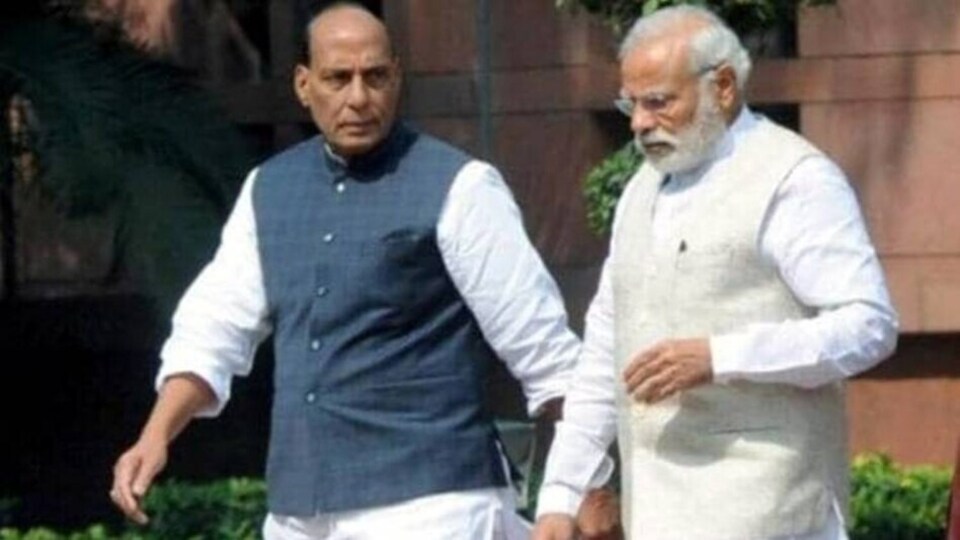
While PM Modi is committed to integration and jointmanship among the armed forces from day one, the sensitization of the military towards impending change of theatre commands has been a slow and deliberate process with Chief of Defence Staff Gen Anil Chauhan exercising all his patience. On September 4 at the Joint Combined Commanders Conference in Lucknow, CDS Chauhan gave a presentation to all assembled Commanders-in-Chief on military theatre commands and answered to all the queries thrown at him.
Despite the nervousness of the traditional establishment with imperial legacy, the draft plan for theatre commands is ready and is awaiting political clearance through due process. While the military leadership of India believes that the job of armed forces is primarily to defend Bharat from external threats and as a tool of diplomatic coercion and military diplomacy, the political leadership is preparing the armed forces for ‘Viksit Bharat’ era where India’s interests will be beyond its horizons and frontiers. Just as China has now acquired power to influence global events, the ‘Viksit Bharat’ vision is to prepare India for the global stage and build capability and capacities in the interregnum. The intake of 55 officers by the Indian Foreign Service this year shows that the Modi government is preparing India for a larger diplomatic role in the future. The theatre commands are also integral to the same plan as future conflicts in the neighbourhood and beyond will have to be addressed simultaneously in all four dimensions including space.
Incidentally at the Lucknow conference, Eastern Army Commander Lt Gen R C Tewari made a presentation before Defence Minister Rajnath Singh on Chinese PLA’s posture against India and the situation along the LAC in the Sikkim and Arunachal Pradesh sector. The Western Theatre Command of China is deployed all along the 3488 km LAC with India with no less than a lakh PLA soldiers and heavy equipment deployed since the May 2020 Chinese aggression in East Ladakh. Apart from disengagement from the friction points in East Ladakh, the de-escalation of forces is still to take place with PLA forwardly deployed in the sector. The only positive sign is that both sides are talking at diplomatic and military levels.
The political upheaval in Bangladesh has also led to anxiety amongst the Indian military commanders with the PLA on one side and rabid Islamists of Jamaat-e-Islami, Hefazat-e-Islam and Ansar Bangla Team on the other side of the thin strip of Siliguri corridor. Given the past links of BNP with Pakistan military and civilian establishment, Indian forces have no options but to be ready for the worst-case scenario. The Interim Government in Bangladesh has still not been able to stabilize law and order in the country with daily murderous attacks on minority Hindus and the perception that Islamists are calling the shots continues to gain currency.
Amidst global turmoil with Ukraine and Gaza wars showing no signs of ending, the Indian military needs synergized operational capability and the artificial silos of the past imperial legacy need to be removed. Military theatre commands with dedicated intelligence collection and application is the only answer.


