
 E-Paper



Will re-examine and reconsider sedition law provisions: Centre tells SC
“The government of India has decided to re-examine and reconsider the provisions of Section 124A (sedition) of the Indian Penal Code, which can only be done before the competent forum,” stated a three-page affidavit filed through the Union home ministry.

 Prefer HTon Google


The 152-year-old colonial law on sedition in India is set to be reviewed, the Union government informed the Supreme Court on Monday while imploring the court to suspend the ongoing judicial scrutiny of the penal provision till the government takes a call on the issue.
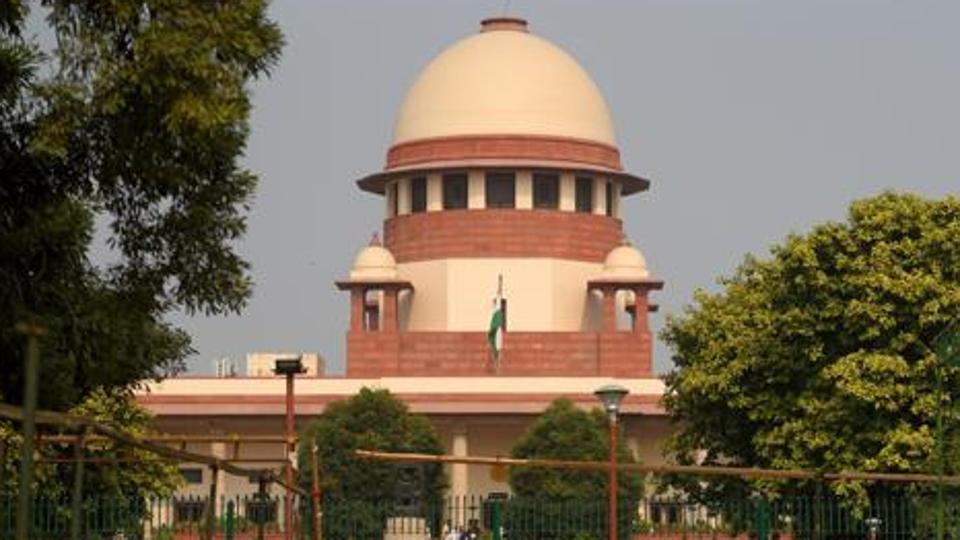
“The government of India, being fully cognisant of various views being expressed on the subject of sedition and also having considered the concerns of civil liberties and human rights, while committed to maintain and protect the sovereignty and integrity of this great nation, has decided to re-examine and reconsider the provisions of Section 124A (sedition) of the Indian Penal Code, which can only be done before the competent forum,” stated a three-page affidavit filed through the Union home ministry.
The latest affidavit curiously followed another document submitted by the Centre in the top court less than 48 hours ago, in which the government defended the penal provision of sedition. In its written submissions filed on Saturday evening, the Centre leaned on a six-decade-old Constitution bench judgment to assert that Section 124A is a valid law and that there are enough safeguards in place to balance the constitutional rights of the citizens and the needs of the State.
But the latest affidavit, submitted by the Centre a day before the top court has scheduled the hearing of a clutch of petitions challenging the validity of Section 124A, put forth a nuanced and an apparently reconsidered stand while also seeking to pause the court proceedings.
The affidavit, which did not mention a timeline to complete the exercise of review by the executive, adequately highlighted Prime Minister Narendra Modi’s impetus on protection of civil liberties and the need to shed “colonial baggage”, acknowledging that repeated concerns have been raised over application and abuse of Section 124A of the IPC. Section 124A is a non-bailable offence punishable with jail term ranging from three years to life.
The government underlined that Modi “has been cognisant of various views expressed on the subject and has also periodically, in various forums, expressed his clear and unequivocal views in favour of protection of civil liberties, respect for human rights, and giving meaning to the constitutionally cherished freedoms by the people of the country”. The PM, said the Centre, has repeatedly said that one of India’s strengths is the diverse thought streams that beautifully flourish in our country.
It further urged the bench, led by Chief Justice of India (CJI) NV Ramana and comprising justices Surya Kant and Hima Kohli, to pause the proceedings indefinitely.
“In view of the aforesaid it is this respectfully submitted that this Hon’ble Court may not invest time in examining the validity of Section 124A once again and be pleased to await the exercise of reconsideration to be undertaken by the Government of India before an appropriate forum where such reconsideration is constitutionally permitted,” stated the affidavit.
The three-page document, however, did not expand on what is meant by “an appropriate forum” where the exercise of review is to be conducted, and other modalities of the proposed action.
The government mentioned that there is a divergence of views expressed in the public domain by various jurists, academicians, intellectuals and citizens in general on various aspects of the sedition law. “While they agree about the need for statutory provisions to deal with serious offences of divisive nature affecting the very sovereignty and integrity of the country, acts leading to destabilising the government established by law by means not authorise by law or prohibited by law. Requiring a penal provision for such purposes is generally accepted by everyone in legitimate State interest. However, concerns are raised about its application and abuse, for purposes not intended by law,” added the affidavit.
The Court will on Tuesday take up a batch of petitions, filed separately by former army officer SG Vombatkere, Editors’ Guild of India, Trimanool Congress MP Mahua Moitra, NGO PUCL, and some journalists, pressing for striking down Section 124A on grounds of infringement of fundamental rights and rampant abuse.
During a hearing last Thursday, attorney general KK Venugopal, who was assisting the Court, said that the sedition law in India must be retained to ascertain the security of the nation and its citizens, adding that some guidelines may be laid down by the court to control the misuse of the statutory provision.
Venugopal, during the hearing of the matter on Thursday, also threw his weight behind the Kedar Nath judgment to argue that the contours of the penal provision had already been delineated by a Constitution bench in 1962 and, therefore, there was no need for a re-look at the provision.
In the Kedar Nath case, a Constitution bench upheld the validity of the sedition law under IPC, holding that the purpose of the crime of sedition was to prevent the government established by law from being subverted because “the continued existence of the Government established by law is an essential condition of the stability of the State”. Section 124A is punishable with jail term ranging from three years to life.
At the same time, the five-judge bench defined the scope of Section 124A, saying it only penalised words that reveal an intent or tendency to disturb law-and-order or that seem to incite violence. The Supreme Court underlined that the presence of a pernicious tendency to incite violence is a precondition to invoke the sedition clause and that the penal provision cannot be used to stifle free speech.
Leading the arguments on behalf of the petitioners, Kapil Sibal on Thursday countered the A-G, contending that a sea change in jurisprudence has taken place since 1962, when the Kedar Nath verdict came. Therefore, he said, Section 124A could be struck down chiefly on the anvils of Articles 14 and 21, without there being any need to delve into questions of Article 19(1)(a) (freedom of speech) which was the premise of the Kedar Nath judgment.
At this point, the three-judge bench asked both the Centre and the petitioners to file their written submissions on the aspect of referring the matter to a larger bench since all the petitions had doubted the correctness of the five-judge bench judgment in the Kedar Nath case. The Union government was also directed to file its counter affidavit on the merits of the matter by Monday.
Filing its submissions on Saturday evening, the central government backed the 1962 judgment in all respects, saying there was no need to either review the judgment or re-look at the validity of Section 124A.
The government sought a dismissal of all the petitions, stating that it is a settled position in law that a judgment, which withstood the test of time and has been followed not mechanically but in the context of changing circumstances, cannot be easily doubted.
The government also told the court that instances of abuse of a provision would not be a justification to reconsider a binding judgment of the constitution bench. “The remedy would lie in preventing such abuse on a case-to-case basis rather than doubting a long-standing settled law declared by a constitution bench for about six decades,” it added in its written submissions on Saturday.
The government, in that document, also resisted a judicial scrutiny of Section 124A by another Constitution bench of five or seven judges, arguing that the Kedar Nath judgment adequately applied the constitutional principles of proportionality, fundamental freedom of speech and expression and the countervailing interest of the State to regulate.
However, that stand by the Centre now appears to be superseded by the new affidavit, which said that the provisions will be re-examined and reconsidered and the government will “suitably” take into account views of all stakeholders.
During the hearing of this case on July 15, 2021, the top court lamented the “enormous power of misuse” of the sedition law in India, and asked the Union government why it should not scrap a colonial law that was once used by the British government to oppress the freedom movements and leaders such as Mahatma Gandhi and Bal Gangadhar Tilak.
Putting the central government to notice on the petitions that have pressed for striking down Section 124A, the court emphasised that it was concerned about the “misuse of the law and lack of accountability of executive and the investigating agencies”.
India’s sedition law was introduced by the British in 1870, and almost dropped from the Constitution in 1948 after discussions of the Constituent Assembly. The word “sedition” disappeared from the Constitution on November 26, 1949 and Article 19 (1)(a) gave absolute freedom of speech and expression. However, Section 124A continued to stay in the IPC.
In 1951, Jawaharlal Nehru brought in the first amendment of the Constitution to limit freedom under Article 19(1)(a) and enacted Article 19(2) to empower the State to put curbs in the form of “reasonable restrictions” on the right to free speech.
In the 1950s, a legal conundrum came to the fore after various high courts took divergent views on the validity of Section 124A. The issue was finally settled by the Constitution bench in its judgment in the Kedar Nath case in 1962. The court upheld the validity of the sedition law under IPC and also defined the scope of it. This definition has been taken as precedent for all matters pertaining to Section 124A ever since.



