
 E-Paper



Women, welfare, infrastructure: NDA’s election formula in Bihar
The NDA's Bihar election campaign highlighted women's empowerment, infrastructure, and Nitish Kumar's record, leading to strong voter turnout and support.

 Prefer HTon Google


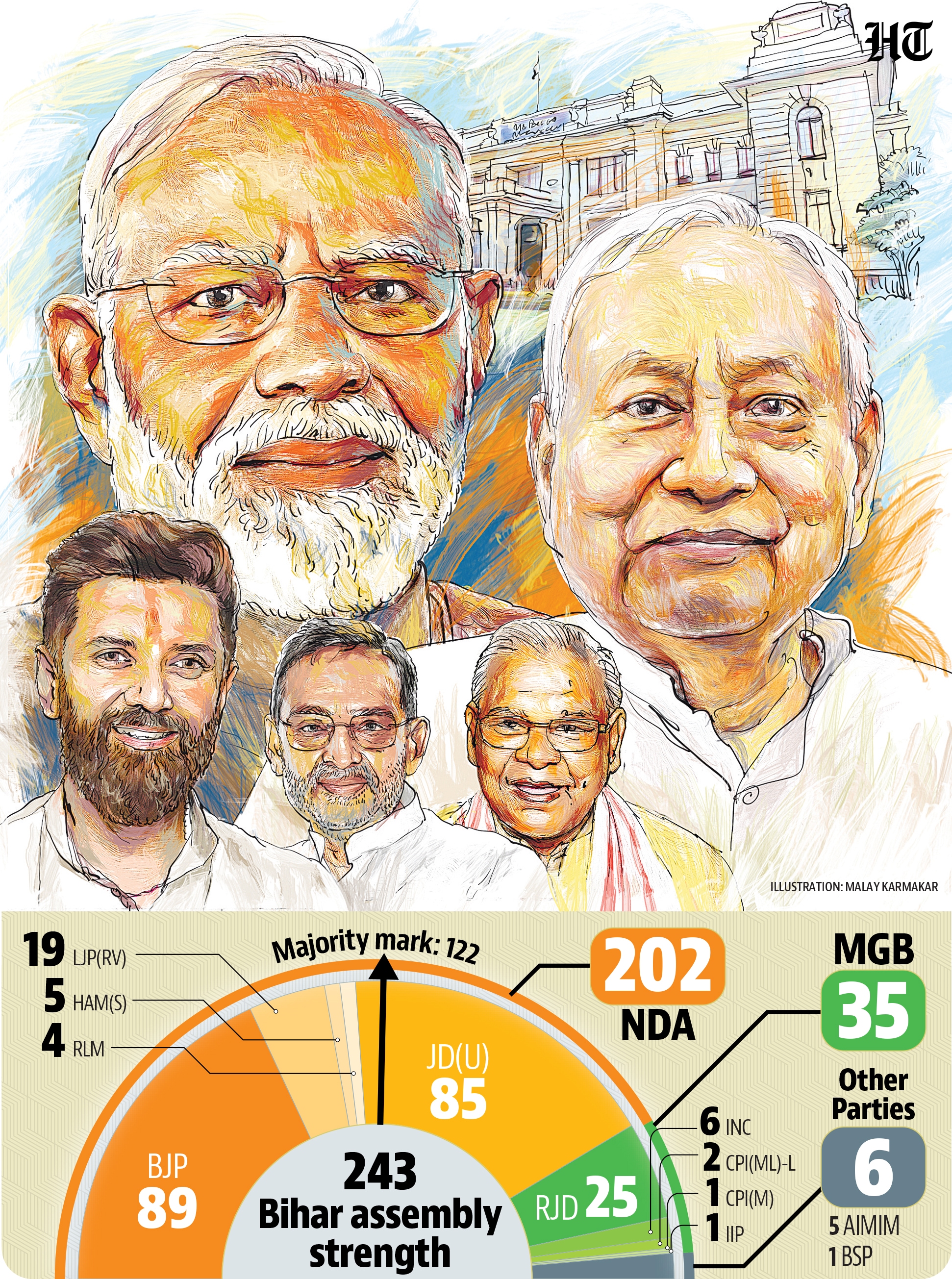
The National Democratic Alliance’s campaign in the Bihar election was pitch-perfect. At a macro level, it focused on three aspects: the empowerment of women; infrastructure and development; and the track record of incumbent chief minister Nitish Kumar, especially when contrasted with what it termed “Jungle Raj under the Rashtriya Janata Dal between 1990 and 2005.
All three worked.
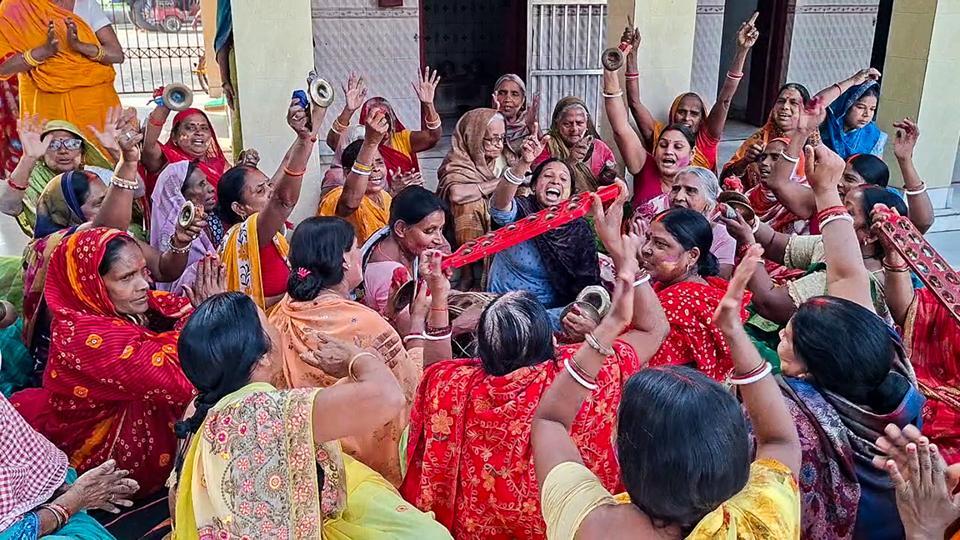
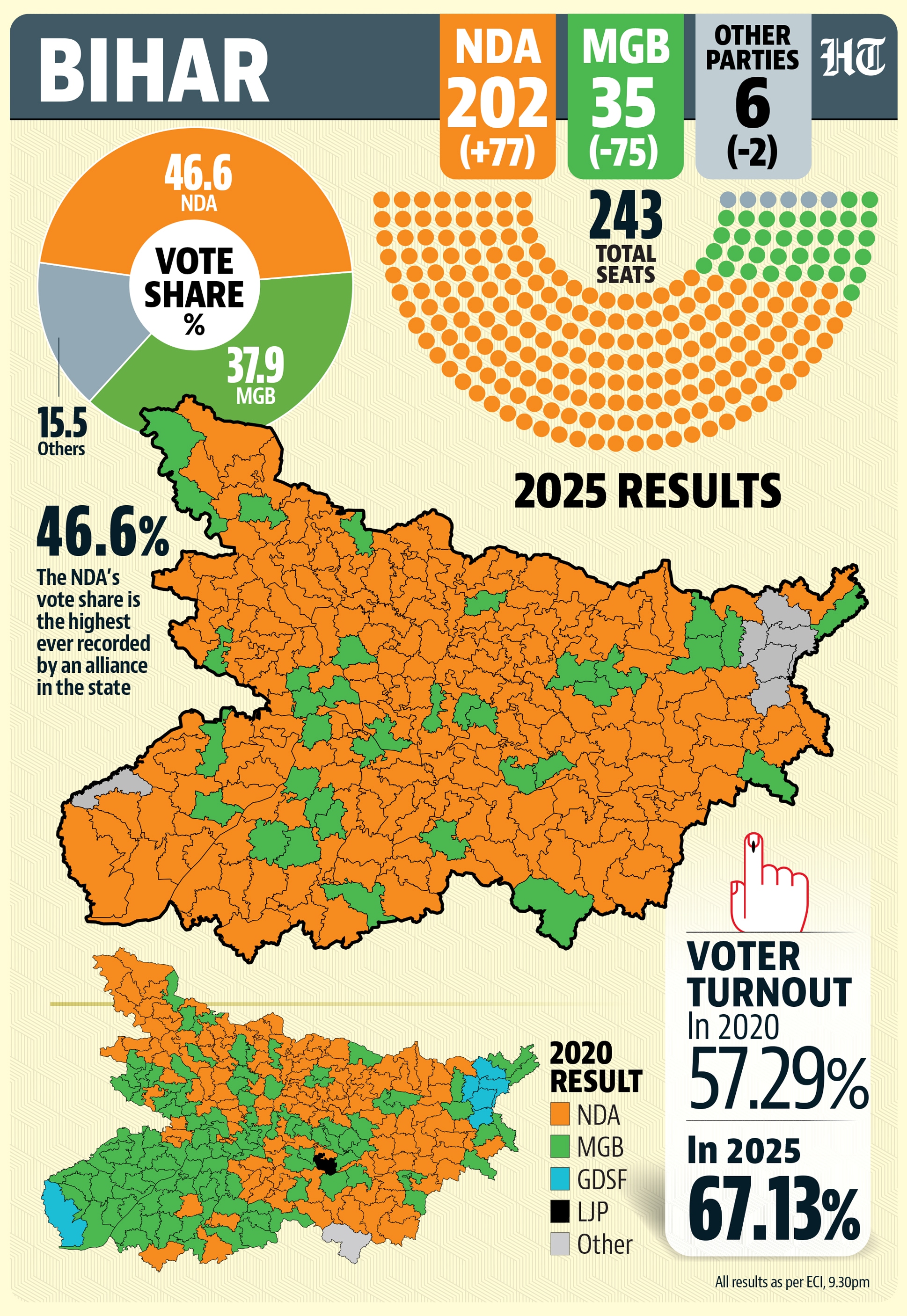
35.14 million women voted in the election, compared to 39.37million men; around 90% of the electorate was around when the RJD was in charge of the state; and Bihar’s infrastructure under Kumar has seen a visible improvement. Operationally, this was backed by a rush of pre-poll sops; the frictionless allocation of seats among alliance partners; and a strong campaign.
Women
14.1 million women received ₹10,000 each before polling under the Mukhyamantri Rojgar Yojana. And the government also hiked the monthly allowance to widows, senior citizens and physically disabled from ₹400 to ₹1,100 . During the campaign, Bihar chief minister Kumar and prime minister, Narendra Modi, repeatedly focused on the empowerment of women over the past twenty years in the state -- starting with the free cycle for schoolgirls scheme introduced in 2005, scholarships for girl students from deprived sections, economic empowerment of over 13 million Jeevika Didis (members of self-help groups) in rural Bihar, and a safer environment for women on account of improved law and order.Political analyst NK Choudhary said the higher turnout among women was simply appreciation of Kumar’s work . “It is a classic example of how women-led development can lead to women-led voting, which may be caste and religion neutral.”The Centre’s schemes such as free ration, Ujjwala Yojana, Matri Vandana Yojana, and Lakhpati Didi Yojana may have also contributed, analysts added. Women are also for prohibition, Choudhary added, and Prashant Kishore’s promise of lifting of prohibition during the campaign and Tejaswhi Yadav’s, of allowing brewing of local wine,, if he came to power “may have created the impression that the opposition wants to lift prohibition,” he said.
Also Read | Coalition calculus fuels Bihar sweep for tight-knit NDA
Jobs
Another issue that dominated the poll narrative was job creation. Both the NDA and the Grand Alliance promised jobs -- the first, 10 million in the next five years, and the second, one government job per household. But the GA’s promise seemed unbelievable, even to voters, who seem to take most promises at face value. “Results show that youth were not swayed by Tejaswhi’s promise and were influenced by Nitish’s good governance and delivery of pre-poll sops,” said Nawal Kishore Choudhary, former Principal of Patna College.
“It was a referendum for the continuation of the development agenda be it good roads, infrastructure and jobs.”And while migration was a big talking point among voters, most accepted the reality that young people would have to travel outside to look for better jobs. “Migration is not new to Bihar. What matters to migrants is that their families are safe back home, which was not the case during Lalu’s tenure,” said Amit Anand, a social activist in Saharsa district.
Infrastructure
Prime Minister Narendra Modi, Union home minister Amit Shah and Kumar in their rallies highlighted the NDA government’s success in revamping the state’s infrastructure including the completion of several bridges over the Ganga , a four-lane highway connecting Patna to Gaya and partial completion of the Metro rail network in Patna. They also spoke of allocation of over ₹10,000 crore for Kosi river management . “When we came to power, Bihar’s infrastructure was poor. We revamped it. More work will be done, if we come to power,” Kumar said in his rallies. He also promised up to 125 units of power free for households -- a welcome gift in a state where the electricity supply was erratic 20 years ago. “This was seen as a step forward,” said Nawal Kishore Choudhary, former Patna College principal, lamenting that even state capital Patna used to be without power for days during Lalu’s 15-year-rule. The free power scheme was implemented from September 1 and covers around 20 million households. For the Grand Alliance, the real issue was not about the promises, but its track record and credibility, given the hangover of its rule in the state between 1990 and 2005. “It did try to push the developmental agenda, but faced a crisis of credibility,” said R Tiwary, a Patna based academic.
(With inputs from Arun Kumar in Patna)


