E-Paper



Xiaomi Redmi 17C costs more, is well polished, and yet hostage to a supply chain
As component costs continually push phone prices up, the Redmi 17C has to realign in a new price band and deliver more to less forgiving customers

 Prefer HTon Google


Almost every affordable or mid-range Android phone analysis these days must illustrate a complex scenario regarding pricing and components. Here is a short history of Xiaomi’s Redmi ‘C” series phones in India. The Redmi 13C in late 23 was priced at ₹7,999 onwards. The Redmi 15C in early 2026 was priced upwards of ₹12,499. We are now at the doorstep of the latest addition to this portfolio (albeit in a shorter window than usual), the Redmi 17C, and the entry price point, at ₹20,999 onwards, is significantly higher than it has ever been.
It is a double whammy, with Xiaomi having to use the MediaTek Dimensity 6300, which has been around for a couple of years. If you think Xiaomi is shortchanging you, scanning the landscape is important. The HMD Vibe 2 Pro 5G (priced at ₹16,999) launched in September, as well as the Samsung Galaxy F70e 5G (around ₹16,000 onwards) and the Oppo K14x 5G (around ₹16,999 onwards) from earlier in the year, are examples of recent launches running this very chip.
In short, they aren’t shortchanging you. It seems more to be a race of which chip is available in enough quantity and at a price that works for the bill of materials for the envisioned product, which dictates the fit.
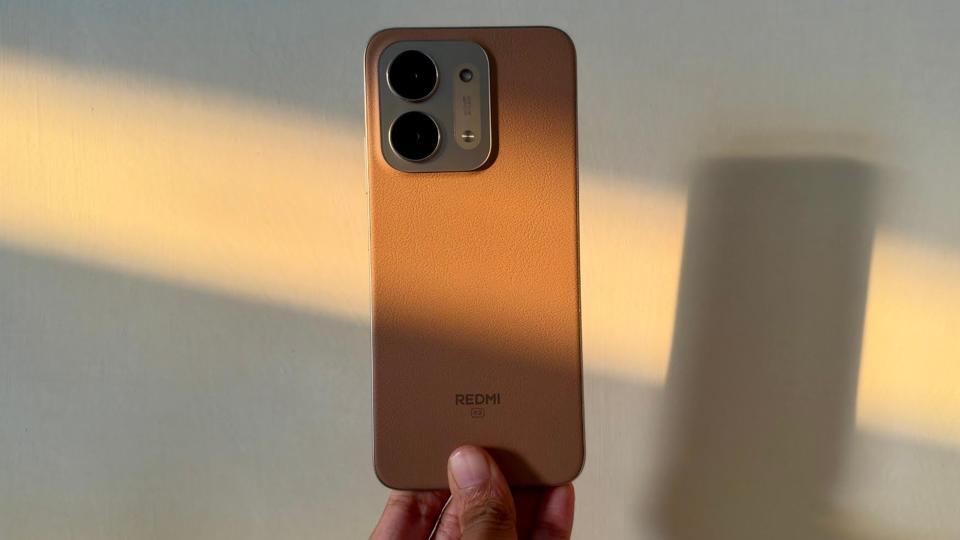
With prices going up, Xiaomi has done quite a bit to give the Redmi 17C a premium personality. The Coffee Brew vegan leather finish is exactly the sort of attention and experimentation that is becoming increasingly rare with smartphones. Purple Dawn is also a rather nice colour option for those who may prefer it, while Dark Night is the conventional black colour. On the Coffee Brew option, even the camera island has a different treatment that adds a bit of shine. It also feels a lot lighter to hold, than the 211 grams spec would suggest.
In terms of performance, the Dimensity 6300 doesn’t leave much to chance and holds up well even with some serious multitasking. At this point, it is important to recommend the 6GB RAM version over the base 4GB (which costs ₹2,000 more) because that extra headroom will serve you well as you switch between everyday apps and some casual gaming from time to time. Improvements that HyperOS 3 integrates also serve well towards the performance pursuit. I’ll also point to the 6,000mAh battery, which benefits from enough layers of efficiency to last a day and a bit longer on a single charge. One could argue for charging speeds faster than 33-watt, but that may be nitpicking.
This 6.9-inch display with the 1600x720 pixel resolution is particularly impressive in how it manages illumination under bright sunlight. Across the board, this looks crisp (certainly crisper than the resolution would suggest) and I’m particularly impressed with how the colours look. Overall, this is a peppy screen (if that’s really the word) that scales the experience well for reading, photo editing and regular app usage.
The 50-megapixel main camera is one of two, the other is an auxiliary lens for depth information, making up the photography experience. Photography, particularly daytime and good-light photos, is nicely locked in. You’ll get a lot of detailing, the colours look well separated and the artificial intelligence (AI) boosting for details and minor elements in any photo remains quite nicely restrained. If there is a lighting scenario or a moment where the Redmi 17C’s camera is not up to the mark, I did not notice any overbearing attempts using AI image processing to make the results look better.
A hot tip: use the Ultra HD mode for those important photos where you don’t want any imperfections to undermine the memories. This sensor really comes alive in this mode.
That said, an auxiliary secondary camera is more of a handicap, because a usable ultra-wide or telephoto would have added versatility to the overall photography proposition. I am also not entirely sure how consumers would receive the 1080p at 30fps video ceiling, because as the Redmi 17C has moved up the price band, expectations inevitably change too.
I had pointed out in my analysis of the Mivi One 5G that the affordable Android phone conversation has been forced to switch gears, because of everything else in the chain. It is a similar scenario with mid-range and upper mid-range phones. The Redmi 17C will be looked at differently because it breaches the ₹20,000 price mark, and that also means buyers are less forgiving of foibles.
Within the constraints of what Xiaomi (and most phone makers too) was working with, I wouldn’t hold using an older generation processor against them, because inventory choice isn’t exactly a luxury these days. Most things around it, including the gorgeous design, a well-optimised HyperOS that promises no slowdown in performance for a 48-month window, the retention of a 3.5mm headphone jack and the expected AI layer inclusion—including Gemini Live and Xiaomi’s own additions in the Gallery app for example—point towards a more expensive than before yet wholesale mid-range Android phone experience.