E-Paper



Right to die: Lines remain divided on legalising passive euthanasia
There’s a mixed opinion about euthanasia or the right to die. While some think India is not ready, a few others even argue for active euthanasia.


Few things divide people so dramatically as debates over the right to life. Capital punishment, abortion, euthanasia -- there is no middle ground, for most people, on these issues. You either consider life sacred or your prioritise the individual’s freedom to choose.
There’s an interesting twist when it comes to euthanasia. With execution and abortion, the subject of the debate is not heard. A death row convict is not asked his opinion; a foetus cannot give one.
With euthanasia, each side is often able to argue their case. And so you have elective deaths such as that of Brittany Maynard, the 29-year-old American newlywed with terminal brain cancer who moved states to make use of Oregon’s physician-assisted suicide law.
You have living wills that seek to determine how much life support a person is to be given.
But you also have cases such as that of Terri Schiavo, a woman in a persistent vegetative state whose family was torn apart as her husband said she would have wanted to die and distraught parents beg for her feeding tube to stay.
In Schiavo’s case, the debate wore on for seven years until US courts allowed her feeding tube to be removed, in 2005.
In India, the idea has prevailed -- until recently -- that it is better to support any remaining vestiges of life than to act in such a way as to speed up death (except in prison; there we continue to have rows of people awaiting the noose).
Last week, the Union health ministry invited public reactions to a draft bill that looks set to change that. Called the Terminally Ill Patients (Protection of Patients and Medical Practitioners) Bill, it seeks to legalise passive euthanasia -- the kind where you allow a person to die without actually doing anything to speed that process along.
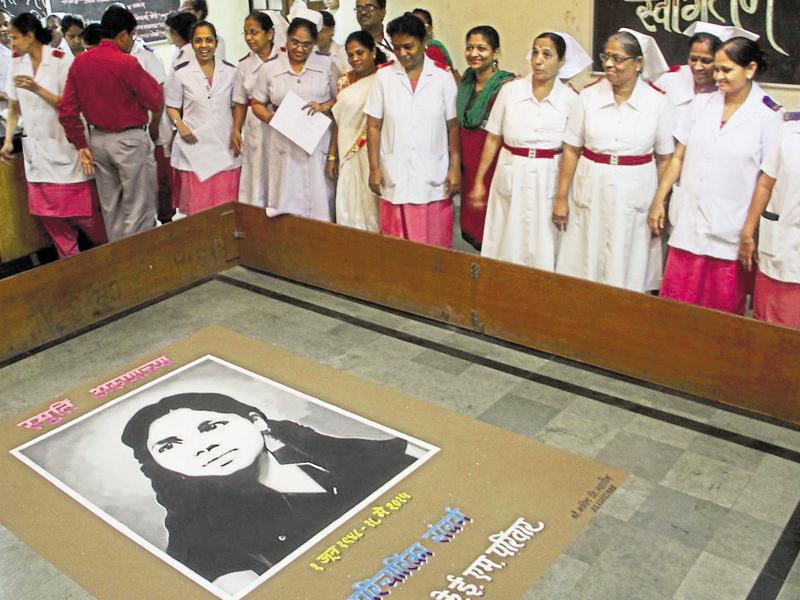
It’s a shift in policy that began in 2011, when a mercy killing petition was filed on behalf of a former nurse who had at that point spent 38 years in a coma. Aruna Shanbaug suffered extensive brain damage when she was raped and sexually assaulted by a sweeper at the government-run KEM hospital in Mumbai where she worked. The Supreme Court ruled against a mercy killing but delivered a landmark judgment allowing passive euthanasia under exceptional circumstances, and asking that the government frame a law to monitor it.
There are some who think India is not ready for this law. “It takes sensitivity and maturity to make such a call,” says Dr Bipin Walia, head of neuro-spine surgery at Delhi’s Max Hospital, Saket. “We Indians are emotional by nature -- and we know how to find loopholes in a law.”
Read | Govt’s draft bill again stirs debate on passive euthanasia
That latter bit is the slippery slope argument that even many proponents of euthanasia can’t get past. If it is legal to passively allow or actively hasten death, what’s to say an aged parent won’t be hastened in favour of an inheritance, or a spouse have treatment withdrawn for the sake of a hefty insurance payout?
Cardiothoracic and vascular surgeon Dr A Sampath Kumar, author of a book called Patients’ Rights, has a counter-argument. “The fundamental goal of medicine is to reduce pain and alleviate suffering,” he says. “As such, passive euthanasia can become an extension of medical care, in cases of terminal illnesses and extreme suffering.”
In his time working at the city’s All India Institute of Medical Sciences (Aiims), he dealt with numerous cases where passive euthanasia would have been the better alternative.
There are also some who argue for active euthanasia. “In situations such as end-stage cancer, when even a morphine pump cannot manage the pain, mercy killing should be allowed,” says oncologist Dr PK Julka. “We deal with such patients and see how devastating continued life can be for them and their families. And what is the point in prolonging the physical agony of a terminally ill person?”
The risk of abuse should not be a deterrent, these doctors add. Instead, adds Supreme Court advocate Shekhar Naphade, who had argued for a mercy killing for Shanbaug, the focus should be on creating a strong law with safeguards to ensure it is not misused.
(To take a look at India’s proposed bill, go to mohfw.nic.in. You can email your reactions to the ministry of health and family welfare at passiveeuthanasia@gmail.com by June 19)