Editor’s note: This story was first published on September 13, 2015. HT is republishing it following an incident in Bangalore where a leopard strayed into a school
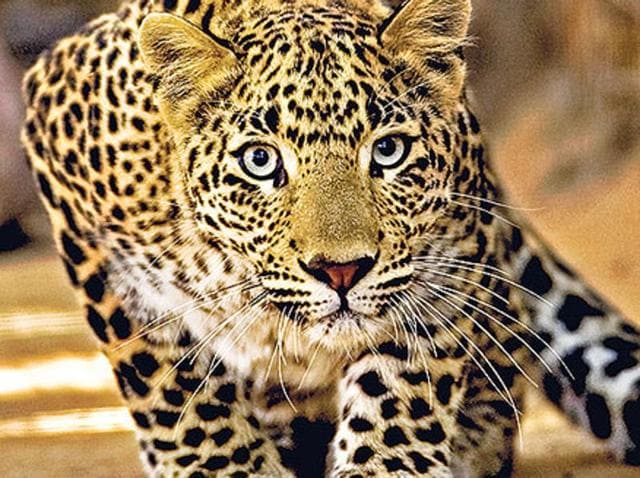
Sunday’s leopard incident in Bengaluru has brought the endangered spotted feline back in the spotlight. The animal entered a school premises and attacked half a dozen people as it attempted to escape. It was finally captured after being shot with two tranquillizer darts.
Read more: Captured in pics: When a leopard strolled into a Bengaluru school
A couple of similar incidents have already been reported this year, adding to a growing list of man-animal conflicts, a cause for concern for environmentalists and those in prone areas. The species, which is endangered, is losing its habitat as urban boundaries grow and is likely to come more in contact with humans.
The country’s first-ever leopard census was in fact conducted last year to help monitor the animal. The numbers revealed both good and bad news. The good news was that the Wildlife Institute of India (WII) estimated there are 12,000 to 14,000 in the wild – a very healthy number for the endangered spotted big cats. The bad news was that almost half live outside protected areas and are vulnerable to conflict with people.
The damage this is doing to their numbers is borne out by data collected by the Wildlife Protection Society of India (WPSI), which stated that 299 leopards had been killed by September; and 329 were killed in 2014. The highest number of deaths was reported in Uttarakhand, Maharashtra, Rajasthan, Madhya Pradesh and Uttar Pradesh.
{{/usCountry}}The damage this is doing to their numbers is borne out by data collected by the Wildlife Protection Society of India (WPSI), which stated that 299 leopards had been killed by September; and 329 were killed in 2014. The highest number of deaths was reported in Uttarakhand, Maharashtra, Rajasthan, Madhya Pradesh and Uttar Pradesh.
{{/usCountry}}The first-of-its-kind survey by the Dehradun-based WII collected data on leopards while conducting the tiger census in 2014 – the tiger population, incidentally, is at an estimated 2,226, a 30% increase from 2010. Using the same methodology of double sampling – camera traps and scat DNA analysis – and extrapolation, the WII arrived at a leopard population of 7,872 in five landscapes, including the Gangetic plains, central India and the Western and Eastern Ghats. While camera traps covered 9,735 locations across the five major tiger landscapes – spread across 350,000 sq km -- a total of 10,000 surveyors also walked a combined 459,096 sq km across 18 states to gather data. Areas left out include Gujarat, West Bengal, the eight states of the north-east, and the higher reaches of Uttarakhand. “The leopard data gathered in the tiger habitats was extrapolated to arrive at an estimated national leopard population, on the basis of prey populations, the ratio of spotted cats to tigers, and other factors,” says YV Jhala, senior biologist with the WII.
Typically, there are five leopards for every tiger in the wild. As with the tiger census, there has been some debate among wildlife experts over the methodology used in the leopard count, and the accuracy of the extrapolation. “The methodology of extrapolation using linear regression is fundamentally flawed and the results are not dependable as the methodology fails to take into account other extraneous factors that impact animal population,” says biologist K Ullas Karanth, Padma Shri awardee and director of the Bengaluru-based Wildlife Conservation Society. “Even within the tiger survey region, the basic methodology employed by the WII was flawed statistically. For this reason, I do not think the tiger and leopard numbers it generates for larger landscapes are reliable.”
While senior WII biologists Qamar Qureshi and Jhala dispute this claim, PR Sinha, former director of WII and India representative of global wildlife monitoring body International Union for Conservation of Nature (IUCN), vouched for data collected but not the final inference. “To me, the data collected through a long process of field surveys is robust. Scientists can differ on the final statistical inference,” says the biologist who introduced the methodology for tiger estimation in India in 2006. Karanth and WII scientists agree on one point - the actual number of leopards in the wild could be much higher, since the survey was restricted to tiger landscapes, which cover just 6% of the country’s wildlife areas. “Even presence-absence estimations are vital for conservation strategy, adds Bittu Sahgal, editor of wildlife magazine Sanctuary Asia.
The concern being raised now is whether India has a plan to manage these numbers in light of the country’s degrading wildlife habitats. Sinha calls this a major worry because the leopard’s prey base is extremely poor. The WII survey has revealed that the small wild animals that are the prey for leopards in non-protected areas are in distress because of human encroachment and degradation of forests. As a result, leopards are forced to enter human habitats looking for food and water, especially during summer months. This has been in evidence from Mumbai to Meerut, where scores of leopards have been caught after they ventured into residential areas, some of them killed, others trapped, still others rescued from wells. “The fact is, leopards are more adaptable and therefore able to live in closer proximity to humans, often without people even knowing they are around,” Sahgal says. This proximity is becoming increasingly fatal, with the monthly death rate for leopards this year rising to 37, from 27 in 2014. The WII exercise could lead to a better protection and leopard management strategy, since we now know the forest locations with large leopard populations, Sinha says. For that to happen, there will have to be a will among foresters to protect the vulnerable animals, adds Sahgal. “The more natural forests we destroy, the quicker we will push these animals towards extinction.”
Buffer zone turns conflict zone
As the buffer zones have shrunk over the past decade, under the influence of human activity, prey populations have fallen and wild animals have been forced to forage further afield. Here, they are increasingly running into people, fields, wells and construction projects. The impact is clearly visible in the number of casualties – 769 humans, 179 elephants and 110 tigers have been killed around wildlife zones between 2012 and 2014, according to data released by the government. This is about five times the number of these animals killed by poachers during this period.
“It is the rising human population in many of these green corridors that is causing the rise in conflict,” says Dipankar Ghose, director of species and landscapes with the advocacy group World Wide Fund (WWF) for Nature. The quality of buffer zones is an area of concern and the prey population is not sustainable for the large populations of wildlife residing outside the protected areas, adds a biologist with WII.
About half of the 12,000 to 14,000 leopards in the country, a third of India’s 2,226 tigers, and 60% of its 29,000 wild elephants live in the buffer zones outside national parks and sanctuaries. Studies in states with a high density of wildlife, such as Uttarakhand, Maharashtra, Madhya Pradesh and Assam, show that new conflict zones have been created in such areas over the past decade. The government’s response has, in many cases, been counterproductive. Sensing that protecting wild animals will not fetch votes, the environment ministry earlier this year authorised state governments to declare wild animals vermin if they pose a threat to farms.
The vermin tag means that these species can then be hunted or eliminated until their numbers are sufficiently reduced. In a fresh advisory, the ministry recently added that forest departments can allow “elimination” of animals responsible for “habitual crop raiding”… “in rarest of rare cases”. ‘Rarest of rare’ has not been defined. While these options do not apply to endangered species such as the tiger, leopard and elephant, they help explain why prey populations are dwindling in buffer zones, forcing the endangered species into conflict with humans.
The union ministry has also asked state governments to adopt Gujarat’s volunteer programme to rope in civilians to help protect human habitats from wild animals. In Gujarat, the scheme was used to protect lions in and around the Gir National Park. Experts say people living around Gir have traditionally protected lions, but most of those in tiger and elephant conflict zones will most likely not have the same approach. The truth is, it will be difficult to prevent the conflict unless governments - state and centre - begin to work to fix the root of the problem: protecting and revitalising buffer zones and restoring crucial wildlife corridors between protected areas. The WII study will likely reiterate why this is crucial. It is the government’s response that might fall short. Its latest measure, for instance, has been to open up degraded forests to ‘private management’, a move that wildlife experts say could destroy complex ecosystems altogether.
Watch | Stray leopard sneaks into Bengaluru school