When deadly flooding struck Uttarakhand in June, killing an estimated 1,000, India’s disaster management looked disastrous. The devastation was thought to have been worsened by officials who made light of a specific weather warning.
Yet, it was the India Meteorological Department, the nation’s 138-year-old national weather agency, which came under a cloud of doubt. The National Disaster Management Authority (NDMA) was slammed for being a refuge for retired bureaucrats with the right political connections.
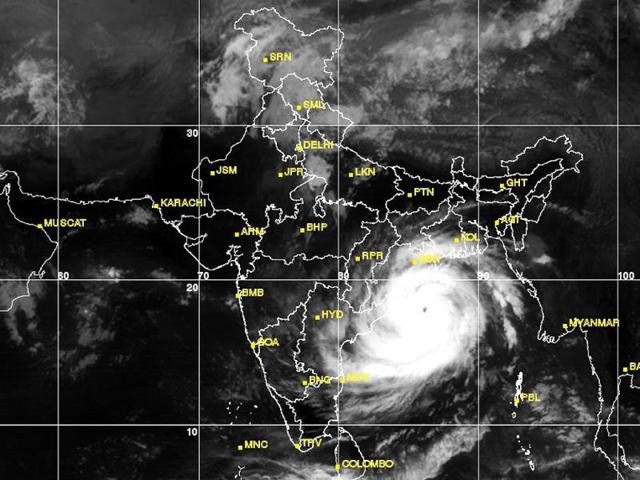
Phailin, India’s most powerful cyclone in a decade, proved to be an exception, when authorities got their act together. More than 23 hours after the storm’s landfall, authorities could confirm only 14 dead. The Met department picked up Phailin on Day One, on Oct. 8, when it was just a low-pressure fleck.
Precise tracking of the cyclone’s footprints and intensity made the key difference. Between October 8 and 12, authorities got four days of response time.
“This is considered a reasonably long time to prepare for a cyclone, giving immense confidence (to authorities) to move men and material,” the chief of India Meteorological Department, the national weather bureau, LS Rathore said. Phailin triggered one of the largest evacuation operations in Indian history.
Each year, the Met department faces a credibility test of predicting an increasingly erratic June-September monsoon, the lifeblood of Asia’s third-largest economy. Yet, the weather bureau isn’t as slack as it is made out to be.
{{/usCountry}}Each year, the Met department faces a credibility test of predicting an increasingly erratic June-September monsoon, the lifeblood of Asia’s third-largest economy. Yet, the weather bureau isn’t as slack as it is made out to be.
{{/usCountry}}An international audit of forecasting errors in 2012 showed the Met department’s accuracy was comparable and, higher in some instances.
A comparison of wind-related forecasts between India’s National Centre for Mid-Range Weather Forecasting, the US’s National Center for Environmental Predictions, the UK Meteorological Office and the European Centre for Medium Range Weather Forecasts showed Indian predictions had the lowest “mean error” scores in four among five categories of projections: 48-hour, 72-hour, 96-hr and 120-hour forecasts. Only in the 24-hour category was the “mean error” score for India higher at 4.1, compared to US’s 4.0 and UK’s 3.9.