Indian women have become more active in electoral politics during the past few decades — from a mere 45 women in the 1957 general elections, the number multiplied more than 10 times to 556 in the 2009 election.
Yet, it is not a happy story all the way — fewer and fewer women candidates have been getting elected over the years, as Election Commission data shows.
Only 59 of the 556 — a mere 11% — women candidates were elected to the Lok Sabha in 2009. This was abysmally low when compared to the strike rate of women elected to Parliament in the 1957 and 1967 when it was 60% and 45%, respectively.
But 11% is a better strike rate than the 6.4% for men. Of the 7,514 men in the fray, 484 were elected.
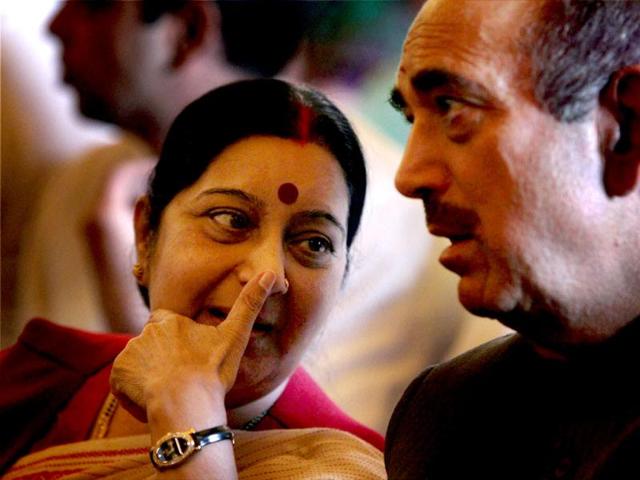
The elected MPs included high-profile winners, such as Congress president Sonia Gandhi and party leaders Meira Kumar and Kumari Selja; BJP stalwarts Sushma Swaraj, Yashodhara Raje Scindia and Maneka Gandhi; women politicians with a political legacy such as Supriya Sule and Agatha Sangma of the NCP, and Priya Dutt of the Congress.
The highest percentage of women candidates was in Tura constituency in Meghalaya, where three of the four candidates were women. The NCP’s Agatha Sangma, daughter of former Lok Sabha Speaker Purno Sangma, was elected from here.As political parties struggle to finalise their lists of candidates for the forthcoming elections, there is a clamour from women’s groups to increase the representation of women. But parties consider "winning ability" of candidates over any other factor in giving tickets.
The highest percentage of women candidates was in Tura constituency in Meghalaya, where three of the four candidates were women. The NCP’s Agatha Sangma, daughter of former Lok Sabha Speaker Purno Sangma, was elected from here.As political parties struggle to finalise their lists of candidates for the forthcoming elections, there is a clamour from women’s groups to increase the representation of women. But parties consider "winning ability" of candidates over any other factor in giving tickets.
The 556 women candidates in the last general election formed a paltry 7% of the total candidates in the fray then: 8,070.
“The rising number of women contestants is a good sign, hopefully there will be more women this time too, but we can’t be sanguine. The reason is that many of these women have a patriarchal political legacy or may be proxy candidates or from recognised families,” pointed out Dr Vibhuti Patel, economist, director of post-graduate research in Mumbai’s SNDT University, a member of the subgroup on gender in the Planning Commission of India.
It’s also significant that the young electorate, or first-time voters in this election, also display the skewed pattern: women are only 41% of first-time voters though they form 47% of the population in the 18-19 age group. The latest EC data showed that there were 96 lakh women between 18 and 19 years had registered to vote compared with 1.4 crore male voters.