The government has banned the import of human embryo for the purpose of commercial surrogacy against the backdrop of concerns that India has become an international hub for the practice .
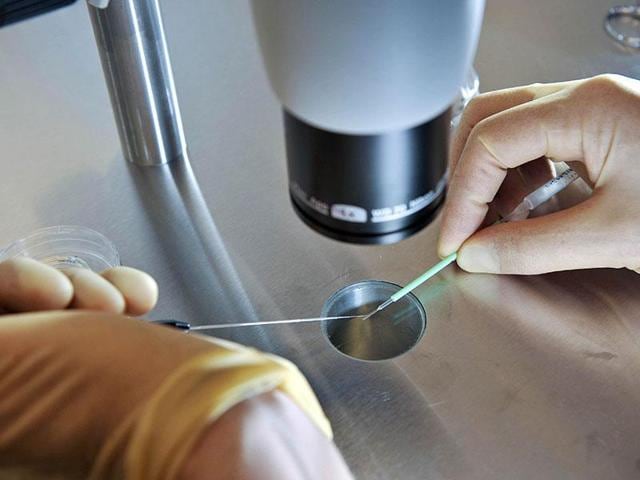
Amending its 2013 notification, which has been challenged in the Supreme Court, the commerce and industry ministry issued a fresh order on October 27 that allows the import of embryos only for research.
The decision is likely to affect the surrogacy business in India, which the government has admitted is thriving in the absence of a law to regulate or contain it.
In an affidavit filed in the Supreme Court, the health and family welfare ministry took a definite stand against commercial surrogacy and said it had communicated its views to the commerce ministry, which then issued the fresh notification on the ban.
After the new notification, there is no possibility of anyone obtaining a no-objection certificate from the Indian Council of Medical Research (ICMR) for importing embryos for commercial surrogacy.
The ministry said its proposed law shall allow only “altruistic surrogacy to the infertile married Indian couples” and not benefit foreigners, the Supreme Court was informed.
{{/usCountry}}The ministry said its proposed law shall allow only “altruistic surrogacy to the infertile married Indian couples” and not benefit foreigners, the Supreme Court was informed.
{{/usCountry}}“It is respectfully submitted that the adequate provisions will be made in the enactment to prohibit and penalise commercial surrogacy services,” stated the affidavit filed in response to a PIL by advocate Jayashree Wad.
Wad had sought a direction from the Supreme Court to end commercial surrogacy. As an interim measure, Wad wanted the court to stay the 2013 notification that allowed import of human embryos. Medical practitioners were practising surrogacy under shelter of the notification.
The government’s latest move came almost two weeks after the top court suggested the government should put on hold the import of human embryos as India had become an international hub for commercial surrogacy.
Agreeing with Wad’s contention that the surrogacy business had an annual worth of at least $445 million, a bench of justices Ranjan Gogoi and NV Ramana had said on October 15 that there should be a law to regulate the practice.
It had given the Centre time till October 28 to spell out the measures it intends to take. The bench had warned it would issue a direction if its order was not complied with.
The Centre’s affidavit assured the court the new law would have provisions to safeguard the rights of a surrogate mother. In response to a query from the court, the government clarified that the surrogate mother would legally continue to be the legitimate mother.
But in altruistic surrogacy arrangements, a surrogate mother agreed to give up her motherhood rights and the commissioning couple took over as the child’s legal guardian.
The issue of a child’s parentage in such a relationship will be settled in the draft surrogacy bill – The Assisted Reproductive Techniques (Regulation) Bill 2014 – which is being prepared in consultation with the law ministry. The bill has been uploaded on the ministry’s website for public responses.