As one enters the cradle of India's 'revolution' and the site of pilgrimage for those the government describes as Left-wing extremists, what is most striking is the sheer inconspicuousness of the town.
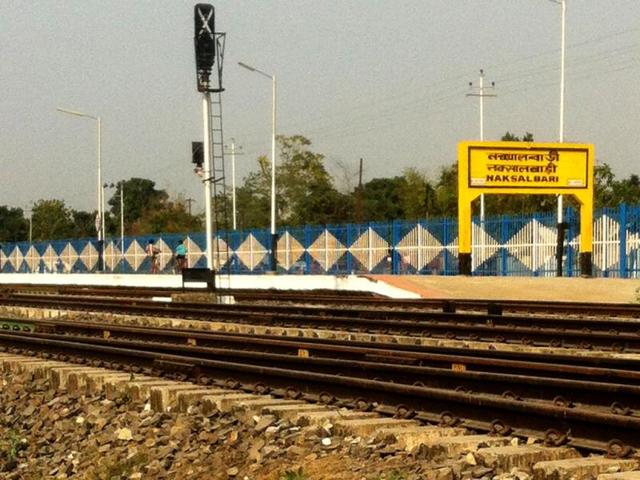
It is easy to skip Naxalbari, to drive past the historic site, for little distinguishes it from any of east India's myriad bazaars and villages.
The railway station is the town's key landmark, and a few kids are strolling across the tracks. The main bazaar, a little down the road, is littered with ATMs of private banks, and a string of mobile repair shops. Finance capital and technology has arrived in the place which had once stood up against feudalism and capitalism.
It was here in 1967 that India's far-Left insurgency began. Inspired by the Maoist revolution in China, a group of young men decided to mobilise the local peasantry to wrest land from landlords for redistribution among the landless. They picked up arms, and fought the state apparatus. Through the late 60s and 70s, West Bengal was home to the fiercest clashes between security forces and the radical Left.
An entire generation of young idealistic men and women took to the ideology to expose "bourgeois democracy", only to see their movement crushed.
An entire generation of young idealistic men and women took to the ideology to expose "bourgeois democracy", only to see their movement crushed.
But its legacy remains. Next door in Nepal - the border is only a 20-minute drive away - various communist factions waged a popular revolt, finally ousting the monarchy and ushering in a republic in 2008. Today's Maoists in central and east India draw inspiration from the Naxalite strand.
But here, the movement is only a distant memory. Anando Ghose, who runs a small eating joint, tells HT, "It was all a long time ago. We were very young, in school. There was a lot of fear then. But it is all over now."
Kanu Sanyal, one of the movement's founders, committed suicide in his home in Naxalbari in 2010.
Did it benefit the town? Ghose responds, "No benefit and no loss. If you succeed, there is benefit. The movement failed. We got nothing. It is politics as usual now."
Naxalbari falls under the Darjeeling parliamentary constituency, which is witnessing a four-cornered contest between BJP candidate SS Ahluwalia backed by Gorkha Janamukti Morcha, Trinamool candidate Bhaichung Bhutia, CPM candidate Somen Pathak and independent Mahendra Lama.
In front of a deserted TMC office, which has several vacant chairs, a group of drivers are playing cards. Speaking in a mix of Nepali, Bengali and Hindi, one of them says that the town's votes will go to TMC and CPM.
"But nothing will change. We will remain backward. People will still migrate for jobs. There will be no industry. Politicians will continue to do their politics."
It is the voice of a resigned man, in a resigned town, witness to a failed revolution, now enmeshed in India's democratic festival of elections.