
 E-Paper



World mourns anti-apartheid hero Nelson Mandela; burial on Dec 15
Very few people become global icons whose passing can dominate all of the world's front pages, trigger non-stop TV coverage and invite worshipful plaudits from across the media landscape. Nelson Mandela was one. Remembering Madiba, all steel and gentleness | HT Edit: Mandela, a man who belongs to the ages


The death of global anti-apartheid icon and South Africa's liberation leader Nelson Mandela has unleashed a chorus of awed respect from across the worlds of politics, religion, sport and culture.

Statesmen, resistance leaders, Nobel laureates and prisoners of conscience have died before, but never has one man united such global unity in honoring his passing.
Very few people become global icons whose passing can dominate all of the world's front pages, trigger non-stop TV coverage and invite worshipful plaudits from across the media landscape. Nelson Mandela was one. The journey 1918-2013
The 95-year-old's death late on Thursday also generated an outpouring of emotion across Twitter and other social media, demonstrating a fitting sense of global unity in praise for the anti-apartheid hero whose struggle for equality in South Africa inspired billions.
Mandela will be buried on Sunday, December 15 at his rural home in Qunu, and a memorial service in a Johannesburg stadium will be held on Tuesday, December 10, president Jacob Zuma announced.
READ:Remembering Madiba, all steel and gentleness
His body will lie in state at government buildings in Pretoria from Wednesday, December 11, until the burial, and this coming Sunday, December 8, will be a national day of prayer and reflection.
In pics: Mandela's Indian connect
Mandela was hospitalised in June with a recurring lung infection and slipped into a critical condition, but returned home in September where his bedroom was converted into an intensive care unit.
World leaders queued up to issue solemn tributes to the 95-year-old anti-apartheid hero who became South Africa's first democratic president.
"He no longer belongs to us; he belongs to the ages," Barack Obama, America's first black president, said in a deliberate echo of an early tribute paid to Abraham Lincoln, the president who emancipated the slaves.
In a rare tribute for a foreigner, Obama ordered US flags at the White House and other public buildings flown at half-mast until Monday.
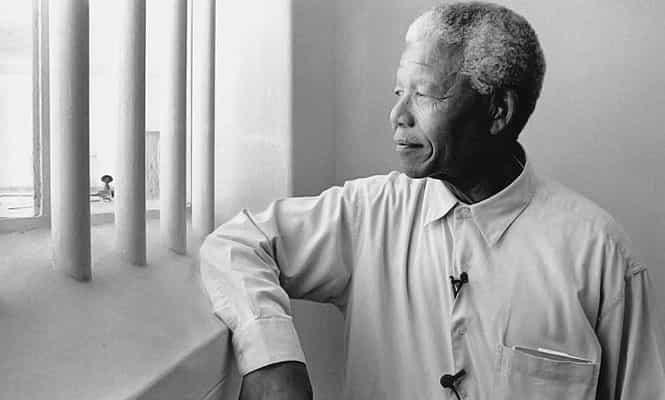
Over and over, leaders returned to the dignity Mandela displayed during his long imprisonment by South Africa's former racist regime and then later, when he led his country to majority rule.
United Nations Secretary General Ban Ki-moon declared Mandela a "giant for justice."
"Many around the world were influenced by his selfless struggle for human dignity, equality and freedom. He touched our lives in deeply personal ways," he said.
Britain's Queen Elizabeth II sent her personal condolences to Mandela's family, saying she "remembers with great warmth" her meetings with a man who "worked tirelessly for the good of his country."
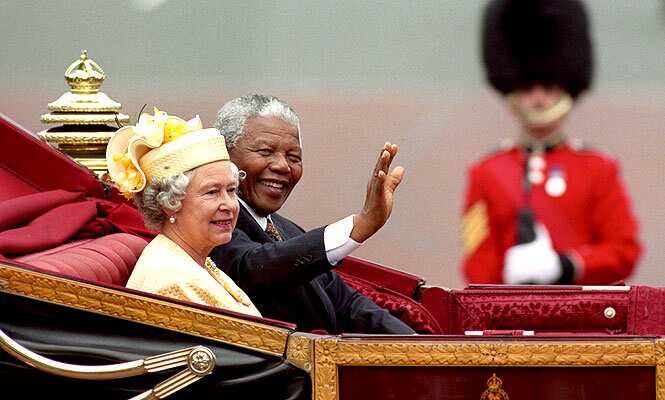
Prime Minister David Cameron, who in 2006 apologized for what he said were the "mistakes" of his Conservative Party in its response to apartheid in Britain's former colony, said: "A great light has gone out in the world."
French Prime Minister Jean-Marc Ayrault, in China on an official visit, said Mandela would "long be an inspiration to all of humanity" as his government also ordered flags to fly at half-mast.
India's Prime Minister Manmohan Singh hailed the anti-apartheid icon as a "true Gandhian" who would continue to inspire future generations after his death, while Nigeria's President Goodluck Jonathan dubbed Mandela "one of mankind's greatest liberators."
The Indian government announced a five-day state mourning as a mark of respect to Mandela.
A decision to this effect was taken at a special meeting of the Union Cabinet, which condoled the death of the anti-apartheid icon. "Mandela was the tallest leader of not only his generation but possibly this entire paradigm. The role that he personally played in dismantling the apartheid is something exemplary," information and broadcasting minister Manish Tewari said after the meeting.
READ: With Mandela gone, South Africa may become vulnerable to racial tension
Russian President Vladimir Putin recognised Mandela as "one of the greatest politicians in modern times" and a man who never betrayed his convictions.
And Israel's leaders recognised him as a champion of peace despite his tireless advocacy of the Palestinian cause.
Retired political figures who remembered Mandela during his 27 years of imprisonment or worked with him after his 1990 release were also effusive.
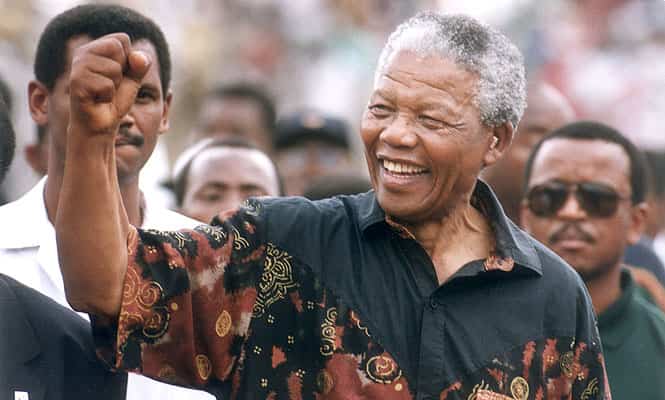
Former US president Bill Clinton tweeted a picture of himself with his "friend," and said: "Today the world has lost one of its most important leaders and one of its finest human beings."
"Over the past 24 years Madiba taught us how to come together and to believe in ourselves and each other. He was a unifier from the moment he walked out of prison," said Archbishop Desmond Tutu.
In his home country, most newspapers published their headlines in black, in a reflection of the deep sense of loss brought by the death of "Madiba", a father figure to millions of South Africans.
"The World Weeps," said the national daily The Star.
READ: Mandela: prisoner, president and father of 'Rainbow Nation'
Around the globe, news channels offered rolling coverage while many newspapers and weekly magazines deployed the kind of souvenir front pages that would usually greet the death of a monarch or national hero.
The cover of The New Yorker featured the image of a young Mandela raising his fist with typical defiance and dignity, while Time magazine chose a more recent photo with the caption: "Protester. Prisoner. Peacemaker."
"The alchemy of character and events made of Mandela a peculiarly unspotted figure," wrote Britain's The Guardian in an editorial.
"Few could deny a certain sweetness in his personality, and a largeness of mind that had room for all."
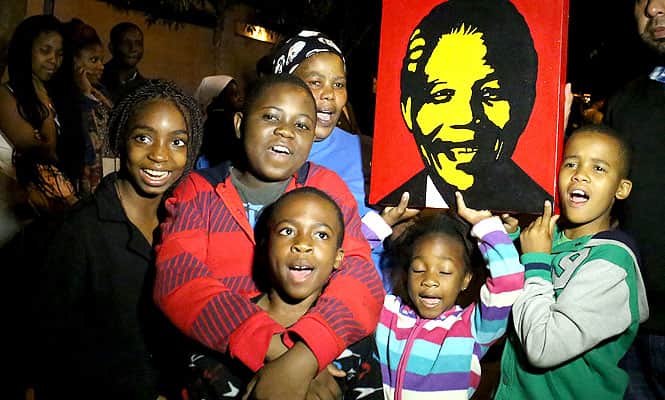
Mandela spent 27 years in jail for his battle against white-supremacist rule, before being elected in South Africa's first all-race elections in 1994 and reconciling with his former oppressors.
His death had long been expected, coming after a spate of hospitalisations with lung infections and three months of intensive care at home. But the announcement sent a shockwave around the world nonetheless.
READ: The private heartache of public hero Nelson Mandela
Britain's Daily Mail described Mandela as a "colossus" and "a giant who taught the world the meaning of forgiveness", joining other British newspapers for whom news of Mandela's death broke just in time for front-page redesigns.
Spain's leading daily El Pais dedicated its first 13 pages to the story, leading with "The man who defeated racism" on its front page above a photo of him with his closed fist raised to his forehead.
The online edition of Germany's Der Spiegel hailed Mandela as "one of the greatest fighters against oppression" while Berlin daily Taggespiegel carried "Death of a legend" as its headline.
In France, sports newspaper L'Equipe noted Mandela's influence and example on athletes around the world, given how he used sport as a force for national reconciliation at the 1995 Rugby World Cup.
While paying fulsome tribute, Sweden's Dagens Nyheter sounded a note of criticism in an editorial: "It would have been desirable that Mandela had spoken about the abuses in neighbouring Zimbabwe and South Africa's clumsy handling of the problems with (Robert) Mugabe."
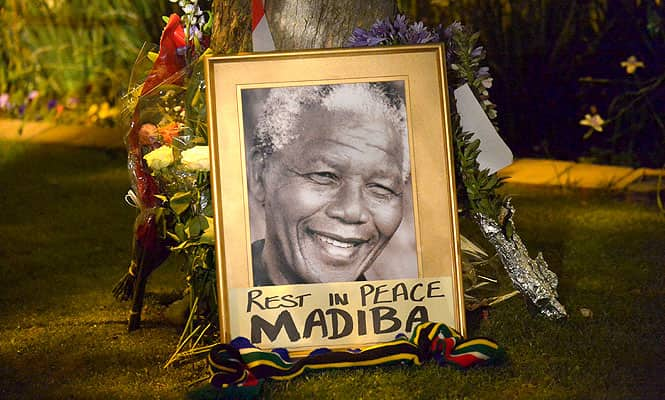
For many, Mandela's death was very much a social media event with Twitter and Facebook ablaze with shared stories, reflections and comments that took the story into a more personal domain.
"I learned of the news on Twitter and shared it on Facebook. It's a normal routine for people in this day and age," said Yuen Chan, lecturer at the School of Journalism and Communication at The Chinese University of Hong Kong.
News of Mandela's death broke too late for many of Asia's newspapers to carry in their print editions. But Hong Kong's South China Morning Post and others splashed the news across their websites.
When it comes to major news events of this magnitude "there is something about having that front page in your hand, holding something physical", Chan said.
"But I'm not sure if that really applies to young people, whether they have that attachment to it."
Regardless of the format, Mandela's legacy struck a universal chord, she said, prompting a global media response of rare scale.
The Onion, a US purveyor of mock news, laced its regular shots of satire with regret at the South African hero's passing. Its headline said: "Nelson Mandela Becomes First Politician To Be Missed."
Full Coverage


