The phase II of Jaipur metro rail may extend from Sitapura till Vishwakarma industrial area to ease the travel of over three million people, officials associated with the project said.
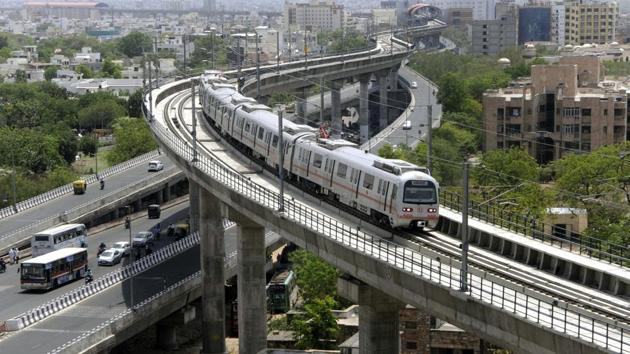
A detailed project report (DPR) for the phase II was prepared in 2014 from Vishwakarma industrial area (VKIA) to Ambabari, covering a distance of 23.771 km – 9.963km underground and 13.808km elevated -- at an estimated cost of ₹10394 crore.
The state government appointed France-based firm EGIS Rail for review and planning of the DPR prepared for the phase II. The firm conducted a traffic survey of the Jaipur city and submitted a report, suggesting that the phase II be extended till VKIA instead of Ambabari. The route length comes to 30.6km.
A Jaipur Metro Rail Corporation (JMRC) official said the firm has prepared a comprehensive mobility plan that identified the busiest roads of the city for executing a mass rapid transit system (MRTS).
JMRC has invited people’s suggestions on the report till July 3. The firm has recommended that phase-I and phase-II corridors be linked at Sindhi Camp.
{{/usCountry}}JMRC has invited people’s suggestions on the report till July 3. The firm has recommended that phase-I and phase-II corridors be linked at Sindhi Camp.
{{/usCountry}}The phase I of metro rail covers 12.067km from Mansarover to Badi Chaupar, of which service is now operational till Chandpole.
“DPR for the phase II was prepared in 2014, thereafter the government asked for its review. The firm has submitted a report on the basis of traffic and passengers; we have invited suggestions from public,” said JMRC project director Ashwini Saxena.
“The firm will submit the final report in a month, which will have all the details, such as project cost, underground and elevated routes, and the number of coaches.”
The firm has identified corridor-alignment options for MRTS and suggested stations at Sitapura industrial area, Pratap Nagar, Sanganer, interational airport, Durgapura, Mahaveer Nagar, Gopalpura, Dev Nagar, Tonk Phatak, Gandhi Nagar, SMS stadium, Narayan Singh circle, SMS hospital, Ajmeri Gate, Sindhi Camp, Collectorate, Panipech, Ambabadi, Shiva Park, Vijaya Bari, Manipal hospital, and Vishwa Karma industrial area.
The study by the firm, covering 10971 families residing in 91 wards, revealed that 16.06% walk, 6.01% cycle, 18.49% take buses and minibuses, 18.71% travel by cars and taxis, 31.70% ride two-wheelers, 8.61% use auto-rickshaws, and 0.42% travel by metro.
The firm estimates that 4,05,065 passengers will travel daily in metro in 2026, the year in which the phase II will be commissioned.
The report states that by 2047, the population in the Jaipur region will be about 68.3 lakh; this will translate into about 6.22 lakh peak-hour motorised trips in 2047, an increase of about 1.9 times compared to the present level.
Jaipur is one of the cities that record high per capita vehicle ownership (470 per 1000 inhabitants) and mechanised per capita trip rate of 0.89 per day.