I love adding lights to my home, but not the kind that leave everything looking too yellow. I prefer lighting that makes a space feel warm, cosy and inviting without changing the way my interiors look. But how do you find that balance? Ceiling lights are one of the easiest ways to refresh your home without giving it a complete makeover. However, choosing the right ones involves more than picking a design you like. Factors such as colour temperature, brightness, furniture and wall colours all play a role in how the light looks once installed. If you want to give your home a cosy feel without making it look too yellow or overly bright, here are a few things to consider before buying ceiling lights.
1. Check the colour temperature before buying ceiling lights
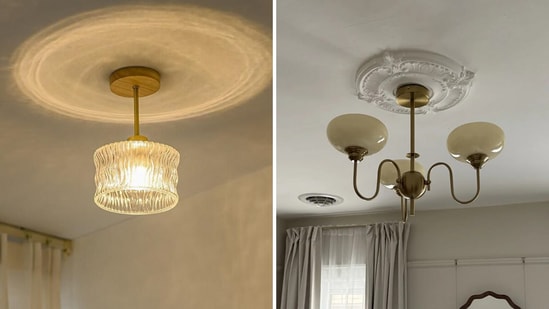
Colour temperature is one of the first things to be taken into consideration when choosing ceiling lights. Measured in kelvin (K), it describes whether a light appears warm and yellowish or cooler and more bluish-white. Warm white lighting creates a soft, cosy atmosphere, while neutral white offers a more balanced appearance. Cool white tends to look brighter and more bluish, depending on the bulb and its specifications. Here is a simple guide to the colour temperatures commonly available for home lighting.
- Warm white (2700K–3000K): Creates a soft, golden glow that works well in bedrooms, cosy living rooms, and areas where you want a relaxed atmosphere. If you are concerned about yellow-looking interiors, consider starting closer to 3000K rather than choosing a very warm bulb.
- Neutral white (3500K–4000K): Offers a balance between warm and cool lighting. It can be a useful option for living rooms, kitchens and multipurpose spaces.
- Cool white (5000K–6500K): Gives a cooler, more bluish-white appeal. Check the actual colour temperature rather than relying only on labels such as daylight white.
- *K refers to the colour temperature.
2. Choose the right colour temperature for each room
Using the same colour temperature throughout your home is not always necessary. Different rooms serve different purposes, so the lighting should complement how each space is used. For the living room, consider warm white or neutral white lighting, depending on whether you prefer a cosy atmosphere or a more balanced appearance. For the bedroom, warm white lighting can make the room feel more relaxing, especially in the evening. Whereas for the kitchen, Neutral white lighting around 3500K–4000K can provide a balanced appearance for cooking and other everyday tasks.
3. Look at brightness, not just colour temperature
A ceiling light can have the right colour temperature and still make a room feel uncomfortable if it is too bright or too dim. This is why it is important to check the lumen rating as well as the wattage. Lumens indicate the amount of light a fixture produces, while watts measure the electrical power it consumes. Two LED lights with the same wattage may produce different amounts of light, so wattage alone is not a reliable way to compare brightness.
When shopping for ceiling lights, consider:
- Room size: A larger room generally needs more total light than a smaller one.
- Ceiling height: Higher ceilings may require more powerful fixtures or carefully planned light distribution.
4. Choose a light design for a ceiling lamp that gives light evenly
Below are some of the wall lights that you can consider:
- Flush-mount ceiling lights: These sit close to the ceiling and are suitable for bedrooms, hallways and rooms with low ceiling height.
- Pendant lights: These are suitable for those who want to give their space an elegant touch. These can add a decorative element above dining tables, kitchen islands and selected living room areas.
- Track and adjustable spotlights: These types of ceiling lights are most commonly seen in malls and showrooms. In the living room, you can use them to highlight home decor.
- Recessed ceiling lights: These are the ideal option for those who want dim yet elegant lighting in their home.
5. Look for lights with adjustable brightness
Some ceiling lights allow you to adjust their brightness according to your needs. You can use brighter light while cleaning or working and lower the brightness in the evening to create a relaxed atmosphere. Some lights also let you change the colour of the light from warm to cool white. Before buying, check whether the light offers these features and whether you need a separate remote or dimmer to use them.
6. Check how colours look under the light
The wall light you choose for your home can affect how your wall paint, furniture, curtains, and decorations look. Some lights may make colours appear dull, while others help them look closer to their actual shades. When buying ceiling lights, check the colour rendering index (CRI) if the information is available. A CRI of 80 or above is generally a good starting point for home lighting. A higher CRI can help colours appear more natural.
7. Choose lights that match your interiors
The colour of your walls and furniture can affect how lighting looks in a room. For example, warm lighting may make cream walls and wooden furniture appear more golden, while neutral white lighting can give the room a more balanced look. If your home already has warm colours, consider neutral white lighting to avoid making everything look too yellow. If possible, test the light in your room before buying several fixtures, since the same light can look different in different spaces.
- Are warm white ceiling lights suitable for kitchens?
Yes, warm white ceiling lights are very suitable for creating a cosy feel in the home.
- What is the difference between lumens and watts in ceiling lights?
Lumens measure the amount of light produced, whereas watts measure electrical power consumption. When comparing LED ceiling lights, check the lumen output alongside wattage to understand brightness and energy use.
- What type of ceiling light is best for a room with a low ceiling?
Flush-mount and low-profile ceiling lights are often practical options because they sit close to the ceiling.
Disclaimer: At Hindustan Times, we help you stay up to date with the latest trends and products. Hindustan Times has an affiliate partnership, so we may get a part of the revenue when you make a purchase. We shall not be liable for any claim under applicable laws, including but not limited to the Consumer Protection Act, 2019, with respect to the products. The products listed in this article are in no particular order of priority.