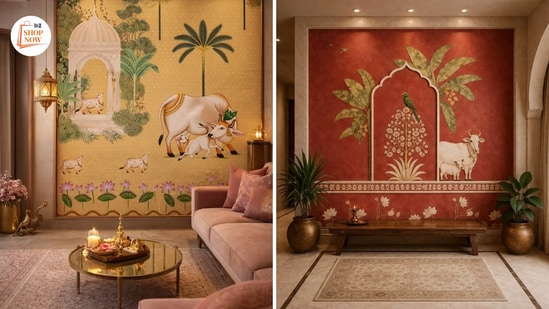
Want to bring art into your home decor? Incorporating Pichwai art is one of the best things you can do. The reason? This art brings in colour, culture, and character to a home. From choosing warm lighting to minimal furniture, below are six ways to style a Pichwai-inspired wall without overwhelming your interiors.
Pichwai art, traditionally associated with the temples of Nathdwara in Rajasthan, is known for its intricate details, rich colours and depictions of Lord Krishna. Originally created as cloth backdrops for the idol of Shrinathji, these paintings feature motifs such as lotus flowers, cows and scenes celebrating different festivals. Today, this traditional art form is finding its way into contemporary homes through framed paintings and statement wallpapers.
However, incorporating Pichwai into modern interiors can feel challenging, particularly because of its elaborate patterns and vibrant colour palette. The key is to let the artwork take centre stage while keeping the surrounding decor balanced. Sidd Panda, Founder and CEO of MagicDecor, shares six ways to style a Pichwai wall with furniture, lighting and colours.
6 ways to style a Pichwai wall in your home.
1. Make the Pichwai wall the focal point
When working with detailed artwork, begin by choosing one wall that can become the focal point of the room. Pichwai-inspired wallpapers can cover an entire wall, creating an artistic backdrop that is difficult to achieve with smaller framed pieces. Consider placing it behind the bed, sofa or dining table to give the artwork a natural visual setting.
The design you choose should also blend well with the size of the room. While bold patterns can work well in larger spaces, lighter designs with sufficient room space between motifs are better suited to compact homes. Avoid extending the same artwork across multiple walls, as one statement wall is usually enough to establish the look.
2. Pick one colour from the artwork for the rest of the room
Pichwai artwork often features a rich palette of blues, greens, blush pinks and gold. Rather than introducing all these shades throughout the room, pick one colour from the artwork and repeat it through smaller decor elements.
{{/usCountry}}Pichwai artwork often features a rich palette of blues, greens, blush pinks and gold. Rather than introducing all these shades throughout the room, pick one colour from the artwork and repeat it through smaller decor elements.
{{/usCountry}}For instance, if your Pichwai wall features green foliage, you can introduce the same shade through cushions, a throw or an accent wall. Similarly, blush pink from the artwork can be carried into soft furnishings. This creates a visual connection between the wall and the rest of the interiors without making the room look overly colourful.
3. Pair intricate artwork with minimal furniture
When the wall features elaborate patterns, the furniture around it should offer visual balance. A simple sofa in beige, cream or grey can complement the artwork without competing for attention. Clean silhouettes and understated upholstery can help to maintain a cohesive look.
Sidd suggests opting for natural fabrics such as linen and cotton, which add texture without cluttering from the wall. If you want to introduce more colour, do so through cushions or smaller accessories rather than choosing heavily patterned or brightly coloured furniture.
4. Use warm lighting to highlight the artwork
Lighting can change how Pichwai artwork will appear throughout the day, particularly when the design includes gold details and intricate motifs. Warm lighting can bring out the richness of these elements, making the wall feel more inviting in the evening.
Consider installing simple brass picture lights above framed Pichwai paintings to highlight their details. For a wallpapered feature wall, warm ambient lighting can help create a softer vibe. Avoid overly cool lighting that may make the artwork appear less warm and inviting.
5. Bring in natural materials such as wood, brass and cane
Natural materials can help connect traditional Indian artwork with contemporary furniture and decor. Wood, brass and cane, which have long been part of Indian interiors, work particularly well alongside Pichwai motifs.
You can place a wooden console against an adjoining wall, introduce a cane accent chair or use a few brass accessories to complement the artwork. These materials add warmth and texture while keeping the space grounded. However, avoid using too many decorative pieces at once, as their own patterns and finishes can compete with the detailed wall.
6. Leave some breathing room around the wall
One of the simplest ways to make a Pichwai wall stand out is to avoid overcrowding the surrounding space. When the artwork already has multiple colours and intricate details, additional decorative elements are not always necessary
Keep the furniture arrangement simple and leave some empty space around the feature wall. A single indoor plant, a brass diya or a carefully chosen accent piece can be enough to complete the setting. This allows the artwork to remain the centre of attention while giving the room a more relaxed and considered appearance.
Frequently Asked Questions:
How can I incorporate Pichwai art into a modern home?
Which colours go well with Pichwai wall art?
What is Pichwai art and where does it originate?
Disclaimer: At Hindustan Times, we help you stay up-to-date with the latest trends and products. Hindustan Times has an affiliate partnership, so we may get a part of the revenue when you make a purchase. We shall not be liable for any claim under applicable laws, including but not limited to the Consumer Protection Act, 2019, with respect to the products. The products listed in this article are in no particular order of priority.