
 E-Paper



Love on loop: Why Anuv Jain makes the best love songs

 Prefer HTon Google


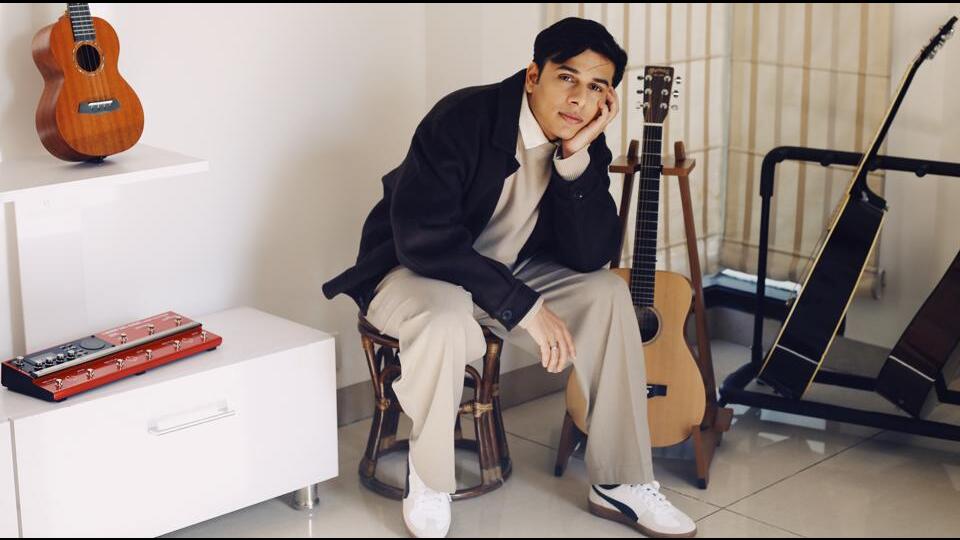
Indie singer Anuv Jain is on top of the playlists. His DMs are exploding. How does he make breakups sound so poetic? And where are all these feels coming from?
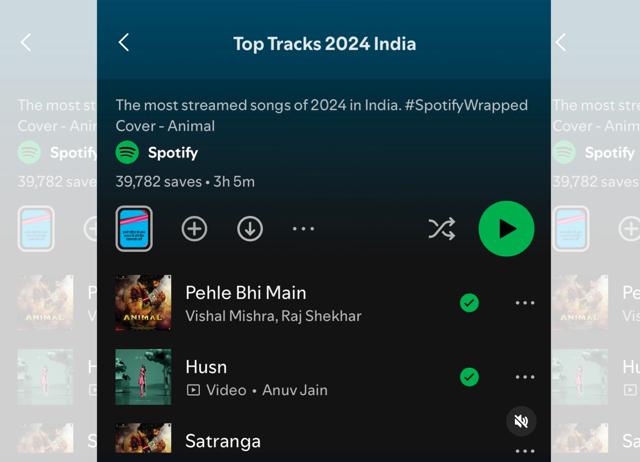
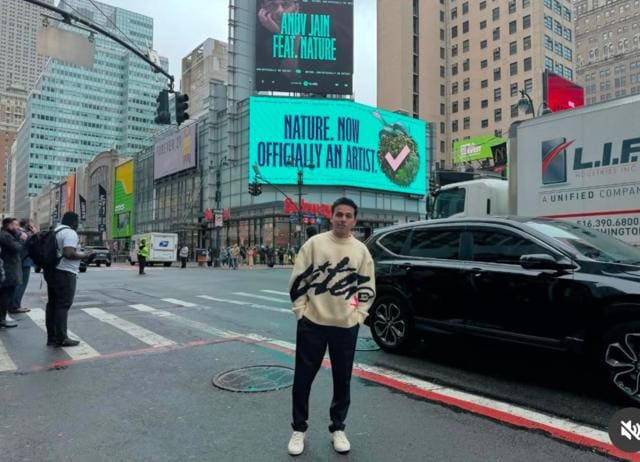
For the rest of his life, Anuv Jain will remember 2024. It’s the year the 29-year-old singer-songwriter from Ludhiana, Punjab, had the top song on Spotify. Husn, about the pain of one-sided love, came out in 2023. That it’s still resonating with listeners a year on is both a surprise and a form of validation. “It’s the craziest thing to happen to an artist today,” he says. A good song might win an award, go viral for a bit. “But topping a streaming service means the song has reached more people. That’s the best indicator of how your music is faring.”
Husn is also among the most streamed Indian songs of the year on other platforms, as was his other hit Jo Tum Mere Ho. Both works, like so much of his music, are acoustic and talk of love – lost love, unrequited love, brooding love, entangled love. In many ways, it seems, life couldn’t have turned out any other way.
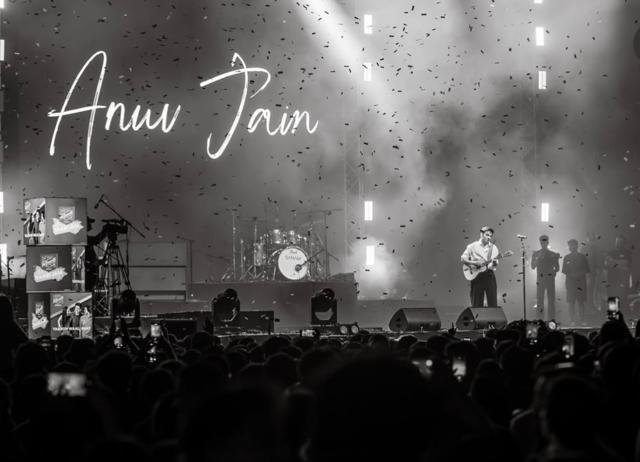
Opening notes
Most songwriters put out their first love songs after their own experiences with it – a crush, perhaps, or a romance gone sour. They’re usually the heroes of the story. Jain’s muses visited earlier. He was 17 when he watched his mother mourn his father, who passed away after being in a coma for seven years. “Mom went through a massive heartbreak,” he says. “She still gets sad as the memories keep coming back, more than a decade on.” He wrote the 2019 song, Riha, for her, keeping the melody simple and celebrating the idea of being in love with someone you’ve lost. The song currently has 16M views on YouTube. Commenters have picked up on its vibe. “Two years ago a guy introduced me to this song. And today I’m married to him. This song is so close to my heart. It still takes me back to the days we started talking”, reads one comment. Another user writes about Riha being a favourite of a boyfriend, who’s since passed away. “Even in the hospital he used to listen to this song during his last days. Now I listen to this song every day bcoz it makes me feel like he is alive”. Fellow poets say his song made them cry and write again.
Jain’s music seems to have tapped into an idea that more young people today inherently understand – that love, even at its best, hurts a little bit. Jo Tum Mere Ho (2024) seems as much a celebration of love as our tenuous hold on it. “There is an ever-looming sadness attached to writing about love,” he says. “Whenever I talk about love, I mention what it would be like if they weren’t in my life and then the slight sadness always creeps into my music.”
And fans have noticed. A common comment on his videos is fans asking why they’re thinking about heartbreak even when they’re happily married. “I guess we’ve all gone through heartbreak, so a song triggers memories, you don’t have to be in the moment to feel it,” says Jain. He’s had his heart broken a few times, and admits that he’s broken some hearts too. He wrote his 2021 single Gul, he says, after one break-up, even though the lyrics are from a woman’s perspective.
Line by line
Jain’s song-writing influences include the now-disbanded Chandigarh act The Local Train, and Billie and Finneas Eilish (for Everything I Ever Wanted). But he credits Irshad Kamil’s work on Rockstar (2011) for the earnest longing they convey. Kamil’s Tum Ho talks of two people who can’t be together, but their lives are so interconnected, they can’t be apart as well. “It showcased human angst, spoke about love and heartbreak that wasn’t just surface level. It dove deeper trying to figure out words to describe them,” says Jain.
Many of his hits also seem like the audio version of a sepia-tinted flashback. It’s by design. Jain actively taps into his childhood memories to project a simpler time. “I am a merchant of nostalgia,” he admits easily. “I want to run away from technology and move to a quaint little place.” His debut, Baarishein (2018), was a hit on audio and Reels for exactly that reason. It’s about recalling the warmth of a lover’s embrace, and the romance of rain by comparing rain to love. He reimagined the track in collaboration with the United Nations, mixing in the sound of rain to the tune. It’s more a mood than an actual preference, he says. “Rain is romantic, until I’m the one getting wet!”
Mostly, he focuses on music that just makes a people comfortable – the same as pulling on a favourite T-shirt or slipping into well-worn sneakers. For listeners, fed up of the faux-perfection of social media, it hits the spot. The songs seem like old friends, filter-free besties. “Only select people get to be part of your life in that way,” he says.
A new chorus
Among Indian artists, indie music is in the midst of a transformation. “A lot of apps like Spotify are now calling it I-Pop, just like K-Pop and J-Pop. I love it because it’s a movement,” he says. But for love-song writers, the field’s changed. Very few songs are about ever-afters. Revenge anthems dominate. Women are fed up of white-knight promises. Even Jain has seen music change over three decades. “As men, we were told to be strong, that nothing should faze us, that we shouldn’t cry,” he recalls. “Now, songs show men in a much softer light and women in a much stronger light”
Love is a bit complicated. Or so he keeps hearing. “People have too many options now and everyone just wants to keep looking rather than stopping at one person,” he says. But, love, even tinged with a bit of sadness, is still love. And Jain finds it easier to write about, “because at least I’m in a happy mood instead of going into a downward spiral! But I am sure there is still some old-school love left in the world and that’s what I wish for everyone.”
Rewind and review: What Anuv Jain misses from the years gone by
The start of the tech revolution. “It was when Facebook was just starting to become a thing. People were raw about posting their lives. I also miss those SMS packs that gave you 10k messages. And I remember when they put a cap on it and everybody’s relationships were in crises!”
The element of surprise. “Remember travelling to a place and discovering it anew? Now, there’s so much travel content on our screens, that nothing seems new or charming. People don’t think of going to the Eiffel Tower in Paris as a big deal anymore. I went and had a great time. Maybe if it wasn’t in your face, you’d appreciate it more.”
Slow-drop entertainment. “I am happy music has gone digital. But I miss waiting for TV shows, watching it and discussing it with my friends. These days you just binge entire seasons and discussions are online. I miss going to the theatre when we would make a day out of a movie outing.”
Quality time. “As a kid, I spent most of my time in a park in front of my house. Even in Ludhiana, parks are now empty. Everyone’s at home, on a screen. Sure, some people play sports, but idle time at the park was always a bit more inclusive. The sense of community has gone. Everyone is just losing their patience.”
From HT Brunch, December 14, 2024
Follow us on www.instagram.com/htbrunch


