Picture this: It’s TooEarlyAM. The phone alarm’s ringing. You’ve hit Snooze twice already. Now it’s time to wake up. The screen, however, shows 11 notifications on Gmail, four on Insta and -- wait a minute -- two on Hinge (someone drunk-swiped you in the middle of the night and they’re not bad-looking!). You’re in bed, checking people out. Then, on to Insta. The landing page throws up a new cat video with hilarious comments... Like. LOL Reaction. Heart. And, finally those DMs. Now for Gmail: Ads. Ads. 50% off coupon with a link to the site. So you do a little browsing, and add an outfit for date night with Hinge cutie. Wait. How is it TooLateAM already? Didn’t you just wake up?
It’s like that all day, isn’t it? We’re on our laptops, but we’ve got 20 tabs about Justin Baldoni as the office meeting drags on. We pick up the phone to set a reminder, but fall into the rabbit hole of plane crash footage, Musk’s new troll bait, and sushi ASMR. We open Facebook to check on an event, but end up stalking all the people tagged in the ex’s NYE party photo.
It’s not you, it’s the all-in-one device. Smartphones and laptops promised us a lighter life, that we’d save time on password input and battery charging. What we got was a needy piece of tech that trained us to heed its every cry, every ping, because it put every notification in one place. “Our smartphones have become hubs for everything — work, personal communication, and leisure — and that overlap creates distraction,” says Yug Bhatia, founder and CEO, Control Z, which resells pre-owned tech.
A study conducted by British consumer research company GWI in 2023 suggests that the average worker spends over two-and-a-half hours a day scrolling social media platforms. No one starts their day planning this. And it’s not just our attention that’s being compromised; with every interruption, it’s harder to get back to whatever else we were intending to do. It’s a digital trap.
{{/usCountry}}A study conducted by British consumer research company GWI in 2023 suggests that the average worker spends over two-and-a-half hours a day scrolling social media platforms. No one starts their day planning this. And it’s not just our attention that’s being compromised; with every interruption, it’s harder to get back to whatever else we were intending to do. It’s a digital trap.
{{/usCountry}}The solution to using tech less is – wait for it – using more tech. “It might sound counter-intuitive, but diversifying devices can be a great strategy to reduce reliance on a single smartphone,” says Bhatia. So, start off with a bedside alarm clock that does only one thing – get you out of bed.Install Insta only on the smartphone, use a secondary-account login (one not linked to social media or WhatsApp) for the laptop, get an analogue watch that doesn’t flash messages when you only want to know the time, use voice assistants to make calls and schedule appointments, stream shows only on the home TV, make e-payments only on one device. “Use an e-reader for books or a separate MP3 player for music so that you’re not constantly picking up your phone. Work-only smartphones without social media apps can help reduce distractions too,” says Bhatia.
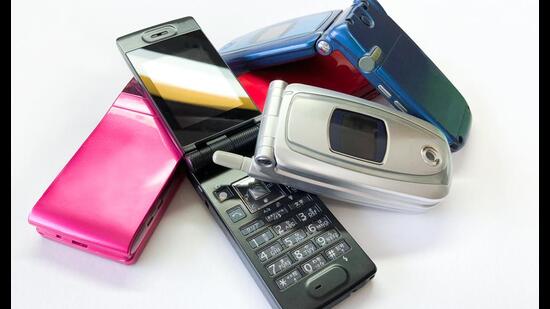
Schools across the world are increasingly banning smartphones. Feature phones – those with fewer apps and notifications – are becoming cool again. Bhatia says it’s better to target digital distraction, rather than the tech itself. “Instead of downgrading to a feature phone, curate your smartphone experience. Delete unnecessary apps, set up timers for app use, and use the grayscale mode to make the visuals on screen appear less engaging.”
It helps, additionally, to break free of the notion that tech is an extension of the self – we are not our devices. And it helps to remember who’s boss – that the goal is to consume, not be consumed by technology, says Bhatia. “The idea is to segment your digital life so that no one device becomes an all-encompassing crutch.”
From HT Brunch, January 04, 2025
Follow us on www.instagram.com/htbrunch