
 E-Paper



Rude Food by Vir Sanghvi: The flavour has chipped away

 Prefer HTon Google


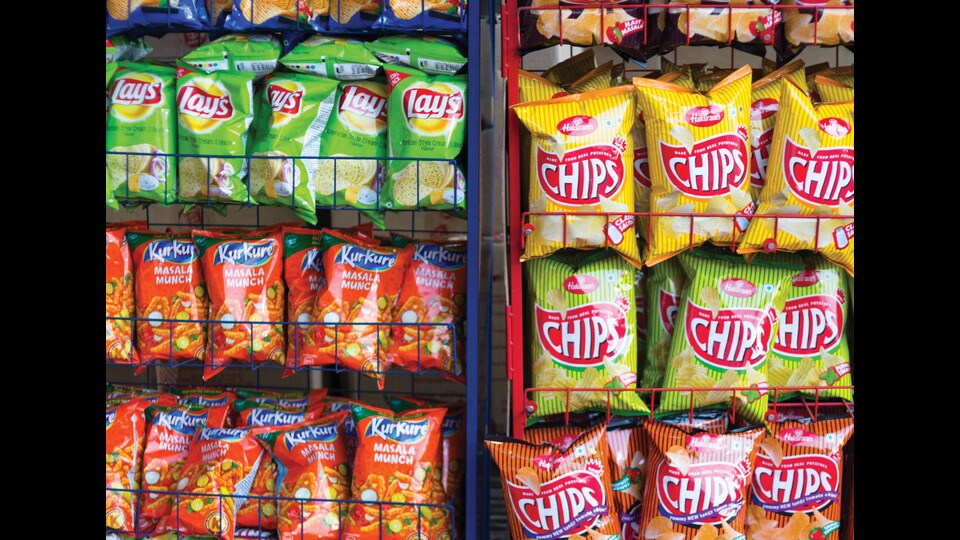
Potato chips used to be a thing of joy. Now, they’re mass-produced, the flavours seem artificial and, like so much else, the good stuff is branded as gourmet
It is the taste of my childhood. And it has many different names. When I was young, the thinly sliced deep-fried potatoes I love were freshly made and came from shops with the names like Okay Wafers, because wafers was what we called them. They usually only had a light salt flavouring. And we enjoyed them because they were crisp, golden and actually tasted of potatoes. Even if you went to the cinema, you could go, in the interval, to the snack counter and ask for a packet of wafers. They came in a paper bag and were never more than a day old.
I never found any fresh wafers, let alone wafer shops, when I went to school in England but there was no shortage of industrially manufactured, pre-packaged crisps – which was what they called wafers. For someone like me who was used to fresh, salted wafers, the crisps never seemed quite right.
But they had a novelty element. You could buy them in many different flavours. At first, this freaked me out. How could you eat a potato wafer that tasted of smoky bacon or of vinegar?
The flavours were not, to be honest, terribly convincing, but they tasted just enough of the ingredients they were mimicking to give a jolt to the palate. Only the cheese-and-onion flavour seemed to get it almost right. The bacon flavour was not up to much and some flavours, like salt and vinegar, held no appeal for me.
This was before I discovered the range of wafers/crisps in America. The UK had only a few brands that were nationally available. But everywhere I went in America, I came across new brands, many of which were distinctively local. Except they did not use the term wafers or even call them crisps. They said they were potato chips.
In those days, Indians used the British term “chips” for what Americans called “French fries”. Some older people even liked the phrase “finger chip”. So I never quite got used to calling wafers “chips”. Somehow, “fish and French fries” did not have the same ring as “fish and chips“.
When I started writing about food – by which stage virtually nobody called them wafers any longer and even the concept of fresh wafers from a special shop was dead – I was surprised to discover that crisps (let’s call them that for the rest of this article) were a universal craze.
There was a well-publicised story about their invention by a man called George Crumb in a restaurant in Saratoga Springs in America, but the more I read the dodgier that claim seemed. There are medieval French recipes for dishes that sound a lot like modern crisps (on the other hand, the French probably had nothing to do with the creation of so-called French fries) and in the UK, the “game chip”, a staple of country houses, seems to have been a precursor to the crisp.
In her definitive study of crisps, the British journalist Natalie Whittle writes about attending a talk by the influential Spanish chef Ferran Adria. “Who invented the omelette?” Adria asked his audience. Nobody had an answer, which was exactly why he had asked the question. Some dishes, he said, have no specific origin, they just emerge from our consciousness.
Perhaps, suggests Whittle, potato crisps are a little like that.
I am a crisp fan and oddly enough, so are many of the world’s greatest chefs. For instance, Adria says he makes a Spanish omelette using a packet of crisps. He prefers packaged chips because there’s not a lot that any chef can do to improve on the basic potato crisp. Heston Blumenthal reinvented French fries with his triple-cooked chips. Joel Robuchon reimagined the mashed potato. But crisps? I am hard pressed to think of anyone with a recipe that differs significantly from the original.
If you are a crisp fan, then here are some tips for you. And if you aren’t a fan, then shame on you!
There have been three revolutions in crisp-making. The first revolution was the industrialisation of the process. Factory-made crisps now account for over 90% of all crisps sold.
The second revolution was added flavours. The first popular crisp with added flavour was made with cheese and onion and it involved sprinkling cheese and onion powder over the crisps. Since then, nearly all the flavours you will come across are synthetic and devised by chemists.
Even when you see a bag of expensive truffle crisps and are told that real truffles have been used, the chances are that synthetic truffle essence is the main flavouring agent and a few specks of cheap summer truffle have been scattered over the crisps to lend some bogus authenticity.
The third revolution has to do with the class system within crisps. Just as we used to have wafer shops in India, there has always been an American tradition of producers making small batches of fresh crisps in relatively small quantities.
In the 1990s, a new market for so-called kettle chips developed. These were batch-cooked crisps and first came to the UK in 1988. They were more expensive but they found many takers. Since then so-called hand cooked crisps (they’re not really hand cooked; but yes they’re not exactly industrial either) have taken over the top end of the market, leaving normal industrial crisps to become a mass product.
All small-batch crisps are not great, but even the worst variety is probably better than most industrial crisps. They are thick, actually taste of potato and sometimes are slightly more oily than the factory-made version.There are Indian manufacturers of these crisps now, of whom Opera was the pioneer.
The industrial crisp is less a potato product than a blank canvas on which flavours are implanted. There are over 1,000 chip flavours around the world. For instance, in the Far East, you will get such flavours as salmon sushi and Tom Yung. I don’t think these are terribly good; they taste synthetic. The one Far Eastern exception is Japan where a lot of attention is paid to quality.
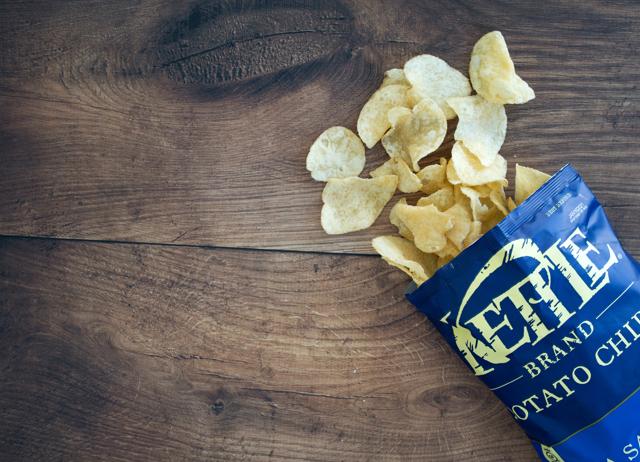
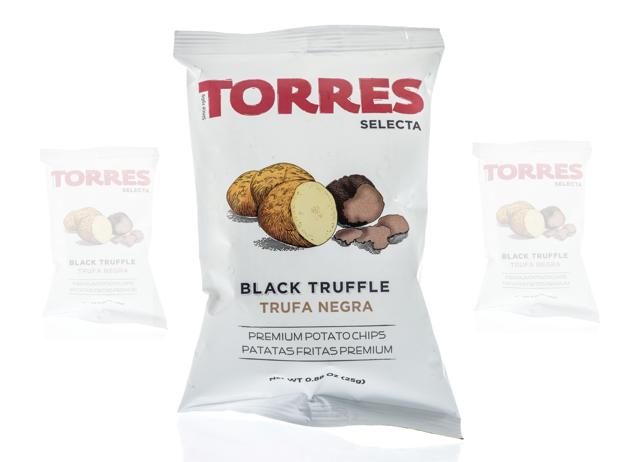
If you want high-quality crisps – even in the mid-market space – then you need to seek out regional producers. In Japan, even an ordinary crisp can be interesting. France concentrates on quality, and in Spain, Bonilla makes excellent chips with specially selected potatoes and olive oil. The most globally famous Spanish producer is Torres because it dominates export markets, but I am not wild about all the flavours.
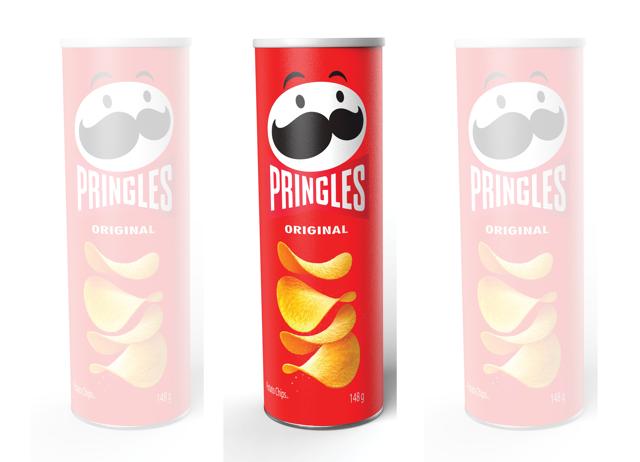
You are welcome to eat Pringles. When my son was a small boy, he used to keep demanding “MuchheWala chips” because he liked the idea of a stackable potato crisp. (Or maybe he just like the picture of the MuchheWala guy on the packet).
In my view, they’re not really crisps. They are not made from whole potatoes. They are made from reconstituted potatoes and moulded so that they look like crisps. Maybe they are directed at small children.
If you are a vegetarian and hesitate when you see say, a prawn cocktail flavoured crisp, do not worry; no prawns were involved in its making. Almost all crisp flavours are vegetarian and made from chemicals.
The prawn cocktail flavour crisp became the subject of controversy in 1991 when the EU imposed different taxes on products that had sugar added to them. No European had ever heard of a prawn cocktail chip and so when the British complained that their beloved prawn cocktail crisp was actually made from synthetic flavours and sugar, this caused consternation in Brussels. (So the caramel popcorn controversy is not without precedent!)
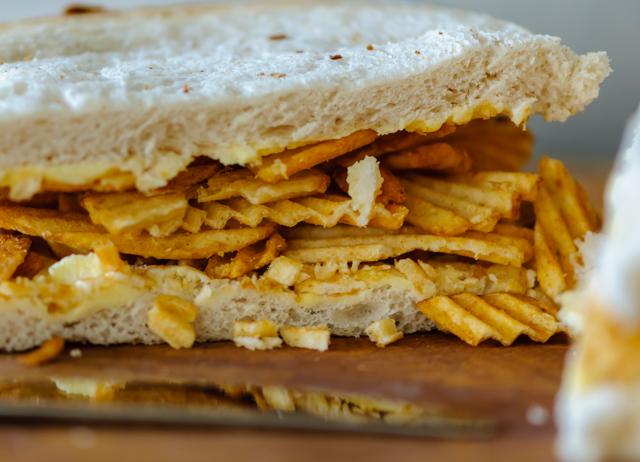
How should you enjoy your crisps? On their own would be my answer. But I find that batch-cooked, salted crisps go well with charcuterie. And cheese and onion is a perfect flavour to accompany red wine. You can also put crisps at the centre of a sandwich for a satisfying crunch.
Are crisps healthy? Not always. Industrial crisps maybe an ultra-processed food, so consume them only in small quantities. On the other hand, batch-cooked crisps often have no additives at all and do not count as ultra processed foods.
So, munch away! And I will pray for the revival of the wafer shop!
From HT Brunch, January 04, 2025
Follow us on www.instagram.com/htbrunch


