You don't need expensive clothes to look polished. These are the five simple styling rules I follow when I want to look classy without spending a fortune.
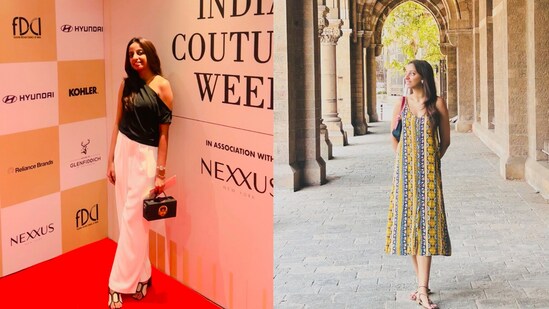
I love clothes, but I don't think looking well-dressed should require a designer wardrobe. In fact, some of my favourite outfits are built around fairly ordinary pieces that I've had for years.
When I want to look classy on a budget, I don't start by asking myself what I can buy. I look at what I already have and think about fit, colour, proportions and finishing touches.
Over time, I've realised that these small decisions make much more difference to how an outfit looks than whether the label inside says ₹1,000 or ₹10,000.
So if you're trying to make your wardrobe look a little more polished without constantly shopping, these are the five fashion rules I personally follow.
How I dress like the rich, but on a budget:
1. I keep my colour palette simple
When I want an outfit to look polished, I usually start by looking at the colours rather than the individual pieces.
I find that outfits feel more put together when the colours complement each other instead of every item trying to stand out. This does not mean wearing neutrals from head to toe. It simply means giving the outfit a clear colour direction.
For example, I might pair a cream top with beige trousers and tan shoes. Brown can be paired with camel and ivory, while navy works easily with denim and black. Even brighter colours can work when the rest of the outfit is relatively restrained.
Some combinations I rely on include:
• Cream with beige and tan
• Brown with camel and ivory
• Navy with denim and black
• Olive with khaki and cream
• Grey with white and black
I also like mixing textures within a similar colour palette. A structured pair of trousers with a soft knit or a crisp shirt with relaxed trousers can keep a tonal outfit from looking flat.
What I do before buying anything
I look through my wardrobe first. If I already have several pieces in similar shades, I try styling them together before deciding that I need something new.
This is one of the easiest ways to make a budget wardrobe feel more versatile.
2. I prioritise fit over the price tag
If I had to choose one thing that makes the biggest difference to an outfit, I would choose fit.
An expensive garment can look awkward when the proportions are wrong. An affordable shirt, pair of trousers or dress can look much more polished when it sits properly.
When I get dressed, I pay attention to:
• Whether the shoulders sit correctly
• Whether a shirt pulls or gaps anywhere
• Whether trousers are too long for the shoes I am wearing
• Whether there is unnecessary bunching around the waist or ankles
• Whether an oversized piece looks intentionally oversized
That last point matters. Relaxed and oversized silhouettes can look great, but there is a difference between an intentionally oversized shirt and one that simply looks like you bought the wrong size.
I also do not think every piece needs tailoring. If a garment is inexpensive and I am unlikely to wear it often, I would probably leave it alone. But for something I genuinely love and wear regularly, a small alteration can be worth it.
What I do before replacing a garment
I ask myself whether I dislike the piece itself or simply dislike the way it fits.
Sometimes the solution is a small alteration rather than another shopping trip.
3. I pay attention to how the fabric actually looks
I do not automatically associate expensive-looking clothes with expensive fabrics.
What matters to me is how the fabric behaves.
When I am shopping, especially online, I look closely at the material rather than relying only on the product photograph. I want to know whether it has enough structure, how it falls and whether the surface looks excessively shiny, thin or uneven.
For different garments, I look for different things.
For trousers, I prefer fabric that falls cleanly instead of clinging awkwardly. For shirts, I like material that holds some shape around the collar and sleeves. With knitwear, I look for signs of pilling or a surface that already looks uneven.
The things I check include:
• How the fabric drapes
• Whether it is opaque enough for the garment
• Whether it holds its shape
• Whether it looks excessively shiny
• Whether the surface looks smooth and even
• Whether the garment appears likely to crease excessively
I also do not automatically reject synthetic fabrics. The construction and finish of a garment matter just as much. A well-made blend can look far more polished than a poorly constructed garment made from a more expensive fibre.
My online shopping trick
I zoom into the fabric photographs and read the composition and care information before buying.
Customer reviews can also be useful for finding out whether a garment tends to pill, lose its shape or become difficult to maintain after washing.
4. I do not over-accessorise an outfit
One of the easiest ways to make a simple outfit look less polished is to keep adding things because it feels like something is missing.
I have found that I usually get better results when I choose accessories with more intention.
If I am wearing noticeable earrings, I may skip a necklace. If my handbag has prominent hardware, I do not necessarily need several other statement accessories. If the outfit itself has a strong print or silhouette, I tend to keep the accessories quieter.
For a more understated look, I usually look for:
• A handbag with a clean shape
• Jewellery that complements rather than competes with the outfit
• Shoes that are in good condition
• Accessories with neat finishing
• Branding that does not overwhelm the outfit
This does not mean that statement jewellery, logos or colourful accessories are wrong. They can look fantastic. It is simply about deciding what you want the focus of the outfit to be.
The rule I personally use:
Before adding another accessory, I remove one.
Sometimes taking off a necklace or swapping a statement bag for a simpler one makes the entire outfit feel more balanced.
5. I finish the outfit instead of constantly adding to it
Sometimes an outfit does not need new clothes. It simply needs one more considered element.
This is where I find the third-piece approach useful.
A basic T-shirt and jeans can feel unfinished. Add an oversized shirt, blazer, cardigan or jacket and the same two pieces can suddenly look much more styled.
Some combinations I like are:
• A white T-shirt with straight-leg jeans and an oversized shirt
• A tank top with trousers and a lightweight blazer
• A basic dress with a belt and cropped jacket
• A knit top with jeans and a structured cardigan
• A kurta with straight trousers and a structured handbag
But the third piece is not always necessary. Sometimes the outfit just needs better finishing.
Before I leave the house, I look at the small details that are easy to ignore.
• Are the clothes visibly wrinkled?
• Are the shoes clean?
• Is the handbag unnecessarily stuffed?
• Are there loose threads?
• Does the outfit look balanced?
• Does anything feel like it was added just for the sake of adding something?
These details cost very little but can make an affordable outfit look much more considered.
My five-minute check before I leave:
When an outfit does not feel quite right, I do not immediately change everything.
I ask myself five questions:
• Does everything fit properly?
• Are the colours working together?
• Is there too much happening at once?
• Does the outfit have enough structure?
• Is anything visibly wrinkled, scuffed or untidy?
Usually, one of those questions tells me what needs changing.
Sometimes it is as simple as tucking in a shirt, changing the shoes, removing an accessory or adding a layer.
What I would not spend money on just to look classy:
There is also a temptation to buy specific things simply because they are associated with looking expensive.
I do not think that is necessary.
You do not need a wardrobe full of beige clothes. You do not need to remove every visible logo. You do not need designer handbags. You do not need to replace your entire wardrobe with expensive fabrics.
Instead, I would spend money selectively on pieces that genuinely improve how often and how well you can dress.
If I were working with a limited budget, I would prioritise:
• A pair of trousers that fits exceptionally well
• A versatile handbag that works with several outfits
• Shoes that are comfortable and well maintained
• A good quality everyday shirt or top
• Alterations for pieces I already love
That gives you considerably more mileage than buying several trend pieces that only work with one outfit.
For me, looking classy on a budget is not about making affordable clothes look like designer clothes.
It is about being more thoughtful with what I already own.
I pay attention to the fit, keep my colour combinations considered, look closely at how fabrics behave, avoid adding too many accessories and make sure I finish an outfit properly before deciding that I need something new.
That is the biggest fashion hack I have learnt: you do not always need more clothes. Sometimes you just need to style the ones you already have better.
Wardrobe essentials to look classy on a budget:
Similar stories for you:
Balloon Pants: Fashion risk or the coolest trouser trend right now? 8 picks to rock this style
Stop slipping on court: 8 Indoor sports shoes to play your favourite sport in style
₹1,500">Hosting Ganpati at home? 8 Comfortable 4.7-rated kurta sets under ₹1,500
- What colours make an outfit look immediately more expensive?
Neutral tone-on-tone colour palettes—such as cream, ivory, camel, soft beige, olive, rich navy, and charcoal black—instantly elevate an outfit. Monochromatic dressing in these shades creates a clean, cohesive, and high-end aesthetic.
- How do accessories impact the perceived value of an outfit?
less is more. Opt for structured, unbranded handbags with subtle, brushed-metal hardware rather than flimsy totes with shiny bright gold accents. Pair with delicate, non-tarnish minimalist jewelry and clean, scuff-free footwear.
- Which budget fabrics look the most luxurious?
Seek out natural fibers and structured blends like 100% cotton, crisp linen, matte-finish Modal, and heavyweight viscose. Avoid high-gloss polyester, flimsy thin jersey, or acrylic knits that pill after a single wash.
- How can I make fast-fashion clothes look high-end without spending much?
Small tweaks yield huge results: spend a small amount to custom-tailor the fit at your local dry cleaner/tailor, swap out cheap plastic buttons for horn or tortoise-shell alternatives, and always steam your garments to keep them 100% wrinkle-free.
Disclaimer: At Hindustan Times, we help you stay up-to-date with the latest trends and products. Hindustan Times has an affiliate partnership, so we may get a part of the revenue when you make a purchase. We shall not be liable for any claim under applicable laws, including but not limited to the Consumer Protection Act, 2019, with respect to the products. The products listed in this article are in no particular order of priority.
Catch your daily dose of Fashion, Taylor Swift, Health, Festivals, Travel, Relationship, Recipe and all the other Latest Lifestyle News on Hindustan Times Website and APPs.
Catch your daily dose of Fashion, Taylor Swift, Health, Festivals, Travel, Relationship, Recipe and all the other Latest Lifestyle News on Hindustan Times Website and APPs.