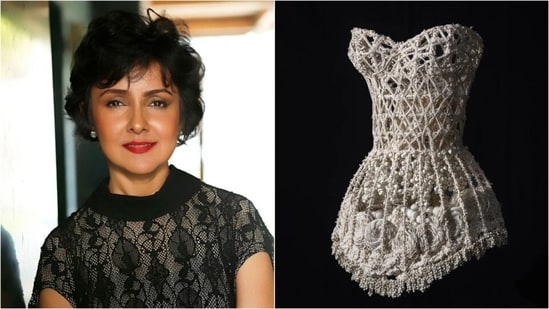
Seen Deepika Padukone in a beautiful saree on the red carpet and stopped your scrolling? Or Anushka Sharma and Kriti Sanon commanding a fashion show runway? You have already seen Payal Jain's work. You know the looks. Perhaps, you just didn't know who made them. Also read | Veteran designer James Ferreira says old Bollywood stars never asked for free outfits
If you have ever stepped into a luxury hotel in India — the quiet courtyards of an Oberoi, the opulent corridors of a Taj, Four Seasons or Leela — and noticed the elegance of the staff uniforms, you have seen her, too.
In an era dominated by hyper-visible branding, algorithmic trends, and viral marketing, designer Payal Jain remains fashion’s formidable quiet force. From a tiny studio in Delhi's Hauz Khas Village in the early 1990s, she went on to dress Bollywood's biggest stars, design identities for more than 300 clients — including luxury hotels like the Taj, Oberoi, Leela, Four Seasons, Aman and Rosewood — and author India's first CBSE-approved fashion studies textbook.
She started when there wasn't even an industry
When Payal returned after graduating Summa Cum Laude from FIDM in California, US, there were no fashion weeks, no retail chains, no blueprint for a young woman to be an independent designer. She opened a small studio in Hauz Khas Village anyway. "When I returned to India in the early 90s, fashion was still finding its identity as an industry," she shared in an interview with HT Lifestyle.
{{/usCountry}}When Payal returned after graduating Summa Cum Laude from FIDM in California, US, there were no fashion weeks, no retail chains, no blueprint for a young woman to be an independent designer. She opened a small studio in Hauz Khas Village anyway. "When I returned to India in the early 90s, fashion was still finding its identity as an industry," she shared in an interview with HT Lifestyle.
{{/usCountry}}"There were no fashion weeks, little organised retail and no established framework for a young designer to build upon. I began with a small studio in Hauz Khas Village, guided largely by instinct, conviction and a deep love for textiles and craftsmanship. Those early years taught me the value of patience, resourcefulness and finding my own design language. Working closely with artisans, understanding textiles, craft traditions and creating every single piece with care became the foundation of my practice," Payal said.
That patience became her philosophy: "I have always believed that good design must have a life beyond the season in which it is created." Payal explained, “Timelessness comes from an understanding of proportion, simplicity, craftsmanship and the ethos of less is more. Restraint is perhaps one of the, most difficult disciplines in design; knowing what to leave out is as important as knowing what to create. Three decades later, that philosophy remains unchanged. A beautifully crafted garment should grow more meaningful with time, becoming a part of the wearer's life and, perhaps one day, their legacy.”
Bollywood's biggest stars have worn her clothes
Actors like Deepika Padukone, Anushka Sharma, Kriti Sanon, Dia Mirza and Huma Qureshi have all been seen in Payal's sculptural silhouettes. "I have always been fascinated by the relationship between form, structure and movement," Payal said, adding, "Architecture, art and sculpture have deeply influenced my design sensibility, particularly the interplay of volume, proportion and space. When I design, I often begin by draping textile on the body form, allowing its natural fall and movement to guide the silhouette. Structure gives a garment its form, while the fluidity of textiles brings it to life. Character, depth and dimension are added through embroidery, surface ornamentation and manipulation."
She continued, "The balance lies in knowing how much is enough. Even the most dramatic silhouette must feel effortless on the body, allowing the woman to move naturally and inhabit the garment with ease. I believe the most beautiful designs have an inherent harmony, where structure, softness and craftsmanship come together so seamlessly that the complexity of their creation is barely visible."
She was doing slow fashion before it was a buzzword
While the industry chased synthetics, Payal's atelier became a craft sanctuary: Varanasi handlooms, Awadh chikankari, Bengal kantha, Gujarat bandhani. "I believe the emotional connection begins with the hands that create a garment. Every textile carries a history, every craft a legacy of knowledge passed down through generations. Having worked closely with artisans for over three decades, I have come to value the human touch, the subtle imperfections and the individuality that handcraft brings to every creation," Payal said.
Her co-designers: women artisans
"Working with women artisans in rural India has been one of the most enriching aspects of my creative journey," Payal said, adding, "These women bring generations of inherited knowledge, extraordinary skill and an intuitive understanding of their craft. Every collaboration becomes an exchange of ideas, where their experience often opens up possibilities I may never have imagined. The creative process becomes more organic and exploratory. Equally meaningful is witnessing how this work brings financial independence, confidence and a sense of pride to these women, while allowing their skills to remain relevant for future generations."
How do you make Banarasi feel 2026?
Payal's approach 'begins with understanding the essence of a craft, its technique, texture, rhythm and character'. She explained, “I then explore how it can be reinterpreted through contemporary silhouettes, unexpected proportions, a restrained colour palette or an entirely new application. A traditional Banarasi weave may find expression in a sculptural jacket, chikankari in a fluid contemporary dress, or Kantha in a beautifully textured surface. The challenge is to preserve the soul of the craft while allowing it the freedom to find new expression.”
Sustainability isn't a buzzword for her: it's the whole operating system
Her studio is zero-plastic, low-waste, natural fibres, plant-based dyes, water-conserving. "The greatest challenge is that sustainability requires a fundamental shift in the way we think, design and operate," Payal said, adding, "It is a commitment that influences hundreds of small decisions every day, from sourcing fibres and developing textiles to managing waste, packaging and production."
“The fashion industry's supply chain is deeply dependent on synthetics, plastics and processes built around speed, convenience and cost. Finding responsible alternatives that meet our standards of quality, durability and consistency requires continuous research, experimentation and patience. Natural fibres, man-made sustainable textiles and plant-based dyes bring their own context and understanding, particularly in achieving consistency of scale. Over the years, we have learnt to work more consciously with our resources, repurposing textile remnants, minimising waste and finding new applications. I believe sustainability is a belief and discipline of responsibility. It demands that we constantly question our choices, consume resources with greater sensitivity and recognise that every decision has a consequence,” Payal said.
She doesn't try to convince you to buy less: she lets the clothes do it. "I have never believed in convincing someone to buy into a philosophy," she stated firmly. "I would rather let the garment speak for itself through its craftsmanship, quality, fit and the way it makes a woman feel. Over the years, I have seen women return to pieces they bought decades ago, wearing them with the same pleasure, sometimes passing them on to their daughters. That, to me, is the true measure of enduring design. I believe the real value of a garment is measured by how often you return to it, how long you cherish it, and how naturally it becomes a part of your life," Payal added.
That hotel uniform you noticed? Also Payal Jain
Thought the uniforms at the Taj, Oberoi, Leela, Four Seasons, Aman, Rosewood, Hyatt or GMR Airports looked chic? That was Payal. While most luxury houses stay confined to runways and private fittings, she has quietly reshaped how luxury hospitality looks around the world.
"Designing for luxury hospitality requires a deep understanding of the brand's identity, its geographical location, local traditions, architecture, cultural context and the experience it wishes to create for its guests," Payal said, adding, "Every property has its own character, and the uniforms must become a natural extension of that identity. My experience in couture brings an understanding of proportion, silhouette, textiles and detailing, while hospitality design demands an equally rigorous focus on comfort, movement, durability and ease of maintenance."
Bridging the gap between high couture aesthetics and the rigorous physical demands of daily hotel operations requires a distinct engineering mindset. "The attire they wear every day, round the year, must perform through long working hours, across different roles and environments," Payal said, adding, “We spend considerable time understanding how each team works, studying their movements, responsibilities and practical requirements before developing the designs. Fabric selection, fit, construction and functionality are considered at every stage. I believe the best corporate design aesthetics give the wearer a sense of pride, confidence and belonging.”
She wrote India's first CBSE-approved fashion studies textbook
Payal shared, "When I returned to India in the early 90s, fashion education was still in its infancy. Having experienced a rigorous, multidisciplinary education at FIDM in California, I understood how important a strong academic foundation was for developing a designer's creative vision. Writing India's first CBSE-approved fashion studies textbook was an opportunity to introduce young minds to fashion as a serious discipline, one that brings together art, history, culture, textiles, technology, craftsmanship and business. I wanted students to understand the depth of knowledge, research and skill that lies behind every garment."
For Payal, the textbook was also an act of cultural stewardship. She said, "I felt strongly that young design enthusiasts should grow up recognising the extraordinary wealth of textile knowledge and craftsmanship that exists within our own country, and the responsibility we share in preserving and evolving this heritage." She added, “I hope young students learn to see fashion as a powerful form of creative expression, one that demands curiosity, discipline, sensitivity and an understanding of the world around them.”
Catch your daily dose of Fashion, Taylor Swift, Health, Festivals, Travel, Relationship, Recipe and all the other Latest Lifestyle News on Hindustan Times Website and APPs.
Catch your daily dose of Fashion, Taylor Swift, Health, Festivals, Travel, Relationship, Recipe and all the other Latest Lifestyle News on Hindustan Times Website and APPs.