One scroll through Instagram and you'll find someone — and their favourite food influencer — using Ember cookware these days. Its aggressive marketing successfully put the brand's stunning sage green pots and pans quite high on my wishlist. After using the cookware for two weeks, I can finally tell you whether it deserved that spot at all.
Also read: Tried and Tested: I put the Ninja CRISPi Air Fryer to the test and here’s how it fared in my kitchen
I received my Ember starter kit about two weeks ago, and not a day has gone by since that I haven't used at least one of the three pieces. The kit includes a Ceramic Frypan, a Titanium-Clad Cast Iron Tawa and a SuperPan. Here's how each of them fared.
Ceramic Frypan 2.0
The lightest and most versatile of the three, the Ceramic Frypan quickly became my 12am snacking buddy. I've probably abused it the most — for midnight Maggi, quick egg bhurji breakfasts between morning meetings and desi macaroni lunches.
The frypan comes with an Arcilla ceramic coating and weighs around 700 grams, making it easy to handle and wash. This is especially useful in my home, which is essentially a family of one. The ceramic coating delivers a smooth cooking surface with minimal sticking and allows for very little oil. I've been able to brown onions and garlic with just a teaspoon of oil, and do it fairly quickly.
For everyday care, Ember recommends avoiding metal utensils and using wooden or silicone ones instead. Harsh metal or steel scrubbers are also a no-go, as they can damage the surface. The pan prefers a gentle hand wash and works best on medium to low heat. It should also be allowed to cool before washing — running cold water over a hot surface can affect the coating and its performance over time.
Also read: Tried and Tested: Revamping my kitchen and cooking habits with Brazilian cookware brand Tramontina
Titanium-Clad Cast Iron Tawa
This one is easily the prettiest of the lot — and also the trickiest to use.
There is always a learning curve with cast iron cookware, something I am yet to master, and this tawa was no different. It took me some time to get used to it.
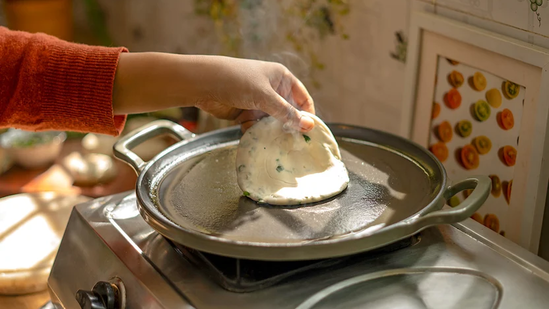
I've used it for everyday parathas and rotis, uttapams (one successful and one spectacularly unsuccessful attempt) and, most often, simply toasting sliced bread. For an entire week, I was convinced the tawa and I were not going to work out. The bread would brown beautifully on one half while the other remained as pale as a vampire. Then, one day, I pressed the toast down with a spatula for about 10 seconds, and got some of the most beautiful browning I've managed in my kitchen.
My first uttapam attempt last week was similarly successful: crisp and golden on the outside, with the vegetables cooked perfectly into the batter. Today's breakfast, however, was a complete disaster. Despite experimenting with extra oil, cold water and everything else I could think of, not a single uttapam turned out well. For now, I'm blaming my batter-making skills.
At 30 cm, the tawa is quite large and weighs around 2.7 kg. It can be cumbersome to wash after every cooking session, so I often leave it on the stove after gently wiping it down with a paper towel, following a practice recommended by many chefs and cast-iron enthusiasts.
The larger size comes with shorter handles on either side, both of which get extremely hot during cooking. This can make the tawa slightly difficult to handle, especially if you're not used to cast iron.
As tricky as it has been so far, I'm not ready to give up on it. I've decided to master the art of cast-iron cooking. Come back to this space next month for an update.
For everyday cooking, use low to medium heat and add a thin layer of oil before you begin. Since cast iron retains heat for longer, handle the tawa with care, especially after cooking. Let food release naturally rather than trying to force it off the surface. Once you're done, wash it with warm water and mild soap. For a deeper clean, you can boil some water in the pan and rinse it afterwards. Avoid steel wool and other abrasive cleaners.
The SuperPan
If there was one thing missing from my very new kitchen, it was a large non-stick kadhai that could also double up as a wok. The Ember SuperPan turned out to be exactly that.
It defies some of the expectations you might have from a non-stick pan: it is uncoated but still offers a non-stick cooking experience, and it can even be used with metal utensils. According to Ember, the pan has a "layered stainless steel body, finished with NanoFusion — a titanium-enhanced surface engineered into the steel, not applied over it." In other words, there is no conventional coating to peel off.
The SuperPan weighs around 1.6 kg and comes with a stainless steel handle. There is also a silicone side holder for the shorter handle, which makes it easier to handle while cooking.
I cooked several desi dishes in it, including amchur bhindi, kadhai paneer and chole, all of which cooked quickly without compromising on flavour. Fried rice was another winner — the grains stayed separate and got nicely fried without sticking to the pan.
For everyday cooking, use medium heat and add a thin layer of oil before cooking. The pan is safe to use with metal utensils, but avoid cutting, chopping or repeatedly scraping with sharp edges, as this can damage the engineered surface over time. After cooking, it can be washed with warm water and mild soap or placed in the dishwasher. For stubborn residue, soak it briefly before scrubbing with a regular scrub pad. Steel wool can also be used for tougher residue, but use light pressure and avoid aggressive or prolonged scrubbing. The pan is designed to handle everyday temperature changes, from stovetop to sink, but avoid leaving it empty on a lit stove for extended periods.
So, is Ember worth it?
For someone setting up a kitchen from scratch — and particularly for a novice cook like me — Ember makes a strong case for having the right cookware without needing to buy an entire cupboard's worth of pans.
The Ceramic Frypan retails for ₹2,999, the Cast Iron Tawa for ₹4,000 and the SuperPan is the most expensive of the three at ₹7,499.
The products also come with fairly extensive literature and guides covering everything from cooking different types of food to caring for the cookware. The cast iron products come with a 9+1-year warranty, while the SuperPan comes with a 5+1-year warranty.
After two weeks of almost daily use, the Ceramic Frypan is the easiest recommendation for me — lightweight, versatile and genuinely convenient for everyday cooking. The SuperPan has also earned a permanent spot on my stovetop, particularly for Indian cooking and dishes that need a larger surface. The Cast Iron Tawa, meanwhile, remains a work in progress.
For a family of one, I certainly don't need all three. But as a starter kit, the combination covers most of my everyday cooking needs — from a quick midnight Maggi to a full kadhai of chole.
Disclaimer: The Ember cookware products were sent to HT by the brand for the purpose of this review. The review reflects our experience using the products over a two-week period.